
Fertilization
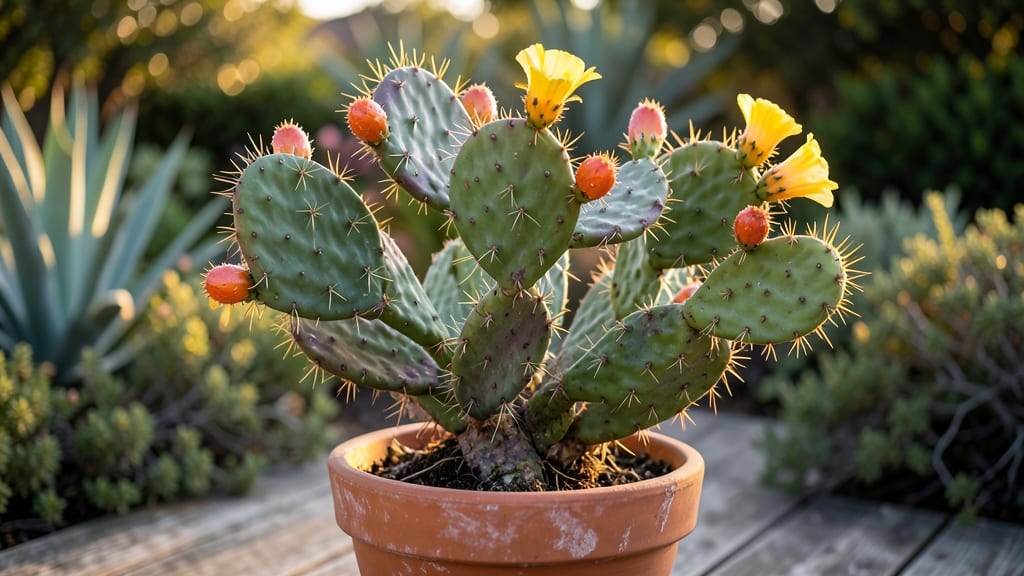
Yes, prickly pear is a fruit—botanically classified as a berry from the cactus family (Opuntia)—with its edible parts being the sweet, gel-like pulp surrounding seeds. This cactus fruit grows on pads and provides nutritional benefits like fiber, antioxidants, and vitamins.
Prickly pear's classification as a fruit comes from its reproductive biology: it develops from the ovary of a flowering plant, just like other berries such as tomatoes or blueberries. 🌱 The cactus itself produces vibrant flowers that eventually transform into the fruit we recognize, complete with tiny black seeds embedded in the edible pulp.
What makes this fruit unique is how it's protected by sharp spines, which actually serve as a natural defense mechanism against animals while preserving the sweet, jelly-like interior.
Beyond its botanical classification, prickly pear offers practical benefits for gardeners and health-conscious individuals alike. The cactus thrives in arid conditions, making it perfect for drought-resistant landscaping, while the fruit itself contains compounds like betalains that give it both color and antioxidant properties.
Many people enjoy it fresh, blended into smoothies, or even candied for desserts, though proper preparation is key to removing those protective spines safely.
💡 In This Article
- Botanical Classification of Prickly Pear Fruit
- Growing and Harvesting Prickly Pear for Edible Use
Botanical classification of prickly pear fruit
The prickly pear fruit belongs to the Cactaceae family, which includes over 2,000 species of cacti. Botanically, it's classified as a berry because it develops from a single ovary containing multiple seeds, much like tomatoes or blueberries.
The key difference lies in its reproductive structure: prickly pears grow from the Opuntia genus, where flowers emerge from the flat, paddle-like pads (cladodes) rather than traditional stems.
What we commonly call the "fruit" is actually the fleshy pericarp (fruit wall) surrounding hundreds of tiny, hard seeds. These seeds are embedded in a translucent, jelly-like pulp that ranges from yellow to deep red, depending on the variety.
The spines covering the fruit aren't part of the fruit itself but are modified leaves called glochids and larger spines, which serve as protection against herbivores. 🌵 Unlike dragon fruit (another cactus fruit), prickly pear's edible portion comes from the fruit's interior rather than its skin.
The classification as a berry stems from its simple ovary structure with one or more seed chambers. When ripe, the fruit's exterior turns from green to vibrant hues of yellow, orange, or red, signaling that the pulp inside has developed its signature sweet-tart flavor.
This transformation occurs over 6-8 weeks after flowering, during which the fruit's sugar content increases dramatically—from about 5% in unripe stages to 15-20% in fully ripe fruit. The seeds themselves contain up to 18% protein, making them a nutritional powerhouse.
What makes prickly pear unique among berries is its photosynthetic pads, which perform photosynthesis while the fruit develops. These pads can store water (up to 2,000 times their weight in some species), allowing the cactus to thrive in arid environments.
The fruit's skin contains barbary (larger spines) and glochids (microscopic hair-like spines), which must be carefully removed before consumption—a process that often involves boiling or soaking the fruit to soften the spines for easier extraction.
Comparing it to other cactus fruits like dragon fruit (Hylocereus genus) reveals key differences: dragon fruit has a thicker, non-spiny rind and edible skin, while prickly pear's entire exterior is inedible.
The pulp's texture also differs—prickly pear is more gelatinous and seed-heavy, whereas dragon fruit has a firmer, seedless interior. Both fruits share antioxidant-rich properties, but prickly pear's pulp contains higher levels of vitamin C (43% DV per 100g) and fiber (10g per 100g).
The fruit's botanical journey begins when the cactus flower (which lasts just 24-48 hours) is pollinated, typically by bees or bats. After fertilization, the ovary swells into the fruit we recognize, with the seeds developing from the ovules.
This process highlights why prickly pear is unequivocally a fruit—it follows the same reproductive biology as other botanical fruits, just with a cactus twist. 🌿