
Fertilization
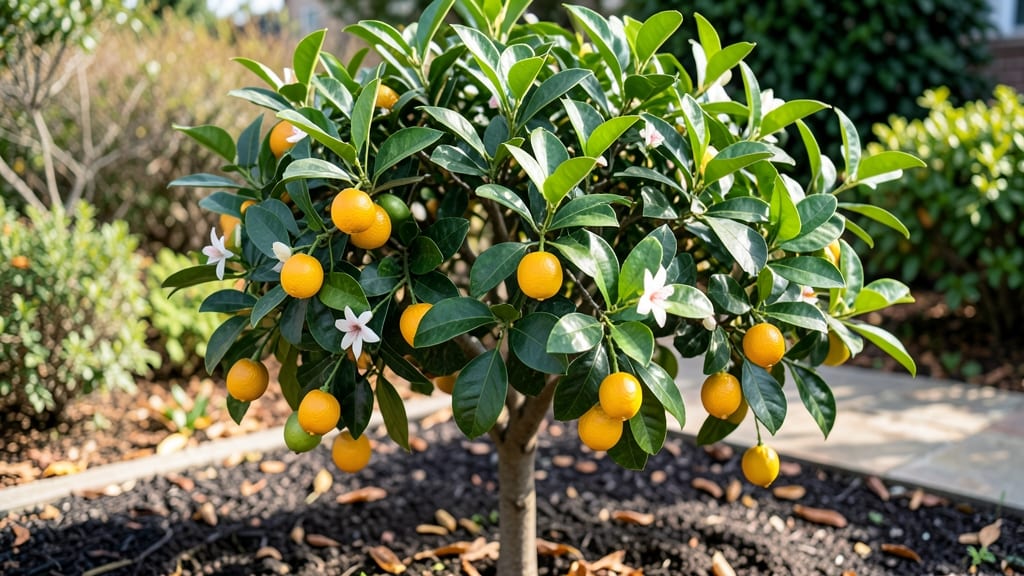
Calamansi fruit is a small, tart citrus hybrid native to Southeast Asia, prized for its intense lime-like flavor and used fresh, in juices, or as a marinade. Its scientific name is Citrus microcarpa or C. × calamondin, and it thrives in tropical climates with minimal care.
Calamansi is often called the "Filipino lime" due to its zesty punch, though it's actually a cross between a kumquat and a mandarin orange. 🌿 This hybrid citrus grows on compact trees that can reach 10-15 feet tall, producing bright yellow-green fruits about the size of a golf ball.
The skin is thin and slightly textured, with a flesh that's tart enough to use straight from the tree but sweet enough when cooked. Unlike true limes, calamansi keeps its seeds even when ripe, which adds a unique crunch to dishes.
What makes calamansi special is its versatility—it's the secret ingredient in many Southeast Asian recipes, from sinigang (sour soup) to calamansi juice, which is often mixed with sugar for a refreshing drink.
The fruit's high acidity also makes it a natural preservative, extending the shelf life of meats and seafood when used as a marinade. Even the leaves can be steeped for tea, offering a milder citrus aroma.
💡 In This Article
- Calamansi Fruit Origins and Botanical Characteristics
- Growing Calamansi Trees at Home: A Gardener’s Guide
Calamansi fruit origins and botanical characteristics
The calamansi's lineage traces back to the tropical regions of Southeast Asia, where it evolved as a natural hybrid between the sweet kumquat (Fortunella spp.) and the bitter mandarin orange (Citrus reticulata).
This genetic cross explains its dual nature—sweet yet intensely tart, with a flavor profile that bridges the gap between citrus and tropical fruits.
The fruit's scientific name, Citrus microcarpa or C. × calamondin, reflects its small size (typically 1.5–2 inches in diameter) and compact growth habit, making it distinct from larger citrus varieties.
Visually, calamansi stands out with its bright yellow-green rind that transitions to a deeper orange as it ripens. Unlike limes, the skin remains thin and slightly textured, almost papery when dry.
The flesh inside is translucent, packed with 10–15 seeds per fruit, and releases a burst of aroma when cut—similar to a cross between lime zest and mandarin sweetness. The juice-to-pulp ratio is high, with acidity levels reaching pH 2.5–3.5, making it nearly twice as tart as a standard lime.
What’s fascinating is how the fruit’s chemistry changes with maturity. Young calamansi are so acidic they can cause a tingling sensation on the tongue, while fully ripe ones develop subtle floral notes.
This duality makes them ideal for both raw applications (like garnishes) and cooked dishes (such as glazes or marinades). The tree itself is a dwarf variety, often staying under 10 feet tall unless pruned, and thrives in USDA hardiness zones 10–11, where temperatures rarely drop below 30°F.
Cultivating calamansi at home reveals its resilience—it tolerates poor soil as long as drainage is excellent and prefers 6–8 hours of direct sunlight daily. The roots are shallow, making them sensitive to waterlogging, which explains why they’re commonly grown in containers in cooler climates.
Interestingly, the fruit’s high acidity isn’t just for flavor; it acts as a natural fungicide, protecting the tree from common citrus diseases like anthracnose.
One lesser-known fact is that calamansi trees are self-pollinating, meaning they don’t require cross-pollination to produce fruit. This trait, combined with their compact size, makes them perfect for urban gardens or balconies.
The leaves also play a role in flavor—when bruised, they release volatile oils that enhance dishes, much like bay leaves in cooking. 🌱
For those curious about taste comparisons, imagine a lime’s sharpness blended with the subtle sweetness of a clementine. The juice has a Brix value of 8–10% (a measure of sugar content), which is higher than lemons but lower than oranges.
This balance is why it’s the star of Filipino calamansi juice—a mix of juice, sugar, and sometimes soda water, served chilled.