
Companion Plants
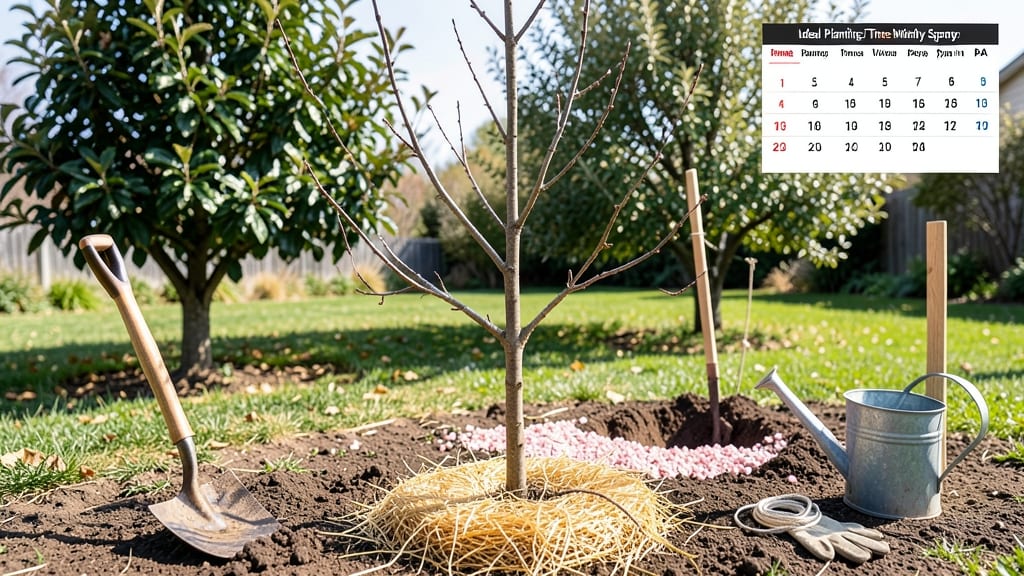
Planting fruit trees in Pennsylvania at the right time ensures your 🍎 thrives—and skipping the window can mean wasted saplings or stunted growth.
Here’s the hard truth: a single late frost or missed chill hours can turn your orchard dreams into a sad pile of mulch. Whether you’re planting apples, peaches, or cherries, timing isn’t just about the calendar—it’s about your local microclimate and USDA zone.
In Pennsylvania’s 5b-7a zones, the best windows are late winter to early spring (February–April) or early fall (September–October). But even then, soil temperature and frost dates matter more than the month alone.
Below, I’ll break down the exact chill hours your trees need, how to track frost-free days, and which varieties handle PA’s climate best—so you can plant with confidence and harvest like a pro.
Best planting months for fruit trees in Pennsylvania based on chill hours
Pennsylvania's USDA zones 5-7 and chill hour requirements (200-1,000+ hours) create a unique window for planting fruit trees. Unlike warmer climates, timing matters because late frosts and cold snaps can devastate young trees.
The best planting months depend on whether you're using bare-root trees or container-grown varieties, as well as your specific chill hour needs.
For most apple, pear, and cherry trees (which need 500-1,000 chill hours), late winter to early spring (February through April) is ideal.
This gives roots time to establish before the growing season kicks in. Peach and plum trees (requiring 200-500 chill hours) can also go in during this window, but they’re more flexible with early fall planting (September-October) in milder microclimates.
Chill hours are the number of hours below 45°F a tree needs to produce fruit. Pennsylvania’s northern regions (zones 5-6) have 800-1,000+ chill hours, perfect for apples and cherries, while southern PA (zone 7) offers 500-700 chill hours, better suited for peaches and pears. Planting outside these ranges risks poor fruit set or tree stress.
Bare-root trees should always be planted in dormant season (late fall or early spring) to minimize transplant shock. Container-grown trees, however, can be planted in spring or early fall—just avoid summer heat, which stresses roots. In Pennsylvania, September is the safest month for container-grown trees because soil stays warm enough for root growth but cools before winter.
| Fruit Tree | Chill Hours Needed | Best Planting Months | USDA Zones | Notes |
|---|---|---|---|---|
| Apple | 800-1,000+ | Feb-Apr (bare-root) or Sep-Oct (container) | 5-7 | Needs well-draining soil; prone to fire blight |
| Peach | 200-500 | Feb-Apr or Sep-Oct (avoid late fall in zone 5) | 6-7 | Susceptible to brown rot; needs cross-pollination |
| Pear | 500-800 | Feb-Apr (bare-root) or Sep (container) | 5-7 | Dwarf varieties ideal for small spaces |
| Cherry (Sweet) | 600-1,000 | Feb-Apr (bare-root) or Sep (container) | 5-6 | Needs full sun; watch for leaf spot disease |
| Plum | 300-600 | Feb-Apr or Sep-Oct (zone 7 only) | 6-7 | Fast-growing; great for urban orchards |
If you're planting in late fall (October-November), stick to container-grown trees and avoid zone 5, where early frosts can damage roots. Southern PA (zone 7) has a longer fall window, making September-October perfect for peaches and plums.
Always check your last frost date—Pittsburgh averages April 15, while Philadelphia sees frost as late as April 20.
For bare-root trees, soak roots in water for 1-2 hours before planting to revive them. Dig a hole twice as wide as the root ball but no deeper—planting too deep suffocates roots. Mix
How to calculate your local frost-free timeline for safe planting
Pennsylvania’s diverse climate means last frost dates can vary by 50 days from one region to another. For fruit trees, planting too early risks frost damage, while waiting too long may delay root establishment. Understanding your local frost-free timeline ensures your trees thrive from day one.
Start by checking your USDA hardiness zone (PA ranges from 5b to 7a). Zones 5b-6a typically see their last frost around April 15, while zones 6b-7a average April 30. However, microclimates—like urban areas or slopes—can shift these dates by weeks.
🚨
Planting fruit trees 2-3 weeks before your average last frost date gives roots time to establish before warm weather arrives. Use local weather records (not just zone averages) to refine your timeline. For example, Pittsburgh’s last frost often hits April 20, while Philadelphia’s can be as late as May 5. Verify with your county extension office for precision.
Next, monitor soil temperature. Fruit tree roots need soil to warm to 40°F (4°C) before planting. Use a soil thermometer to track daily highs—consistent temps above 50°F (10°C) signal it’s safe to plant. In PA, this usually aligns with late April to early May for most regions.
For bare-root trees, plant as soon as soil is workable (even if frost lingers). Container-grown trees can handle slightly cooler soil but still need stable warmth to avoid transplant shock. Mulch heavily after planting to insulate roots if late frosts are forecasted.
Use historical frost data from sources like the Mid-Atlantic Regional Climate Center or Almanac.com. Note that urban areas often warm 1-2 weeks earlier than rural zones due to the heat island effect. Adjust your timeline accordingly—city gardeners may plant 2 weeks sooner than their zone average suggests.
Finally, account for chill hours. Most PA fruit trees need 500-1,000 chill hours (below 45°F (7°C)) to fruit properly. Planting too late may leave them unable to fulfill chill requirements, reducing yields.
Balance your frost-free timeline with your tree’s chill hour needs—for example, apples (600-800 hours) vs. peaches (500-700 hours).
By combining local frost dates, soil temperature, and chill hour data, you’ll pinpoint the perfect window to plant fruit trees in PA—minimizing risks and maximizing success. Start your orchard with confidence! 🌳