
Trees
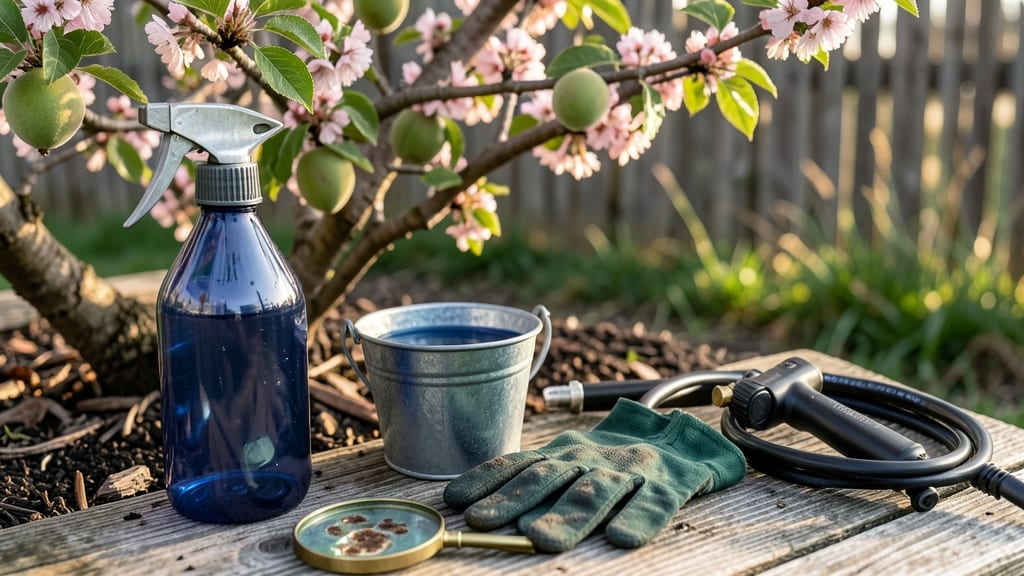
To apply copper fungicide to fruit trees effectively, time your treatments based on disease prevention: use it before bud break in early spring (pink bud stage) to stop fungal spores from taking hold, and consider a second application after harvest for late-season protection. Always inspect your trees first—copper prevents infections but won’t cure active blight or rust.
Copper fungicide works best when applied during critical growth stages when fungal spores are most vulnerable. 🌱 The pink bud stage in early spring is ideal because it targets overwintering pathogens before they can establish themselves.
For stone fruits like peaches, timing matters even more—spraying at petal fall prevents blossom blight, while citrus trees often need applications during new growth flushes. Always follow label instructions for dilution rates and reapplication intervals, as overuse can harm beneficial insects.
Before applying, check for signs of active infections like leaf spots or fruit rot—copper won’t reverse damage but can stop further spread. I recommend keeping a spray schedule tailored to your region’s climate, with adjustments for wet springs that may require earlier treatments.
Safety is key: wait at least 2-3 weeks after application before harvesting to ensure residue levels are safe.
💡 In This Article
- Optimal Copper Fungicide Timing for Fruit Tree Disease Prevention
- Step-by-Step Guide: When and How to Spot-Treat Copper Fungicide
Optimal copper fungicide timing for fruit tree disease prevention
Copper fungicide works through a process called contact inhibition, where copper ions disrupt fungal cell membranes and prevent spore germination.
The most critical timing is during the pink bud stage (when buds are swollen but before petals emerge), as this targets overwintering spores of diseases like apple scab and peach leaf curl.
At this stage, fungal pathogens are dormant but preparing to activate—spores germinate within 24-48 hours of warm, wet conditions, making early intervention essential.
The effectiveness of copper depends heavily on environmental conditions. For example, in USDA Zone 5, where cold winters preserve fungal spores, apply copper when daytime temperatures consistently reach 50°F but nights stay above freezing.
In warmer zones like Zone 9, fungal activity begins earlier—spray at bud swell (when buds are visible but not yet open). Humidity also plays a role: after application, aim for 4-6 hours of leaf wetness to ensure copper adheres properly to plant surfaces.
Different fruit varieties have unique vulnerabilities. Apple trees, for instance, need copper at petal fall to prevent blossom blight, while peaches require treatment at shuck split (when fruit pits separate). Citrus trees, which are susceptible to melanose, benefit from copper applications during new growth flushes in spring and summer.
The key is matching the fungicide to the tree's growth cycle and the pathogen's life stages—this is why a pre-bloom application is non-negotiable for disease prevention.
Temperature thresholds are critical for copper's efficacy. Below 45°F, copper uptake slows dramatically, reducing protection. Above 85°F, the fungicide can volatilize or wash off quickly, especially if rain occurs within 24 hours of application.
Always check the 7-day forecast before spraying to avoid wasting effort. For organic growers, this means planning copper treatments around predictable weather patterns—like the 10-day rule (waiting 10 days after rain before reapplying).
What most gardeners overlook is the residual effect of copper. A single application at pink bud stage provides 2-3 weeks of protection, but secondary infections can occur during wet springs.
For high-risk areas, a second application at fruit set (when flowers have fallen and small fruits appear) adds an extra layer of defense. This two-step approach mirrors commercial orchard practices, where copper is used in rotation with other fungicides to delay resistance development.
Copper's mechanism also explains why it's ineffective against established infections. Once fungal hyphae penetrate plant tissue, copper can't reverse the damage—it only prevents new spores from infecting healthy areas. This is why early detection (like spotting black spots on leaves or cankers on branches) is crucial.
Think of copper as a preventive shield, not a cure—similar to how sunscreen prevents sunburn but won't heal an existing tan.