
Diseases
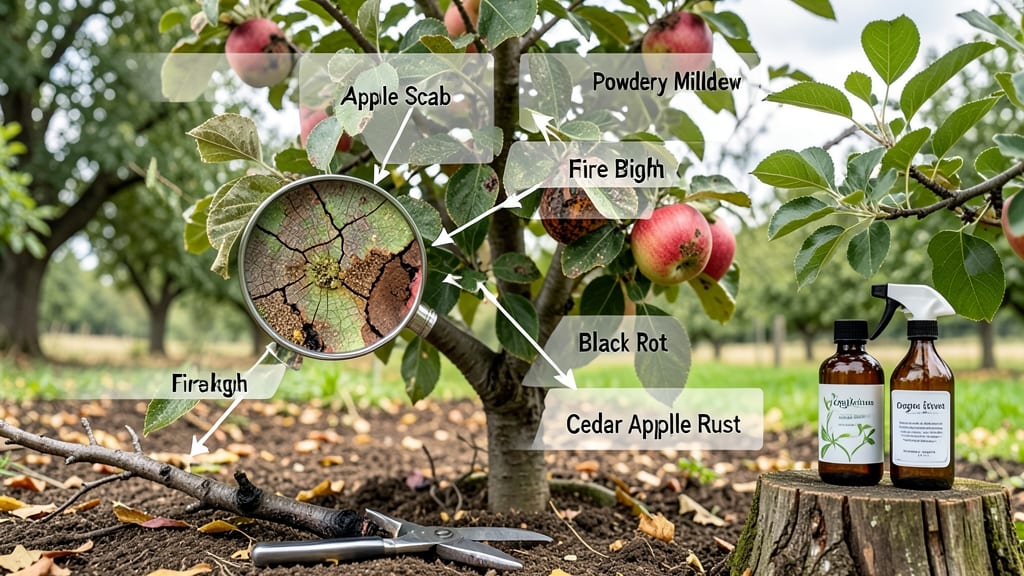
Apple fruit diseases pictures reveal the sneaky enemies lurking in your orchard—black spots, crusty patches, or oozing cankers that turn vibrant apples into unsellable mush. 🍏 I’ve spent years tracking these blights, and the first step to saving your harvest is knowing what to look for: apple scab’s olive-green freckles, powdery mildew’s white dust, or fire blight’s blackened branches.
Once you spot the problem, prevention is your best weapon: copper sprays for scab, neem oil for mildew, and pruning infected wood in late winter. Organic options work, but timing matters—act before symptoms spread, and you’ll protect next year’s crop without harsh chemicals.
The key is catching it early, before those picturesque (but ruined) apples hit the ground.
📚 In This Guide
- What you need
- Instructions
- Tips and common mistakes
- Wrapping up and next steps
What you need
- ● Healthy apple trees or branches – For inspection (live or recently harvested fruit).
- ● Digital camera or smartphone – With a macro lens or zoom (10x+ magnification) for close-up disease pictures.
- ● Hand lens/magnifying glass – 10x magnification for spotting tiny symptoms like powdery mildew or rust spores.
- ● Field guidebook or printed reference – A book like "Comprehensive Guide to Apple Diseases" (or a trusted digital resource).
- ● Disposable gloves – Nitrile or latex-free to avoid contaminating samples.
- ● Plastic bags or sealed containers – For transporting suspect fruit or leaves to a lab (if needed).
- ● Labeling tags & permanent marker – To tag samples with dates/locations.
- ● Pruning shears or sharp knife – Sterilized with rubbing alcohol (70% isopropyl) for cutting infected branches.
- ● Spray bottle with water – For rinsing tools between samples.
- ● UV flashlight (365nm) – Reveals fungal spores that glow under blacklight.
- ● pH test strips – To check soil/fruit surface pH (some diseases thrive in acidic conditions).
- ● Disease-resistant apple varieties – For comparison (e.g., 'Liberty' or 'Enterprise' apples).
- ● Fungicide samples – If testing treatments (e.g., copper-based sprays or sulfur).
- ● Notebook or app – For logging symptoms, dates, and environmental conditions (e.g., iNaturalist or PlantVillage).
Visual guide to spotting and stopping apple fruit diseases
Here’s how to identify and treat common apple diseases before they ruin your harvest.
🍎 Step 1: Learn the Visual Signs of Common Apple Diseases
Start by familiarizing yourself with the most destructive apple diseases. Apple scab appears as olive-green or black spots on leaves and fruit, often with a fuzzy texture. Powdery mildew looks like white, powdery patches on both leaf surfaces and young fruit. Cedar apple rust shows bright orange, jelly-like spots on leaves, while black rot creates sunken, cracked areas on fruit with concentric rings.
I always examine leaves and fruit early in the season—before symptoms spread. Use a magnifying glass for close inspection, especially on the undersides of leaves where many diseases hide. Take photos of suspicious spots to compare with reference guides later.
🍏 Step 2: Inspect Trees at Key Growth Stages
Check your apple trees three times during the growing season: at bud break, when flowers appear, and again when fruit is the size of a dime. Bud break is when you’ll first spot signs of overwintering diseases like scab or rust. Flowering is critical because fungal spores spread easily in wet conditions. Finally, fruit set reveals any infections that developed during bloom.
Look for yellowing leaves, distorted growth, or unusual spots—these are red flags. I also tap branches over a white sheet to catch falling spores or infected leaves. If you see more than a few spots, act fast: diseases spread quickly when humidity stays above 75% for 9+ hours.
✂️ Step 3: Prune and Clean Infected Areas Immediately
Remove and destroy any infected leaves, fruit, or branches—don’t compost them. Place them in a sealed bag and dispose of them in the trash, not the yard waste bin. Prune out dead or diseased wood with clean, sharp pruners, cutting 6 inches below the last sign of infection. Sterilize your tools with 70% rubbing alcohol between cuts to prevent spreading spores.
Thin the canopy slightly to improve airflow—crowded branches trap moisture, creating perfect conditions for fungal growth. I aim for 6-8 inches of space between branches to reduce humidity. After pruning, rake up all fallen leaves and debris from under the tree.
💧 Step 4: Apply Preventive Sprays at Critical Times
Use copper fungicide or neem oil as a preventive spray before symptoms appear. Apply it every 7-10 days during wet periods, starting at bud break and continuing until fruit is fully sized. For organic growers, baking soda spray (1 tbsp baking soda + 1 tsp oil + 1 gallon water) works well for powdery mildew when applied every 10 days. Always spray early in the morning to avoid burning leaves in direct sun.
If you’ve had repeated issues, consider dormant oil spray in late winter to smother overwintering spores. I also mulch around the base of the tree with 3-4 inches of straw to reduce soil splashing—many fungal spores hitchhike on water droplets.
☀️ Step 5: Adjust Care to Reduce Disease Risk
Water deeply but infrequently—1-2 times per week—to avoid keeping leaves wet. Aim for 1 inch of water per week, delivered at the base of the tree. Avoid overhead irrigation, which spreads spores. If your area gets high humidity, consider spacers between branches to improve airflow.
Finally, harvest promptly when fruit reaches maturity—don’t let it overripe on the tree. Store harvested apples in a cool, dry place (around 32-40°F) to prevent post-harvest rot. I always inspect stored fruit weekly and remove any that show signs of spoilage immediately.
Tips & tricks for spotting and stopping apple fruit diseases
Real talk: Early detection is your best defense against apple blights. Here’s how to stay one step ahead of these common diseases.
Visual Inspection Upgrade: Grab a magnifying glass and check the undersides of leaves first—this is where fungal spores often hide. I’ve caught early signs of apple scab by examining the leaf veins under magnification. Look for tiny olive-green specks that later turn black and fuzzy. For powdery mildew, the white powder shows up more clearly on leaf undersides too.
Timing Secret: The three inspection windows in Step 2 are non-negotiable. Bud break reveals overwintering spores, flowering spreads them, and fruit set shows infections that developed during bloom. Don’t skip the dime-sized fruit check—this is when black rot often becomes visible as sunken cracks. I set phone reminders for these critical stages.
Pruning Precision: When removing infected branches in Step 3, cut 6 inches below the last visible infection mark. This ensures you’re removing the entire infected area where spores might linger. Sterilize your pruners between cuts with 70% rubbing alcohol—this simple step prevents cross-contamination that spreads disease throughout your tree.
Spray Strategy: For the baking soda spray in Step 4, mix it fresh each time you apply it—it loses effectiveness after 24 hours. I apply it on calm mornings when humidity is naturally lower, which gives the spray time to dry before afternoon moisture sets in. The early morning application also avoids leaf burn from direct sunlight.
Pro Tips for Apple Fruit Diseases Pictures
- Real talk: Early detection is your best defense against apple blights. Here’s how to stay one step ahead of these com...
- Visual Inspection Upgrade: Grab a magnifying glass and check the undersides of leaves first—this is where fungal spor...
- Timing Secret: The three inspection windows in Step 2 are non-negotiable. Bud break reveals overwintering spores, flo...
Frequently asked questions
Got questions about apple fruit diseases? You’re not alone! Here are some of the most common concerns—plus quick answers to help you protect your trees and harvest.
What are the most common apple diseases I should watch for?
The top offenders include apple scab (black spots on leaves/fruit), powdery mildew (white fuzzy coating), fire blight (blackened, oozing branches), and cedar apple rust (orange pustules). Check our visual guide for side-by-side pictures!
When is the best time to treat apple tree diseases?
Timing is key! Start preventative sprays in early spring (before buds swell) and repeat every 10–14 days during wet seasons. For fire blight, act immediately if you spot wilting flowers or blackened tips—delaying can spread it fast.
Are organic treatments effective against apple diseases?
Yes! Try neem oil (for mildew/scab), baking soda spray (1 tbsp baking soda + 1 quart water + soap), or copper fungicides (organic-certified options like Copper Soap). For severe cases, combine organic sprays with pruning infected branches to limit spread.
Can I still eat apples if they have minor disease spots?
It depends! Small, superficial spots (like scab) are usually safe to peel and eat, but avoid fruit with deep rot, mold, or oozing wounds (like fire blight). When in doubt, compost diseased fruit far from your garden to prevent reinfection.
How do I clean my orchard tools to prevent disease spread?
Disinfect pruners and tools with 70% rubbing alcohol or a 10% bleach solution (1 part bleach to 9 parts water) between trees. Wipe down surfaces thoroughly to kill spores—this simple step stops 90% of cross-contamination!
Wrapping up and next steps
Recognizing apple fruit diseases early can save your harvest—and your sanity! 🍏 From scab and powdery mildew to fire blight, these visual guides and prevention tips give you the tools to keep your trees thriving. Stay proactive: regular inspections, proper pruning, and organic sprays make all the difference.
Now that you’re armed with knowledge, take action! Start by checking your trees this weekend—spot the first signs of trouble, and tackle it before it spreads. Your future apple harvests will thank you! 🌱