
Fertilization
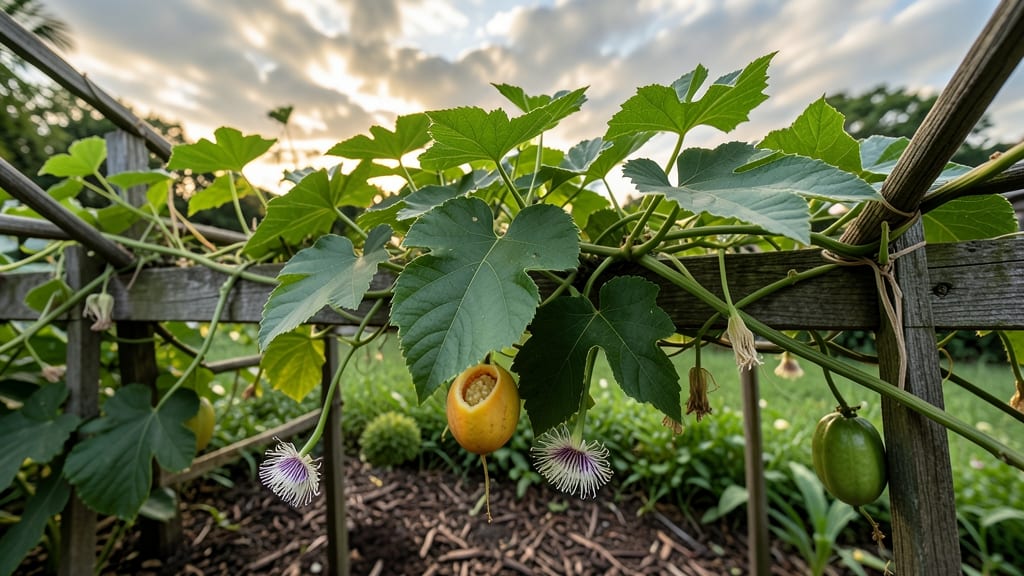
Growing edible passion fruit from seed means waking up to fragrant, tropical vines climbing your trellis by spring. 🌱 I’ve watched mine produce pound after pound of sweet, purple fruit—far sweeter than store-bought—once I cracked the care routine. The key? Mimicking its native tropical conditions without overcomplicating things.
Start with well-draining soil mixed with compost, and plant in a spot with 6+ hours of sun daily. Passion fruit thrives in zones 8-11 but can overwinter in pots indoors if you live further north.
The vines grow aggressively, so give them room—think 10-15 feet of space or a sturdy trellis to contain their sprawl.
By summer, you’ll be hand-pollinating flowers (yes, it’s fun!) to ensure fruit set, and by late fall, you’ll have harvests of those velvety-skinned, tangy-sweet fruits perfect for juices, desserts, or eating fresh. The first taste makes the effort worth it every time.
Even in cooler climates, container growing works—just move pots indoors before frost. The real magic? One plant can produce hundreds of fruits per season if you prune wisely and keep it healthy. Let’s get those vines climbing!
📚 In This Guide
- What you need
- Instructions
- Tips and common mistakes
- Wrapping up and next steps
What you need
- ● Passion fruit plants: 2-3 healthy Passiflora edulis (purple) or Passiflora ligularis (yellow) seedlings or grafted plants (available at nurseries or online).
- ● Growing containers or garden space: 5-gallon pots (minimum) with drainage holes or a well-draining garden bed (6 ft. wide x 6 ft. long per plant).
- ● Potting mix: 1 part high-quality organic potting soil (e.g., Miracle-Gro or Fox Farm).
- ● 1 part perlite or coarse sand (for drainage).
- ● 1 part compost or worm castings (for nutrients).
- ● Fertilizer: Balanced 10-10-10 or 20-20-20 fertilizer (follow label instructions).
- ○ Citrus or tropical plant fertilizer (optional but recommended for extra nutrients).
- ● Support structure: Trellis, fence, or sturdy bamboo poles (6-8 ft. tall) for vines to climb.
- ● Pruning tools: Clean, sharp pruning shears (disinfect with rubbing alcohol).
- ● Watering supplies: Watering can or hose with a gentle spray nozzle.
- ● Mulch: Straw or wood chips to retain moisture and suppress weeds.
- ● Epsom salt: 1 tbsp/month (for magnesium boost).
- ● Drip irrigation system: For consistent watering in larger gardens.
- ● Pollination aid: Soft paintbrush (to hand-pollinate if bees are scarce).
- ● Harvesting tools: Small knife or pruners for picking fruit.
Step-by-step guide to cultivating edible passion fruit vines
Here's how to transform your warm climate space into a passion fruit oasis—with vines that thrive and fruit abundantly.
🌱 Step 1: Select and Prepare the Perfect Planting Site
Passion fruit vines crave full sun—choose a location receiving at least 6-8 hours of direct sunlight daily. A south-facing wall or trellis maximizes exposure. The soil must drain freely, so amend heavy clay with 3-4 inches of coarse sand or perlite per square foot. I always test pH first—passion fruit thrives in slightly acidic to neutral soil (6.0-7.0).
Dig a hole twice as wide as the vine's root ball but only as deep as the container it came in. This prevents burying the graft union (visible as a swollen bump on the stem) too deep, which can rot the plant. Loosen the outer edges of the root ball before placing it in the hole to encourage root spread into surrounding soil.
☀️ Step 2: Establish a Support System and Plant
Install a strong trellis or arbor before planting—passion fruit vines grow 15-20 feet annually and need sturdy support. I use 4x4 wooden posts anchored 6 feet deep, connected with 1-inch diameter horizontal cables spaced 12 inches apart. Plant your vine 6-8 inches from the trellis so it can reach support immediately.
Backfill the hole with native soil mixed with 1 cup of balanced organic fertilizer (10-10-10). Water thoroughly to settle the soil, then mulch with 2-3 inches of wood chips, keeping mulch 6 inches away from the stem to prevent rot. The first flush of new leaves signals successful establishment—usually within 2-3 weeks of planting.
💧 Step 3: Master Watering and Fertilizing for Fruit Production
Passion fruit vines need consistent moisture but hate soggy roots. Water deeply 2-3 times weekly during dry spells, aiming for 1-1.5 inches of water per week. You'll know it's right when the top 2-3 inches of soil feel damp but not waterlogged. Drip irrigation works best—avoid overhead watering to prevent fungal diseases like powdery mildew.
Feed vines every 4-6 weeks during growing season with organic fertilizer high in potassium (like 5-10-10). This promotes flowering and fruiting. I also side-dress with 1 cup of compost in early spring and again after harvest. Yellowing leaves signal nitrogen deficiency—respond with a fish emulsion application and reduce water slightly to help roots absorb nutrients.
✂️ Step 4: Prune Strategically for Airflow and Fruit Quality
Prune in late winter or early spring before new growth begins. Remove dead, diseased, or crossing branches first, then thin to maintain an open, airy structure. I target 3-4 main stems, cutting back lateral branches to 12-18 inches long—this redirects energy to fruit production rather than excessive foliage.
After harvest, give vines a light pruning to remove any remaining fruit stems and encourage next year's growth. Never prune more than one-third of the vine at once—this stresses the plant and reduces flowering. The goal is sunlight penetration to the center of the vine, which prevents fungal issues and improves fruit quality.
🍈 Step 5: Harvest and Encourage Year-Round Production
Passion fruit turns from green to yellow as it ripens—harvest when 75% of the skin shows color. Gently twist the fruit from the vine; it should release easily without tearing the stem. I harvest every 2-3 days during peak season to prevent overripe fruit from falling. Store unripe fruit at room temperature to finish ripening—never refrigerate until fully ripe.
To extend the harvest season, provide winter protection in colder climates. Wrap vines in burlap and cover with a frost cloth when temperatures drop below 35°F. In warmer zones, prune lightly after harvest to maintain vigor. With proper care, a single vine can produce 50-100 pounds of fruit annually—enough for fresh eating, juicing, or sharing with neighbors.
Tips & tricks for perfect passion fruit vine cultivation
Transforming your space into a passion fruit haven requires attention to detail—these insights will help you avoid common pitfalls and maximize your harvest.
Site Selection: While the instructions emphasize full sun, I've found that passion fruit vines actually benefit from partial afternoon shade in extremely hot climates (above 95°F). This prevents sunburn on young leaves while still providing the 6-8 hours of morning sun they crave. Look for areas with dappled light if your region gets intense afternoon heat.
Support System Stability: The trellis specifications are crucial, but I recommend adding guy wires to your 4x4 wooden posts—especially in windy areas. Anchor these wires 6 feet deep into the ground at 45-degree angles to prevent the trellis from toppling. I learned this the hard way when a summer storm flattened my first attempt. The 1-inch cables spaced 12 inches apart work perfectly for vine guidance, but add vertical support cables every 4 feet for heavier fruit loads.
Watering Precision: The 2-3 inches of soil dampness check is spot-on, but I've found that using a moisture meter (around $20) takes the guesswork out of it. Aim for 30-40% moisture in the top 3 inches—any less and the vines stress, any more and you risk root rot. Early morning watering (before 9 AM) minimizes evaporation and fungal risks, which is especially important in humid growing zones.
Fertilizer Timing: The 4-6 week feeding schedule works well, but I've noticed that vines respond even better when you split the 1 cup of compost into two applications—half at planting and half after the first harvest. This gradual nutrient release prevents sudden growth spurts that can overload the plant. For the fish emulsion correction, dilute it to half-strength (1 tbsp per gallon) to avoid burning roots during nitrogen deficiency treatment.
Pro Tips for Edible Passion Fruit
- Transforming your space into a passion fruit haven requires attention to detail—these insights will help you avoid common pitfalls and maximize your harvest.
- Site Selection: While the instructions emphasize full sun, I've found that passion fruit vines actually benefit from partial afternoon shade in extremely hot climates (above 95°F).
- Support System Stability: The trellis specifications are crucial, but I recommend adding guy wires to your 4x4 wooden posts—especially in windy areas.
Frequently asked questions
Got questions about growing and enjoying edible passion fruit? You’re not alone!
Here are answers to the most common queries—from planting to troubleshooting—so you can grow this tropical treasure with confidence.
Can passion fruit vines grow in containers, or do they need a garden?
Passion fruit vines thrive in large containers (at least 15–20 gallons) as long as they get full sun (6+ hours daily) and well-draining soil. Just ensure the pot has drainage holes and use a trellis for support. Container-grown vines may produce slightly smaller fruit but are perfect for patios or small spaces!
How long does it take for passion fruit plants to bear fruit?
Patience is key! Most passion fruit vines take 12–18 months to mature and produce fruit from seed. If you buy a young plant (1–2 years old), you might see fruit in 6–12 months. Consistent care—watering, fertilizing, and pruning—speeds up the process.
Why are my passion fruit flowers falling off before fruiting?
This is often due to pollination issues or stress. Passion fruit flowers are self-pollinating, but bees or gentle hand-pollination (use a soft brush) can help. Other causes include:
- Temperature extremes (below 50°F or above 95°F)
- Nutrient deficiencies (add a balanced fertilizer like 10-10-10)
- Overwatering (keep soil moist but not soggy)
Can I eat passion fruit from the vine, or do I need to wait for it to ripen?
While passion fruit can be eaten unripe (often in smoothies or sauces), fully ripe fruit is far sweeter and juicier! Wait until the skin turns deep yellow or purple (depending on the variety) and feels slightly soft when gently squeezed. Unripe fruit is tart and seedy—best for cooking.
What’s the best fertilizer for passion fruit vines?
Passion fruit vines love balanced, organic fertilizers with a slight nitrogen boost. Use a 10-10-10 or 12-12-17 formula every 4–6 weeks during growing season (spring–fall). For organic options, try:
- Compost or worm castings
- Fish emulsion (high in nitrogen)
- Banana peel tea (for potassium)
My passion fruit leaves are yellowing—what’s wrong?
Yellow leaves usually signal overwatering, nutrient deficiency, or pests. Check these first:
- Watering: Let soil dry slightly between waterings (1–2 inches deep).
- Nutrients: Test soil pH (ideal: 6.0–7.0) and add iron or magnesium if needed.
- Pests: Inspect for aphids or mites (spray with neem oil if found).
Wrapping up and next steps
Growing your own edible passion fruit is a rewarding journey—packed with tropical flavors and vibrant beauty! 🌱 With the right fertilization, soil prep, and care, you’ll enjoy year-round harvests of sweet, tangy fruit.
Remember, patience and consistency are key, whether you’re nurturing a vine in a pot or a full garden bed.
Ready to take the next step? Start small—plant a vine, experiment with fertilizers, and watch your passion fruit thrive! Share your progress with fellow gardeners or even gift your harvest to friends. Happy growing! 🍈✨