
Companion Plants
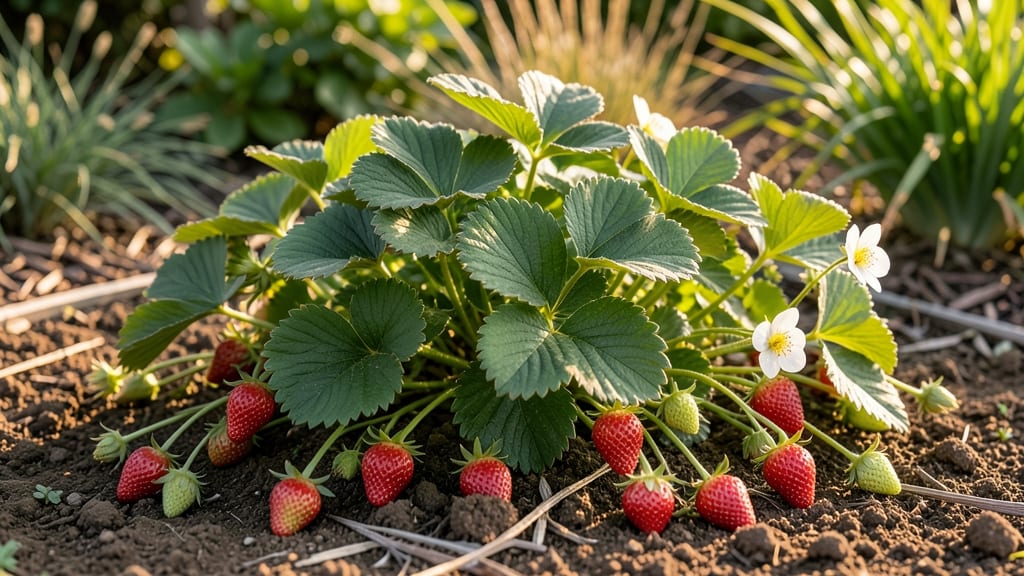
How long before strawberry plants produce fruit? The answer depends on the variety—fast types can deliver ripe 🍓 in as little as 30 days, while most take 60 to 90 days from planting to your first harvest. The secret? Picking the right type and giving them the ideal care.
Picture this: you’ve just tucked in those little crowns in early spring, dreaming of summer snacks, only to wonder why nothing’s happening. The truth? Some strawberries are speed demons, while others play the long game.
I’ll break down the fastest varieties, the sneaky growth stages, and the 3 key factors that cut your wait time in half.
You’re not just waiting for fruit—you’re watching a plant transform. First come the leaves, then runners, then those delicate white blooms. Skip a step, and you’ll end up with flowering but no berries, or worse, a plant that’s all leaves and no payoff.
Here’s how to spot each stage and what to do when things stall.
By the end, you’ll know exactly which strawberry types to grab for a summer harvest, how to tweak your soil and sunlight for speed, and even how to troubleshoot if your plants are taking their sweet time. Let’s get those berries growing!
Strawberry growth stages: how long until first fruit?
Strawberries are one of the fastest garden crops to produce fruit, but the timeline from planting to harvest depends on variety, climate, and care.
Most home gardeners see their first berries in 60–90 days after planting, though some everbearing varieties can fruit as early as 30 days under ideal conditions. Understanding each growth stage helps you set realistic expectations and troubleshoot delays.
The journey from bare-root plant to ripe berry follows four key stages: leaf growth, runner formation, flowering, and fruiting. Each stage has specific timeframes and care requirements.
For example, June-bearing varieties focus energy on leaves first, while day-neutral types prioritize flowers. Temperature and sunlight play critical roles—cool nights (50–60°F) and warm days (70–85°F) speed up flowering.
Here’s a breakdown of what to expect at each stage, including how to optimize conditions for faster fruiting:
During the leaf growth stage (days 1–21), your strawberry plant focuses on establishing roots and foliage. This is the time to ensure well-draining soil and regular watering—aim for 1 inch of water per week.
Avoid overwatering, which can cause root rot. If your plants look leggy or pale, they may need more sunlight or a balanced fertilizer (10-10-10) applied lightly.
The runner formation stage (days 21–45) is where strawberries decide whether to produce fruit or spread via runners. If you’re growing for immediate harvests, prune runners to redirect energy to fruit production.
However, saving a few runners lets you expand your patch for next year. This stage is also critical for day-neutral varieties, which can flower and fruit continuously if runners are managed.
Flowering (days 45–60) is the most exciting—and delicate—phase. Strawberries need cool nights (50–60°F) to trigger flowering, but days must stay warm (70–85°F) for pollinators like bees to visit. If your area lacks bees, gently shake plants or use a small brush to transfer pollen. Frost during this stage can kill flowers, so cover plants if temperatures dip below 32°F.
Finally, the fruiting stage (days 60–90) delivers the payoff! Berries ripen in 2–3 weeks after flowering, depending on variety and weather. Harvest when fully colored and slightly soft to the touch. June-bearing varieties produce one massive crop, while everbearing and day-neutral types offer multiple harvests.
To extend fruiting, remove old leaves after the first harvest to encourage new growth.
Temperature and sunlight are the biggest factors in delaying or accelerating fruiting. Hotter climates (zones 8–10) may see faster growth but risk blind flowering (flowers with no fruit). Cooler climates (zones 3–6) might delay flowering until temperatures rise.
If your plants aren’t flowering after 60 days, check for nutrient deficiencies (yellow leaves = nitrogen), poor drainage, or shade issues.
Pro tip: Use black plastic mulch to warm soil faster in spring, or straw mulch to retain moisture. Both tricks can shave 1–2 weeks off your fruiting timeline.
With the right variety and care, you could be enjoying homegrown strawberries in as little as 6 weeks—or as long as 90 days for slower varieties
Fastest strawberry varieties for quick harvests (ranked by speed)
If you're eager for strawberries but short on patience, choosing the right variety can cut your wait time in half. Some strawberries produce fruit in as little as 6 weeks after planting, while others take 6 months or more.
The key lies in understanding the three main types: June-bearing, everbearing, and day-neutral. Let’s break down which varieties deliver the fastest harvests and where they thrive best.
Day-neutral varieties like 'Seascape' and 'Albion' are the speed demons of the strawberry world. They produce fruit continuously throughout the growing season, often yielding berries just 6-8 weeks after planting. These varieties are perfect for warm climates where frost isn’t a concern.
Meanwhile, June-bearing types like 'Chandler' or 'Jewel' take longer—typically 90 days—but reward you with a massive harvest all at once.
For cool climates, everbearing varieties like 'Tristar' or 'Sequoia' are fantastic choices. They produce fruit in 2-3 harvest cycles per year—once in spring and again in fall—and typically fruit within 8-12 weeks.
These varieties are more forgiving if your growing season is short, as they can handle lighter frosts better than day-neutral types.
If you're in a warm climate (Zones 8-10), 'Albion' and 'Seascape' are your best bets for speed. These day-neutral varieties produce fruit continuously and can even fruit in partial shade, making them ideal for containers or urban gardens. They’re also more disease-resistant, which is a bonus in humid conditions.
Pro tip: If you’re planting in spring, opt for June-bearing varieties like 'Chandler' for a summer harvest. But if you’re planting in fall, everbearing or day-neutral types will give you an earlier spring harvest the following year.
Always check your last frost date—planting too early can stunt growth, while planting too late may delay fruiting.
Ready to pick the fastest strawberry for your garden? Start with 'Albion' or 'Seascape' if you want berries in under 2 months, or choose 'Tristar' for a balanced harvest in cooler areas. With the right variety, you’ll be enjoying homegrown strawberries before you know it! 🍓