
Pruning
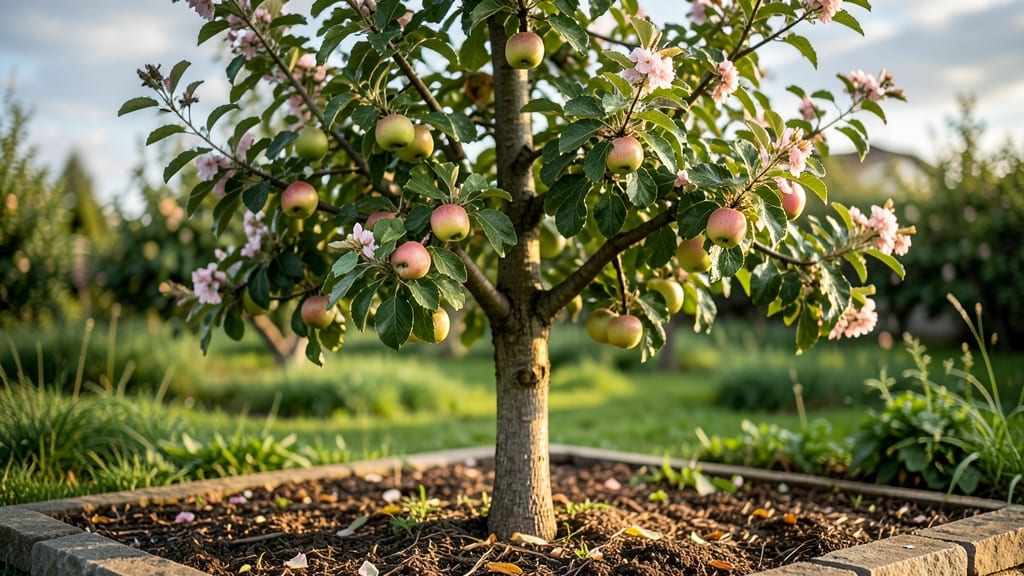
Apple trees take 3 to 5 years to produce fruit after planting, though dwarf varieties can bear fruit in as little as 2 years, while standard trees may take up to 7 years based on the specific variety, growing conditions, and seasonal factors. Quick-producing types like 'Honeycrisp' often outpace later varieties such as 'Granny Smith'.
Understanding this timeline depends on the tree's genetic makeup and environmental conditions. 🍏 Dwarf apple trees, grafted onto compact rootstocks, reach maturity faster because their smaller size allows for quicker energy allocation to fruit production.
Meanwhile, full-sized trees need more years to establish strong root systems and canopy growth before focusing on fruit development. Climate also plays a critical role—regions with distinct seasonal changes trigger the necessary dormancy periods for bud formation, while warmer climates may delay flowering if temperatures remain too consistent.
For home gardeners, choosing early-bearing varieties like 'Anna' or 'GoldRush' can mean harvesting fruit within 2-3 years, but even these require proper care. Adequate sunlight, consistent watering, and balanced fertilization all accelerate fruiting.
Pruning techniques that encourage an open canopy also help by improving air circulation and light penetration, both essential for fruit set.
💡 In This Article
- Factors That Speed Up or Delay Apple Tree Fruit Production
- Fastest-Fruiting Apple Tree Varieties for Home Gardens
Factors that speed up or delay apple tree fruit production
Apple trees enter their fruiting stage when they've built enough energy reserves in their roots and branches—a process heavily influenced by their genetic makeup. Dwarf varieties, grafted onto rootstocks like 'M.9' or 'B.9,' mature faster because their reduced size allows for quicker energy allocation to fruit production.
These trees can bear fruit in as little as 2 years, while standard trees on 'seedling' rootstocks may take 5-7 years to reach maturity. The rootstock's vigor directly impacts how quickly the tree directs energy toward flowering and fruiting rather than just growth.
Climate plays a critical role in triggering the dormancy cycles essential for fruit production. Apple trees need cold stratification—a period of chilling (typically 200-1,000 hours below 45°F)—to break dormancy and initiate flowering.
Regions with 4 distinct seasons (like USDA Zones 4-7) provide this naturally, while warmer climates (Zones 8-10) may require artificial chilling or carefully selected varieties like 'Anna' or 'Dorsett Golden' that tolerate mild winters. Without adequate chilling, buds may fail to open, delaying or preventing fruit set entirely.
Soil quality and watering consistency are equally vital. Well-draining, fertile soil rich in organic matter ensures the tree absorbs nutrients efficiently, while even moisture (about 1-2 inches per week) prevents stress that could divert energy away from fruit production.
Overwatering or drought conditions force the tree to prioritize survival over flowering. For example, a tree in sandy soil may need daily watering in summer, while one in loamy soil might thrive with weekly deep watering.
Mulching with wood chips or straw helps retain moisture and regulate soil temperature, further supporting early fruiting.
Pruning techniques also accelerate or delay fruit production by shaping the tree's structure. Open-center pruning (removing inward-growing branches) improves air circulation and sunlight penetration, both critical for fruit development.
Young trees benefit from light pruning (removing only dead or crossing branches) to encourage a strong framework, while mature trees may need thinning cuts to reduce overcrowding.
Over-pruning can stress the tree, delaying fruiting, while too little pruning leads to dense canopies that shade lower branches, reducing fruit quality and yield.
Finally, fertilization timing matters. Apple trees need balanced nitrogen (N), phosphorus (P), and potassium (K) ratios, with phosphorus being key for root and flower development. Applying a 10-10-10 fertilizer in early spring (before buds swell) and again after harvest supports energy storage for the next season.
Organic options like compost or bone meal provide slow-release nutrients, while synthetic fertilizers offer quicker results. Over-fertilizing with nitrogen, however, can lead to excessive leafy growth at the expense of fruit production.
For home gardeners, combining dwarf rootstocks, cold-hardy varieties, consistent care, and proper pruning can shave years off the fruiting timeline.
For instance, a 'GoldRush' apple tree (a dwarf variety) planted in Zone 5 might bear fruit in 2-3 years, while a standard 'Granny Smith' in the same zone could take 5-6 years.
Understanding these factors helps you create ideal conditions for your tree to flourish and produce fruit sooner.