
Fertilization
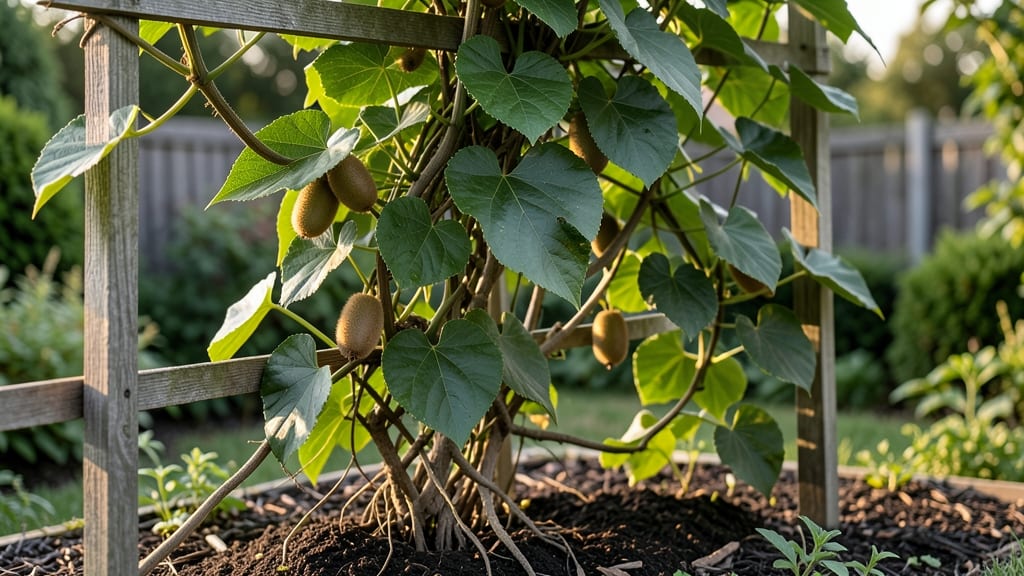
Cultivating kiwi fruit delivers sweet rewards faster than you'd expect. 🌱 These vigorous vines transform a sunny corner into a lush, fruiting wall within just a few seasons—no orchard required.
My first harvest came in year three, and now I can't imagine a summer without fresh kiwi straight from the vine.
Start with the right variety: hardy kiwi (Actinidia arguta) thrives in cooler zones, while fuzzy kiwi (Actinidia deliciosa) needs warmer climates. Both demand well-draining soil, full sun, and a sturdy trellis—these vines grow 20+ feet if left unchecked.
Plant male and female vines within 50 feet of each other for pollination, or choose self-pollinating varieties like 'Issai' for small spaces.
By summer, you'll see glossy leaves and tiny flowers giving way to fuzzy (or smooth) kiwis by fall. Prune aggressively in late winter to shape the vine and encourage fruit production, and watch as your harvest grows year after year.
The first taste of homegrown kiwi—tangy, sweet, and bursting with vitamin C—is worth every pruning session.
Works in containers for small yards, or sprawl across a fence for maximum yield. Here's how to get started without the common pitfalls that trip up beginners.
📚 In This Guide
- What you need
- Instructions
- Tips and common mistakes
- Wrapping up and next steps
What you need
- ● Kiwi vines: Choose cold-hardy varieties like Actinidia arguta (hardy kiwi) or Actinidia deliciosa (classic kiwi). Buy 2-3 plants (male and female vines required for pollination).
- ● Well-draining soil: Mix 60% topsoil, 30% compost, and 10% perlite/sand for optimal drainage. Test soil pH (ideal: 5.5–7.0).
- ● Support structure: Install a 10–15 ft trellis, arbor, or fence (kiwi vines are vigorous climbers!). Use galvanized wire or sturdy wooden posts.
- ● Fertilizer: Balanced fertilizer (10-10-10) at planting (2–3 lbs per vine).
- ● Organic compost (5–10 lbs) worked into soil annually.
- ○ Citric acid (optional) for acidic soil (1–2 tbsp per gallon of water, monthly in growing season).
- ● Mulch: Spread 3–4 inches of organic mulch (straw, wood chips, or leaves) to retain moisture and suppress weeds.
- ● Pruning tools: Bypass pruners (for clean cuts).
- ● Loppers (for thicker branches).
- ● Gloves & safety glasses (kiwi thorns are sharp!).
- ● Watering system: Drip irrigation or soaker hoses (kiwi vines need 1–2 inches of water weekly).
- ● Pollination aid: Hand-pollinate with a soft paintbrush if bees are scarce (especially for indoor/container grows).
- ● Frost protection: Row covers or frost cloth for tender varieties in cold climates.
- ● Soil tester kit to monitor nutrient levels.
- ● Kiwi fruit trellis kit (pre-assembled for convenience).
- ● Container growing: 15–20 gallon pots with drainage holes (for small spaces).
Step-by-Step instructions for cultivating kiwi fruit vines
Here’s how to grow these vigorous vines efficiently—no fancy tools, just smart timing and patience.
🌱 Step 1: Choose the Right Variety and Planting Site
Kiwi vines thrive in zones 6-9 with strong, sturdy support—think trellis or fence. I always pick hardy kiwi (Actinidia arguta) for its cold tolerance and smaller fruit, which ripens faster than fuzzy kiwi. Plant male and female vines 15-20 feet apart—pollination happens via wind, so spacing matters.
Pick a spot with full sun to partial shade (6+ hours daily). Too much shade slows growth; too much sun can scorch leaves. I test the site by checking nearby plants—if they’re thriving, the spot’s likely good. Amend heavy clay soil with 3 inches of compost before planting to improve drainage.
☀️ Step 2: Plant Vines at the Right Time and Depth
Plant bare-root vines in early spring (after last frost) or container-grown plants in fall. Dig a hole twice as wide as the root ball but only as deep—the graft union (visible bump near the base) should sit 1-2 inches above soil level. This prevents rot and encourages strong root growth.
Spread roots gently, then backfill with soil, tamping lightly to remove air pockets. Water deeply (about 1 gallon) to settle the soil. I stake young vines immediately with 4-foot bamboo poles to train them upward—kiwi vines grow 30+ feet if left unchecked, and they’ll climb anything.
💧 Step 3: Water and Fertilize for Rapid Growth
Keep soil consistently moist (not soggy) for the first 2 months, then taper to 1 inch of water weekly once established. Drip irrigation works best—it delivers water slowly at the base where roots need it most. I avoid overhead watering; wet leaves invite fungal diseases like powdery mildew.
Feed vines balanced fertilizer (10-10-10) in early spring and again after fruiting. Too much nitrogen makes leaves lush but fruit sparse. I also mulch with 3 inches of wood chips to retain moisture and suppress weeds. Watch for new shoots—they’ll appear within 4-6 weeks if conditions are right.
✂️ Step 4: Prune for Structure and Fruit Production
Prune late winter (before buds swell) to shape the vine. Remove dead or crossing branches, then cut back last year’s growth by 1/3 to encourage new, fruiting wood. I tie new shoots to the trellis as they grow—kiwi vines are aggressive climbers and need guidance to stay manageable.
Female vines produce fruit on 2-year-old wood, so pruning strategically ensures a harvest. Thin fruit clusters to 3-4 per vine in early summer—overcrowding leads to small, underripe kiwis. I harvest when fruit gives slightly when gently squeezed and skin turns golden (usually late summer to fall).
🪴 Step 5: Protect and Maintain for Year-Round Harvests
Cover young vines with frost cloth in winter if temps drop below 15°F—hardy kiwi survives, but new growth is tender. I also watch for bird damage (they love the fruit!) and use netting if needed. Kiwi vines are self-pollinating with a partner, so plant at least one male vine per 6-8 female vines for reliable fruit set.
Harvest fruit before it fully ripens—kiwis soften and sweeten off the vine. Store in a cool, dark place (like a basement) for 2-4 weeks until ripe. With proper care, vines bear fruit in 2-3 years and live 20+ years, making them a low-maintenance perennial.
Tips & tricks for growing kiwi vines
Fast results start with smart choices—here’s how to accelerate your kiwi vine’s growth and fruit production.
Variety Matters: While hardy kiwi (Actinidia arguta) is my go-to for cold zones 6-9, consider Issai kiwi if you want self-pollinating vines that produce fruit without needing a male partner. These compact varieties also grow well in containers, making them perfect for small spaces or urban gardens. The 15-20 foot spacing still applies for wind pollination, though.
Planting Precision: When planting in Step 2, focus on the graft union—this visible bump near the base should sit 1-2 inches above soil level. I’ve seen beginners bury it too deep, which causes rot. After planting, water deeply (about 1 gallon) and stake immediately with those 4-foot bamboo poles. You’ll thank yourself later when vines reach their full 30-foot potential without tangling in everything.
Watering Wisdom: That first 2-month phase of consistent moisture is critical. I use a simple trick: stick your finger 2 inches into the soil—if it feels dry, water again. For established vines, the 1-inch weekly rule works, but check more often during heatwaves. Drip irrigation at the base prevents fungal issues that overhead watering causes, and it’s more efficient than you’d think.
Pruning Payoff: In late winter pruning (Step 4), aim to cut back last year’s growth by one-third—this isn’t arbitrary. It forces the vine to focus energy on new fruiting wood rather than maintaining old growth. For female vines, remember they fruit on 2-year-old wood, so be patient. Thin those clusters to 3-4 per vine in early summer; crowded fruit stays small and underripe.
Pro Tips for Cultivate Kiwi Fruit
- Fast results start with smart choices—here’s how to accelerate your kiwi vine’s growth and fruit production.
- Variety Matters: While hardy kiwi (Actinidia arguta) is my go-to for cold zones 6-9, consider Issai kiwi if you want self-pollinating vines that produce fruit without needing a male partner.
- Planting Precision: When planting in Step 2, focus on the graft union—this visible bump near the base should sit 1-2 inches above soil level.
Frequently asked questions
Got questions about growing your own kiwi fruit? You’re not alone—many gardeners wonder about timing, care, and troubleshooting. Here are answers to the most common queries to help you cultivate thriving vines with confidence!
How long does it take for a kiwi vine to bear fruit?
A kiwi vine typically takes 2–3 years to produce fruit after planting, depending on climate and care. Female vines (needed for fruiting) may take slightly longer—patience is key! Choose fast-maturing varieties like Issai (self-pollinating) for earlier harvests.
Can I grow kiwi fruit in cold climates?
Kiwi vines thrive in USDA Zones 7–9, but hardy varieties like Hardy Kiwi (Zone 5) tolerate brief cold snaps. Protect young vines with mulch or frost cloth. In colder regions, grow in containers for winter relocation or plant near a south-facing wall for warmth.
Why aren’t my kiwi vines flowering or fruiting?
Common culprits include:
- Insufficient sunlight: Kiwis need 6+ hours of sun daily.
- Lack of pollination: Plant male and female vines (or choose self-pollinating Issai).
- Young age: Vines under 3 years may not flower yet.
- Over-fertilizing with nitrogen: Balance with phosphorus/potassium for blooms.
Do kiwi vines need a trellis, or can they grow on the ground?
While kiwis can sprawl on the ground, a strong trellis or arbor is ideal. It improves airflow (reducing disease), makes harvesting easier, and encourages upward growth. Use a T-bar or cable system to support heavy vines—think of it as a vineyard for your backyard!
Are there kiwi alternatives for small spaces?
Yes! Try these space-saving options:
- Dwarf kiwi varieties (e.g., Baby Gold)—reach 6–8 feet.
- Hardy kiwi (Actinidia arguta): Cold-hardy, compact, and fruit-bearing.
- Passion fruit or arctic kiwi (miracle fruit) for tropical vibes.
Pro Tip:
Need a quick fix for slow growth? Test your soil’s pH (6.0–7.0 is ideal) and boost organic matter with compost. Kiwis are hungry plants—feed them balanced fertilizer (10-10-10) in spring and summer!
Wrapping up and next steps
Cultivating kiwi fruit is a rewarding journey that blends patience with the joy of harvesting your own sweet, tangy treats! 🌱 With the right soil, sunlight, and care, your fast-growing vines can thrive and deliver year-round harvests.
Start small, stay consistent, and soon you’ll be savoring the fruits of your labor—literally!
Ready to take the next step? Plant your first vine today and watch your garden transform into a kiwi paradise! For extra guidance, explore local gardening resources or connect with fellow kiwi growers to share tips and triumphs.