
Size
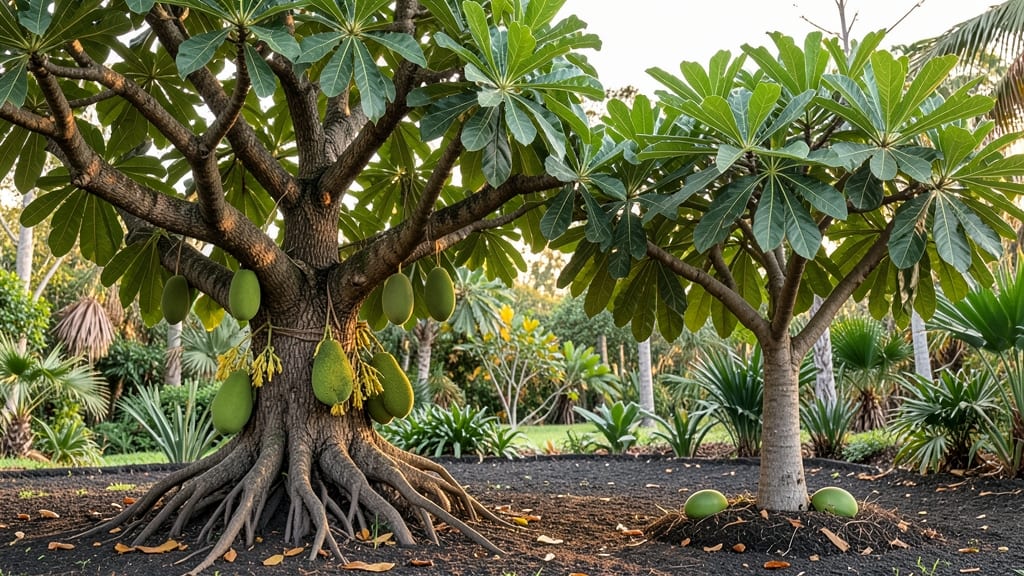
Growing jackfruit and breadfruit from seed means tropical feasts in your backyard. 🌴 These giants thrive where summer never ends—think Florida, Hawaii, or Puerto Rico—but even warm coastal California can work with the right tricks.
I’ve grown both from seed, and the first harvest of sweet, custard-like fruit makes every hour of patience worth it. Both trees love deep, well-draining soil and full sun, but jackfruit handles slightly cooler nights better than breadfruit.
Start seeds in pots under shade cloth, then transplant when they’re 2–3 feet tall. Breadfruit grows faster (ready in 3–5 years), while jackfruit takes 5–7 years—but the fruit size makes up for the wait (some jackfruits weigh 80+ pounds!).
Once established, these trees become self-sufficient, needing only occasional pruning to shape their sprawling canopies. The real magic? You’ll harvest enough to share with neighbors—or freeze slices for smoothies year-round. Just watch for fruit flies and scale insects, which love young trees.
Perfect for homesteaders, foodies, or anyone dreaming of a backyard orchard. Here’s how to turn those tiny seeds into shade-providing giants.
The first product explained
Meet your tropical superstar: the Artocarpus duo! 🌴✨ Whether you're dreaming of lush orchards or just want to grow a few trees in your backyard, jackfruit and breadfruit are the ultimate tropical powerhouses. These fast-growing, low-maintenance trees deliver huge rewards—think massive, flavorful fruits, edible leaves, and even sustainable wood—all while thriving in warm climates. Let’s dive into the specs, features, and everything you need to know to bring these tropical giants into your life!
🌱 Specs & Features
Jackfruit and breadfruit trees are serious growers, but they’re also surprisingly adaptable. Here’s what you can expect:
- Size: Both trees can reach 60–100 feet tall (though dwarf varieties stay manageable at 15–25 feet).
- Growth Rate: Blazing fast! These trees can grow 3–6 feet per year under ideal conditions.
- Fruit Size:
- Jackfruit: Up to 80 lbs! (Yes, really—some weigh as much as a small child!)
- Breadfruit: 1–10 lbs, but packed with dense, starchy goodness.
- Harvest Time: Typically 5–7 years for full production, but some varieties bear fruit sooner.
- Climate Zones: Thrives in USDA Zones 10–12 (or tropical/subtropical regions). Can tolerate brief cold snaps if protected.
- Soil Preference: Well-draining, fertile soil with a slightly acidic to neutral pH (6.0–7.0).
- Water Needs: Moderate—once established, they’re drought-tolerant but love consistent moisture when young.
👨🌾 Who’s This For?
These trees are a game-changer for:
- 🌿 Home gardeners in warm climates looking for high-yield, low-maintenance tropical crops.
- 🏡 Urban farmers with space for a small orchard (dwarf varieties are perfect for patios!).
- 🍽️ Foodies & chefs who love versatile, gluten-free, and sustainable ingredients.
- 🌍 Eco-conscious growers—these trees improve soil health, provide shade, and even support local ecosystems.
- 💰 Budget-savvy plant parents—seeds are affordable, and the payoff is huge!
$ Price Point & Value
Ready to invest in your tropical future? Here’s the breakdown:
| Item | Price Range | Notes |
|---|---|---|
| Seeds (pack of 5–10) | $10–$30 | Cheap upfront cost, but huge long-term rewards! |
| Young saplings (3–5 ft tall) | $30–$80 | Faster growth, but pricier. Check local nurseries for tropical varieties. |
| Dwarf grafted varieties | $50–$150 | Perfect for containers or small spaces—worth every penny! |
| Ongoing care (fertilizer, pest control) | $20–$50/year | Minimal once established—these trees are tough! |
💡 Pro Tip: Start with seeds if you’re patient, or splurge on a grafted dwarf tree for instant gratification (and Instagram-worthy harvests!).
The second product explained
Meet your tropical superstar: Breadfruit! 🌴 If jackfruit stole the spotlight with its meaty texture, breadfruit is the humble, versatile MVP that’s quietly revolutionizing kitchens worldwide. Whether you're a homesteader, a chef, or just a plant parent craving something unique, this fruit tree is a game-changer. Let’s dive into why breadfruit deserves a prime spot in your garden—or your grocery cart.
🌱 Specs & Features
Breadfruit (Artocarpus altilis) is a fast-growing, hardy tree that thrives in tropical and subtropical climates. Here’s what sets it apart:
- Size: Mature trees can reach 60–100 feet tall (though dwarf varieties stay around 20–30 feet), making them perfect for large yards or agroforestry systems.
- Growth Speed: Ready to bear fruit in 3–5 years (some varieties even sooner!), with peak production between years 5–10.
- Fruit Characteristics:
- Ranges from 6–12 inches in diameter, with a rough, spiky exterior (don’t let that fool you—inside is smooth and starchy!)
- Colors: Green when unripe, turning yellow, orange, or brown as it matures.
- Texture: Creamy, potato-like when cooked—hence the name!
- Climate Zones: Thrives in USDA Zones 10–12 (and beyond with protection). Loves heat, humidity, and well-draining soil—think Hawaii, Florida, or Southeast Asia!
- Yield: A single tree can produce 100–200 fruits per year once mature. That’s serious food security!
🎯 Target Users
Breadfruit isn’t just for tropical locals—it’s for everyone who loves:
- 🌿 Sustainable living: Breadfruit is a perennial crop, meaning no replanting every year. Plus, it’s drought-tolerant once established!
- 👨🍳 Chefs & home cooks: Use it like potatoes, plantains, or even bread (yes, really!). It’s gluten-free, high in carbs, and endlessly adaptable.
- 🌍 Global food enthusiasts: Native to the Pacific Islands, breadfruit is a cultural staple—grow it to connect with heritage or explore new flavors.
- 🏡 Urban farmers & homesteaders: Compact varieties fit well in large containers, making it ideal for small spaces.
- 💚 Eco-warriors: Breadfruit trees improve soil health, provide shade, and support biodiversity.
💰 Price Point & Value
Breadfruit plants and seeds vary in cost based on variety and source, but here’s the breakdown:
| Item | Price Range (USD) | Where to Buy |
|---|---|---|
| Seedlings (mail-order) | $20–$50 | Specialty nurseries (e.g., Tropical Fruit Nurseries) |
| Grafted dwarf varieties | $50–$100 | Online plant shops or local tropical plant markets |
| Seeds (for propagation) | $10–$30 | Etsy, eBay, or seed exchanges |
| Mature trees (for established gardens) | $100–$300+ | Local agricultural auctions or farm sales |
💡 Pro Tip: Start with a dwarf variety if you’re in a cooler microclimate or limited on space. They’re easier to manage and still pack a punch!
With breadfruit, you’re not just buying a plant—you’re investing in a lifelong food source that’s cheaper than grocery store staples once established. Plus, the versatility in the kitchen? Priceless.
Head-to-head comparison
Ready to dive into the tropical showdown? Whether you're a backyard gardener or a commercial farmer, understanding the key differences between jackfruit and breadfruit will help you pick the perfect fruit tree for your climate and goals.
Below, we break down their performance, features, cost, and more in a side-by-side comparison—so you can grow with confidence! 🌴🍍
🌱 Growth Performance & Adaptability
If your yard is a tropical paradise (or you’re dreaming of one!), these two giants thrive—but in slightly different ways. Here’s how they stack up:
| Factor | Jackfruit (Artocarpus heterophyllus) | Breadfruit (Artocarpus altilis) |
|---|---|---|
| Climate Zones | 🌡️ Hardiness: USDA Zones 10-12 (tropical/subtropical). Needs warmth year-round and high humidity. Struggles below 50°F (10°C). | 🌡️ Hardiness: USDA Zones 10-12 (but slightly more cold-tolerant than jackfruit). Can handle brief dips to 40°F (4°C) if dormant. Prefers humid, coastal, or rainforest climates. |
| Growth Speed | 🚀 Fast-growing in ideal conditions—can reach 30-50 feet tall in 5-10 years. Early fruiting possible in 3-5 years. | 🌳 Moderate to fast—typically 20-40 feet tall in 5-10 years. Fruits may take 4-6 years to mature. |
| Soil Preferences | ⛏️ Thrives in well-draining, fertile soil with high organic matter. Prefers slightly acidic to neutral pH (5.5-7.0). | 🌿 Adaptable to poor soils but grows best in rich, moist, well-draining soil. Tolerates slightly alkaline conditions (6.0-7.5). |
| Water Needs | 💦 High water demand—especially in dry seasons. Drought-sensitive once established. | 🌧️ Moderate water needs. More drought-tolerant than jackfruit once mature. Prefers consistent moisture but can survive short dry spells. |
Winner for:
- 🌡️ Heat lovers: Jackfruit (needs consistent warmth).
- 🌧️ Drought resilience: Breadfruit (better for variable rainfall).
- 🚀 Fast fruiting: Jackfruit (earlier harvests).
🍽️ Fruit Features & Culinary Uses
These aren’t just trees—they’re culinary powerhouses! But how do their fruits compare in taste, texture, and versatility?
| Factor | Jackfruit | Breadfruit |
|---|---|---|
| Fruit Size & Shape | 🍍 Massive—can weigh 80+ lbs (36+ kg)! Spiky green exterior, creamy yellow-orange flesh when ripe. | 🍞 Round and dense—typically 2-10 lbs (1-4.5 kg). Smooth, green-to-brown skin; starchy, floury interior. |
| Flavor Profile | 🍯 Sweet, tropical, and complex—reminds some of pineapple, mango, and banana. Ripe flesh is soft and custard-like. | 🥔 Mild, nutty, and starchy—tastes like a mix of potato, artichoke, and chestnut. Texture is floury when cooked. |
| Culinary Uses |
|
|
| Nutritional Highlights |
|
|
Winner for:
- 🍽️ Versatile cooking: Jackfruit (better for meat substitutes and desserts).
- 🌾 Starch staple: Breadfruit (ideal for gluten-free baking and sides).
- 💪 Nutrient density: Tie! Jackfruit for vitamins**, breadfruit for carbs.
💰 Cost & Accessibility
Budget matters! Here’s how these tropical trees compare in terms of startup costs, maintenance, and long-term value:
| Factor | Jackfruit | Breadfruit | |||||||
|---|---|---|---|---|---|---|---|---|---|
| Seedling Cost | $20–
Which one should you choose?So, you’re ready to grow your own jackfruit or breadfruit—but which one should you choose? The answer depends on your goals, climate, and what you’re hoping to harvest! Here’s a quick verdict and recommendation to help you decide like a pro. 🌴🌱 🌍 For Climate & Space:
🍽️ For Culinary Use:
📅 For Speed & Patience:Jackfruit trees take 3-5 years to bear fruit, but they’re faster to germinate (ready in 6-12 months). Breadfruit is slower to start (1-2 years to sprout) but may produce fruit in 4-6 years. If you’re impatient, go jackfruit! 💡 Pro Tip for Hybrid Growers:Why not both? Many tropical homesteaders plant one of each to diversify their harvest. Jackfruit for sweet, savory dishes and breadfruit for starchy staples—it’s the ultimate tropical duo! 🌟 Final Verdict:
Ready to plant? Grab your seeds, pick your zone, and let nature do the rest! 🌱💚 |