
Plants
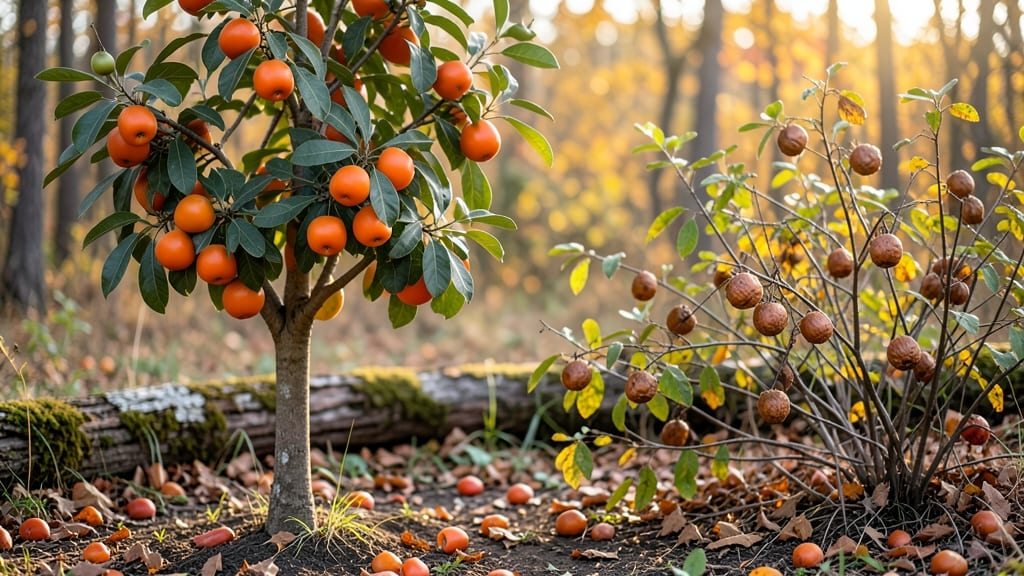
A persimmon fruit looks like a small, round acorn squash or tomato, usually 2-4 inches wide with a flattened top and bottom. Its skin transitions from greenish-yellow to vibrant orange-red when fully ripe, featuring a glossy sheen and a small stem at the top. Before ripening, the fruit feels rock-hard and bitter, while ripe persimmons grow soft and develop a sweet, honey-like flavor.
A persimmon's appearance changes dramatically as it ripens, making visual cues your best tool for determining edibility. 🌟 The skin color shifts from dull green to rich orange, often with a waxy shine when fully mature—this is especially noticeable in Fuyu varieties, which can be eaten firm.
Meanwhile, Hachiya types soften dramatically, sometimes even becoming jelly-like when overripe. The stem also dries out and shrinks as the fruit matures, while unripe persimmons stay firm to the touch, almost like a small pumpkin. These visual and tactile clues help you avoid the astringent bite of underripe fruit.
For gardeners or market shoppers, timing matters too. Persimmons ripen in late fall, and their color deepens with exposure to sunlight. 🍂 If you're picking from a tree, look for fruits that have fallen naturally—they're usually the sweetest.
Store-bought persimmons often need a few days at room temperature to soften properly, so don't rush the ripening process. This gradual transformation from hard to tender is what makes identifying the perfect persimmon so rewarding.
💡 In This Article
- Persimmon Fruit Anatomy and Skin Color Variations
- How to Identify Ripeness in Persimmons by Appearance
Persimmon fruit anatomy and skin color variations
Persimmons come in two primary varieties—Fuyu (flat and squat) and Hachiya (tall and teardrop)—each with distinct shapes that influence their culinary use. Fuyu persimmons resemble a small, flattened tomato or acorn squash, typically 3-4 inches wide with a broad, slightly ribbed base.
Hachiya types, on the other hand, grow taller and narrower, often reaching 4-5 inches long with a tapered top, similar to a mini pumpkin. The skin texture also varies: Fuyus stay firm even when ripe, while Hachiyas soften dramatically, sometimes becoming almost mushy when fully mature.
The color transformation is one of the most striking features of persimmons. Unripe fruits start with a dull greenish-yellow hue, often with a waxy coating that protects against pests.
As they mature, the skin deepens to orange-red shades, sometimes with a glossy sheen that’s more pronounced in Fuyu varieties. Sunlight exposure accelerates this change—fruits on the sunniest side of the tree develop richer colors faster.
For example, a Hachiya persimmon might shift from pale green to a deep crimson in just 2-3 weeks during peak fall ripening, while Fuyus stay in the orange-yellow range even when fully edible.
What most people don’t realize is how the stem condition reveals ripeness. A fresh, green stem indicates an unripe fruit, while a dried, shriveled stem signals maturity. This is especially useful for Hachiyas, which can’t be eaten until fully soft.
The contrast between the two varieties extends to their internal structure too: Fuyus have a thin, papery skin that’s easy to peel, while Hachiyas develop a thicker, more fibrous exterior when ripe. This anatomical difference explains why Fuyus are often eaten raw, while Hachiyas require cooking to soften their texture.
Seasonal variations also play a role in appearance. Early-season persimmons tend to be smaller and paler, while late-season fruits grow larger and develop more intense colors. In cooler climates, persimmons may ripen more slowly, maintaining a duller orange hue compared to their sun-drenched counterparts in warmer regions.
This geographic influence means a persimmon from California might look brighter than one from the Pacific Northwest, even if both are fully ripe.
Here’s a quick visual comparison to help you spot the differences:
- Fuyu: Flat, squash-like shape; stays firm when ripe; skin turns orange-yellow with a glossy finish
- Hachiya: Tall, teardrop shape; softens to jelly-like texture; skin deepens to deep red-orange
- Unripe: Hard as a rock, greenish skin, fresh stem
- Ripe: Gives slightly to touch, vibrant color, dried stem
The science behind these color changes involves carotenoid pigments, which become more active as the fruit matures. These compounds not only create the vibrant hues but also contribute to the sweetness you taste when fully ripe. 🌟