
Trees
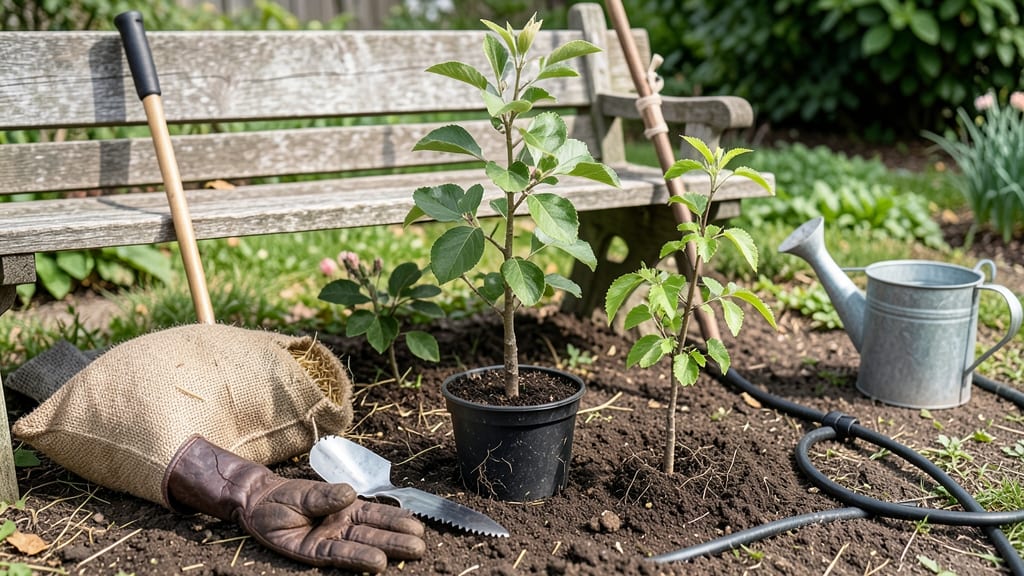
Planting fruit trees in Utah requires knowing the exact chill-hour and frost-free timing for your region—miss it, and your 🍎 saplings could freeze before they even leaf out.
Utah’s climate is anything but simple: high deserts, mountain valleys, and sudden late frosts mean the wrong move can turn your orchard dream into a costly lesson.
But with the right planting window—whether you’re in Salt Lake City, St. George, or the Wasatch Front—you can set your trees up for years of harvests.
Most Utah growers should aim for late winter to early spring, but the critical window shifts depending on your elevation and microclimate. A peach tree in St. George needs 200 chill hours, while an apple in Park City thrives with 800+.
Here’s how to match your tree to your zone and lock in the best frost-free timing.
We’ll cover soil prep, mulching tricks to beat Utah’s dry spells, and emergency frost protection—so you can plant with confidence and watch your orchard grow.
Utah’s chill-hour zones: matching fruit trees to your location’s winter needs
Utah’s diverse elevations and cold winters create 5 distinct chill-hour zones, ranging from 200 to 1,200+ hours below 45°F. These zones determine which fruit trees will thrive in your backyard. Choosing the wrong variety can mean poor pollination or no fruit production, even if your tree survives.
Let’s break down how to match your location’s chill hours to the perfect fruit trees.
In Southern Utah (like St. George), you’ll find 200–400 chill hours, ideal for low-chill varieties like peaches and apricots. Meanwhile, Northern Utah (e.g., Salt Lake City) sits in 600–800 chill hours, perfect for apples and cherries.
High-elevation areas like Park City can reach 1,000+ chill hours, supporting hardy varieties like sour cherries and European plums.
Chill hours are critical because fruit trees need a cold dormancy period to set buds for spring blooms. Too few chill hours, and your tree may bloom poorly or drop fruit. Too many, and tropical varieties (like citrus) will fail to survive. Here’s how to align your fruit tree choices with Utah’s zones:
If you’re in Salt Lake City or nearby, your 600–800 chill hours make apples and pears ideal choices. Look for dwarf varieties like ‘Liberty’ apple or ‘Seckel’ pear, which are disease-resistant and space-efficient.
In Park City, where winters are harsher, sour cherries and plums thrive due to their high chill-hour tolerance.
For St. George gardeners, focus on low-chill fruits like peaches and figs. Varieties such as ‘Redhaven’ peach (300–400 chill hours) or ‘Celeste’ fig (0–200 chill hours) will bloom and fruit reliably. Avoid planting high-chill apples here—they’ll fail to set fruit despite surviving the winter
Best planting months in Utah: frost-free timing by region (with critical deadlines)
Utah’s diverse geography means your fruit tree planting window depends heavily on where you live. Northern Utah’s high desert and mountain valleys (like Ogden or Provo) have later frost dates, while Southern Utah’s St. George and Cedar City regions can plant weeks earlier.
Missing these deadlines risks root shock or winter damage—so timing is everything.
To avoid guesswork, use the Utah Climate Center’s frost maps or your local USDA Plant Hardiness Zone (most of Utah falls in zones 5–8).
For example, Salt Lake City (Zone 6a) typically has its last frost around April 15, while St. George (Zone 8b) often sees frost-free conditions by February 15. Microclimates—like sheltered valleys or urban heat islands—can shift these dates by 2–4 weeks.
📅 Utah Fruit Tree Planting Deadlines by Region
- Southern Utah (St. George, Cedar City): February 1–March 15 (earliest zone, plant bare-root saplings ASAP for root growth before heat stress).
- Central Utah (Provo, Park City, Heber): March 15–April 15 (critical window—avoid planting after April 30 to prevent summer stress).
- Northern Utah (Ogden, Logan, Cache Valley): April 1–May 1 (wait until soil warms above 40°F; late plantings risk late-spring frosts).
⚠️ Pro Tip: For container-grown trees, extend your window by 2–3 weeks—they establish faster than bare-root.
For bare-root trees, prioritize dormant-season planting (late winter/early spring) to let roots establish before summer heat. If you’re planting container-grown trees, you can push the window slightly later—even into May—but water deeply 2–3 times per week to compensate.
In high-elevation areas (like Park City), wait until after Mother’s Day to avoid late-spring snow.
Check your local Almanac frost dates or use the National Weather Service’s point forecast for real-time updates. If you’re in a microclimate (e.g., a sunny south-facing slope), you might plant 2 weeks earlier than the regional average.
Conversely, cold air pockets (like river valleys) can delay frost-free dates by 10+ days.
Once you’ve nailed the timing, soil prep is your next priority. Utah’s alkaline soil (pH 7.5–8.5) needs gypsum or sulfur to sweeten it, and compost to improve drainage. Amend the planting hole with 50% native soil and 50% organic matter—this mimics natural forest conditions and reduces transplant shock.
Water immediately after planting to settle the roots, then mulch with 3–4 inches of wood chips to retain moisture.
Remember: Peach and apricot trees need 400–700 chill hours, while apples and pears thrive with 800–1,200 hours. If you’re in a low-chill zone (like St. George), opt for low-chill varieties like ‘Bonanza’ peach or ‘Harvest Queen’ apple.
Planting at the right time ensures your trees bloom, fruit, and survive Utah’s extremes—so don’t wait until the last minute!