
Trees
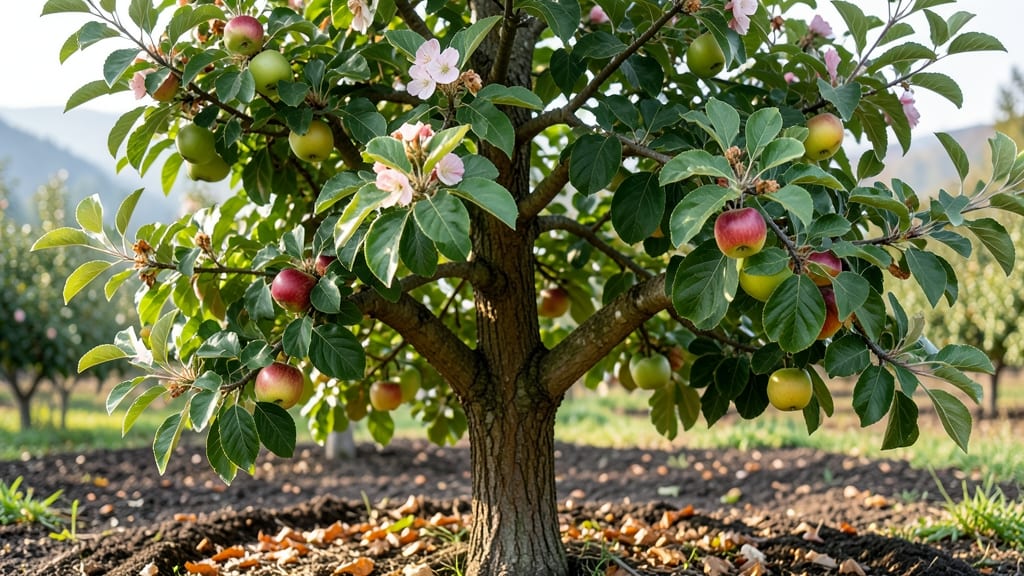
One apple tree can produce fruit if it's a self-pollinating variety like 'Anna', 'Golden Delicious', or 'Gravenstein', though most varieties need another compatible tree nearby for best results.
A single apple tree can indeed bear fruit if it's one of the few self-pollinating varieties that don't rely on other trees. 🌳 These trees carry both male and female reproductive parts, allowing them to fertilize themselves.
However, even self-pollinating trees often produce more abundant fruit when bees carry pollen between branches. For home gardeners with limited space, choosing a self-fertile variety like 'Liberty' or 'Enterprise' can still yield decent harvests, though yields may be smaller compared to cross-pollinated orchards.
Most commercial apple varieties, like 'Fuji' or 'Gala', require cross-pollination from another compatible tree to set fruit properly. This is why orchards often plant multiple varieties together. The key is ensuring both trees bloom at the same time and have compatible pollen.
Even with self-fertile trees, gardeners should still consider planting two varieties for better fruit development and genetic diversity.
💡 In This Article
- How Apple Tree Pollination Works
- Best Self-Fertile Apple Tree Varieties for Home Gardens
How apple tree pollination works
Apple trees reproduce through a process called sexual reproduction, where pollen from the male part (anther) must reach the female part (stigma) of the flower. Most apple varieties are outcrossing, meaning they require pollen from a genetically different tree to produce fruit.
This is why orchards plant multiple varieties together—bees and wind transfer pollen between trees, creating genetic diversity and stronger fruit sets. The pollen grains contain sperm cells that fertilize the ovules inside the flower, leading to fruit development.
Self-pollinating apple trees, like 'Golden Delicious', carry both male and female reproductive organs, allowing them to fertilize themselves. However, even these varieties often produce better yields when bees carry pollen between branches, a process called geitonogamy.
The key difference is that self-pollinating trees can still set fruit without another tree, while cross-pollinated varieties rely entirely on external pollen sources. For example, 'Gravenstein' can produce fruit alone but thrives when planted near 'McIntosh', which blooms at the same time and has compatible pollen.
Temperature and timing play critical roles in pollination success. Apple blossoms open when daytime temperatures reach 55-60°F and nights stay above 40°F. Bees are most active between 10 AM and 4 PM on sunny days, making this the prime window for pollen transfer.
Cold springs or late frosts can disrupt this process, leading to poor fruit set. Even self-fertile trees may struggle if pollinators are scarce or weather conditions are unfavorable, resulting in smaller or fewer apples.
Cross-pollination isn't just about quantity—it also improves fruit quality. When two compatible varieties exchange pollen, the resulting apples often have better flavor, texture, and disease resistance due to hybrid vigor. For instance, planting 'Honeycrisp' near 'Zestar!' can produce apples with enhanced sweetness and crispness compared to self-pollinated fruit.
This genetic mixing is why commercial orchards prioritize diverse plantings, even if some trees are technically self-fertile.
Another fascinating aspect is how apple trees prioritize resources. If a tree isn't pollinated properly, it may drop excess flowers or produce small, misshapen fruit—a phenomenon called June drop. This natural process conserves energy for the remaining fruit, which then grows larger.
Self-pollinating trees may still experience June drop if pollination is inefficient, but the effect is usually less severe than in cross-pollinated varieties that rely entirely on external sources.
For home gardeners, understanding these mechanisms helps maximize yields. Even with self-fertile trees, planting a second variety nearby can double fruit production and introduce new flavors. The trade-off? More trees mean more space and maintenance, but the reward is often worth it for serious apple enthusiasts. 🌿