
Propagation
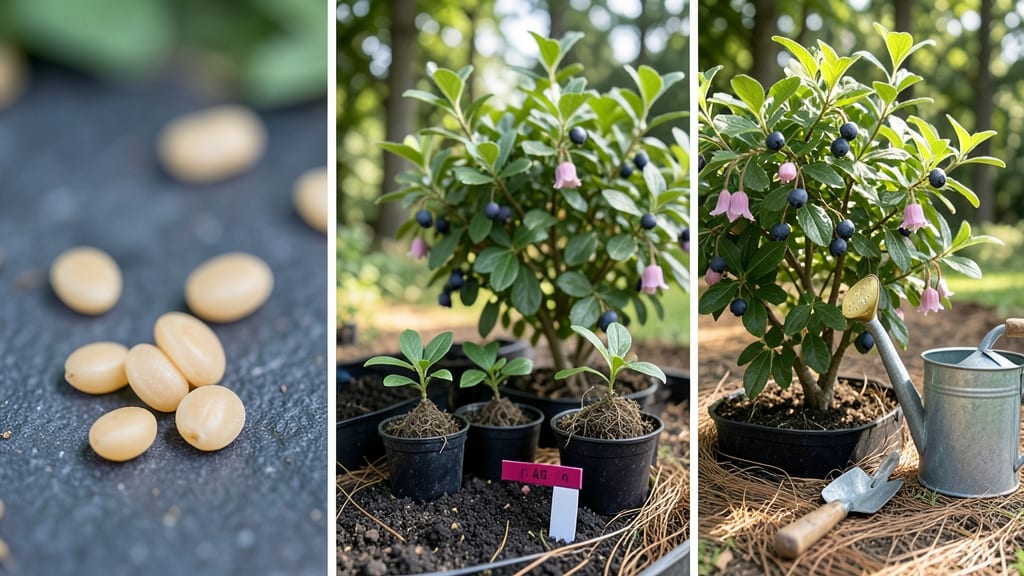
Growing blueberries from the fruit is possible but challenging, as most store-bought varieties are hybrid seeds that produce weak, slow-growing plants with unpredictable berry quality. Success rates improve with fresh, organic seeds or layering/cuttings from mature bushes instead of relying on seeds alone.
You can absolutely propagate blueberries from fruit, but the results depend heavily on seed quality and method. 🌱 Store-bought berries often come from sterile hybrids that won't grow true to type, while heirloom varieties or organic seeds have better success rates.
The key is patience—blueberry seeds require stratification (cold treatment) for 3-6 months before germination, and even then, seedlings may take 2-3 years to bear fruit. For faster results, consider taking cuttings from healthy bushes in late summer, which root more reliably and maintain the parent plant's characteristics.
If you're starting from seed, collect fresh berries from wild bushes or certified organic sources, then extract the seeds carefully. Plant them in a well-draining mix with 50% perlite and keep the soil consistently moist during the stratification period.
For cuttings, use semi-hardwood stems, dip in rooting hormone, and maintain high humidity until roots form. Both methods require acidic soil (pH 4.5-5.5) for optimal growth.
💡 In This Article
- Blueberry Seed Germination Challenges and Success Factors
- Best Propagation Methods for Home Blueberry Growers
Blueberry seed germination challenges and success factors
Blueberry seeds from store-bought fruit often fail because most commercial varieties are hybrid cultivars bred for sweetness and size, not seed viability. These seeds are frequently sterile or produce weak seedlings that take 3-5 years to bear fruit—if they ever do.
Even when viable, the resulting plants rarely match the parent berry's quality, producing smaller, tart fruit with inconsistent ripening. This happens because commercial growers prioritize flavor and shelf life over reproductive traits.
The real challenge lies in blueberry seeds' dormancy requirements. Unlike fast-sprouting seeds (like beans), blueberry seeds need a 3-6 month cold stratification period to break dormancy. During this time, seeds must stay moist at 35-45°F while mimicking winter conditions. Without this step, germination rates drop below 10%.
For example, planting seeds directly in spring without stratification yields sparse, weak seedlings that struggle in summer heat. The key is patience—successful growers often start stratification in late fall for spring planting.
When conditions are ideal, blueberry seedlings emerge with tiny, delicate leaves that resemble maple seedlings but with a slightly waxy coating. These young plants grow slowly—expect only 2-4 inches of growth in their first year. The soil must remain consistently moist (not soggy) during germination, as fluctuating moisture triggers rot.
Using a mix of 50% peat moss and 50% perlite improves drainage while retaining humidity. Even with perfect conditions, only 30-50% of seeds typically germinate, making cuttings a more reliable alternative for most home growers.
Another critical factor is seed source. Seeds from wild blueberries (like lowbush varieties) have higher germination rates than store-bought hybrids. Organic, heirloom seeds from specialty nurseries often perform better because they're less likely to be treated with fungicides that inhibit growth.
For example, seeds from Blueberry 'Jersey' or 'Patriot' varieties (common in home gardens) germinate at 40-60% success when properly stratified, compared to 5-15% for random store-bought seeds. Always check seed viability by floating them in water—sinkers are more likely to sprout.
Temperature also plays a hidden role. After stratification, seeds need 60-70°F soil temperatures to germinate. Below 55°F, growth stalls, while above 75°F, seeds may rot. This is why starting seeds indoors under grow lights (with a heat mat) gives seedlings a head start.
The first true leaves appear in 4-8 weeks post-stratification, signaling it's time to transplant seedlings into individual pots with acidic soil (pH 4.5-5.5). Without proper acidity, seedlings develop chlorosis (yellowing leaves) and fail to thrive.
For those willing to experiment, scarification (lightly sanding seeds) can boost germination by 15-20%. However, this method is risky—over-scarifying damages the embryo. The best approach combines stratification with a warm-cold cycle: 4 weeks at 70°F followed by 12 weeks at 40°F.
This mimics natural seasonal changes and improves viability. Remember, every seed is unique—some may germinate in 2 weeks, while others take 6 months.
If you're serious about growing blueberries from seed, start small with 10-20 seeds to test viability.
Keep detailed notes on stratification timing, soil mix, and germination rates—this data becomes invaluable for future attempts. 🌱 While the process is slow, the reward of watching a seedling grow into a productive bush is unmatched. For faster results, pair seed-starting with cuttings from a local nursery or neighbor's bush.