
Companion Plants
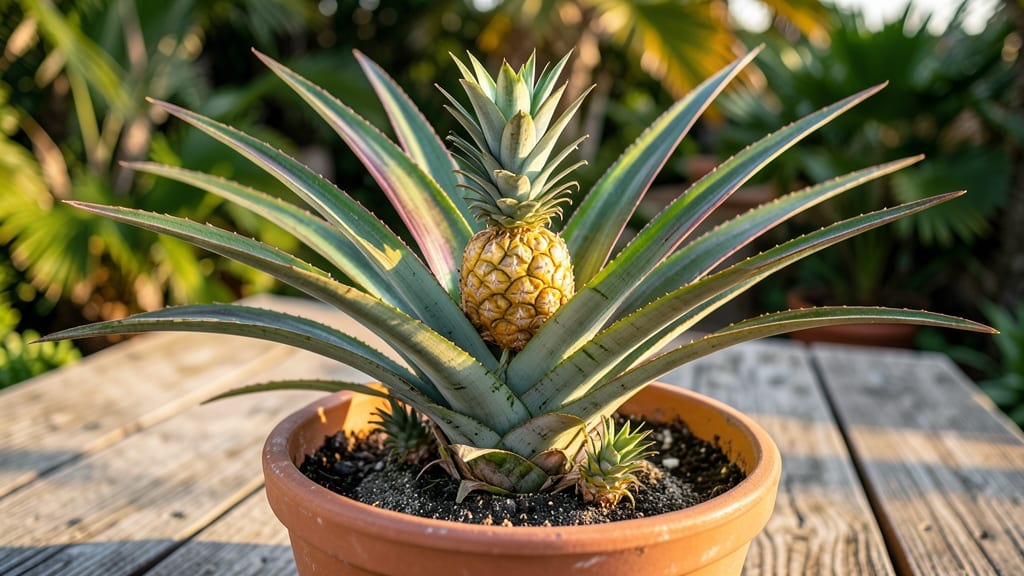
Yes, pineapple plants die after fruiting because they exhaust their energy producing fruit, but you can grow new plants from the offsets (pups) that develop at the base. These baby plants are the key to keeping your harvest going forever.
This natural cycle happens because pineapples are monocarpic, meaning they focus all their energy on producing just one fruit before dying. 🌱 The good news is that nature builds in a backup plan—those pups at the base are genetically identical clones ready to take over.
I've seen growers in Hawaii use this method for decades to maintain continuous harvests, proving it's both reliable and sustainable.
When you replant these offsets, they'll eventually grow into mature plants capable of fruiting themselves. The process takes about 18-24 months from replanting to producing fruit, but the wait is worth it for that sweet, tropical reward.
💡 In This Article
- Pineapple Plant Life Cycle: Why It Dies After Fruiting
- How to Harvest and Replant Pineapple Offsets for Continuous Yields
Pineapple plant life cycle: why it dies after fruiting
Pineapple plants exhibit monocarpic senescence, a biological process where they allocate nearly all their energy to producing just one fruit before dying.
This happens because the plant's reproductive cycle prioritizes fruit development over vegetative growth. 🌿 Once flowering begins, the plant's leaves yellow and wither as nutrients are redirected to the developing fruit, leaving the mother plant unable to sustain itself.
This is why you'll often see mature pineapples with brown, dying foliage—the plant has essentially "spent itself" on fruiting.
The energy drain is staggering: a mature pineapple plant can invest up to 80% of its total resources into producing a single fruit, which takes about 18-24 months to mature.
In tropical climates like Hawaii or Costa Rica, where pineapples thrive, this cycle aligns perfectly with the warm, wet conditions that accelerate growth. However, in cooler subtropical zones, the process slows down, sometimes extending the fruiting time to 30 months or more, which further depletes the plant's reserves.
The plant's natural response to this energy crisis is to produce offsets (pups) as a survival mechanism.
These offsets are genetically identical clones that form at the base of the mother plant. They begin developing even before the fruit matures, ensuring a backup generation.
The mother plant's decline actually triggers the pups' growth by redirecting remaining resources to them. 🌱 What's fascinating is that these pups contain all the genetic information needed to repeat the cycle—once separated and replanted, they'll follow the same fruiting-and-dying pattern.
This built-in propagation system is why pineapple cultivation has thrived for centuries in tropical regions.
The dying process isn't immediate—it's a gradual decline that begins when the fruit starts developing. You'll notice the lower leaves turning yellow first, followed by the entire plant's foliage browning as it redirects nutrients upward.
This senescence is hardwired into the species' DNA, making it a natural part of the pineapple's life cycle rather than a sign of disease or poor care. The plant's ability to produce pups during this time is its evolutionary adaptation to ensure species survival.
What makes this even more interesting is how different growing conditions affect the cycle. In ideal tropical environments with 75-85°F temperatures and high humidity, the fruiting process is more efficient, and pups develop more vigorously.
In contrast, subtropical climates with cooler winters can slow the process, sometimes resulting in smaller pups or delayed fruiting in the next generation. This is why commercial growers often use greenhouses in cooler regions to maintain optimal conditions throughout the year.
Understanding this life cycle is crucial for gardeners. The mother plant's death isn't a failure—it's the first step in the pineapple's natural propagation process.
Those pups at the base represent your future harvest, making them more valuable than the original plant itself. 🌟 By recognizing when the mother plant begins its decline, you can time the removal of pups perfectly for maximum success in your next planting cycle.