
Fertilization
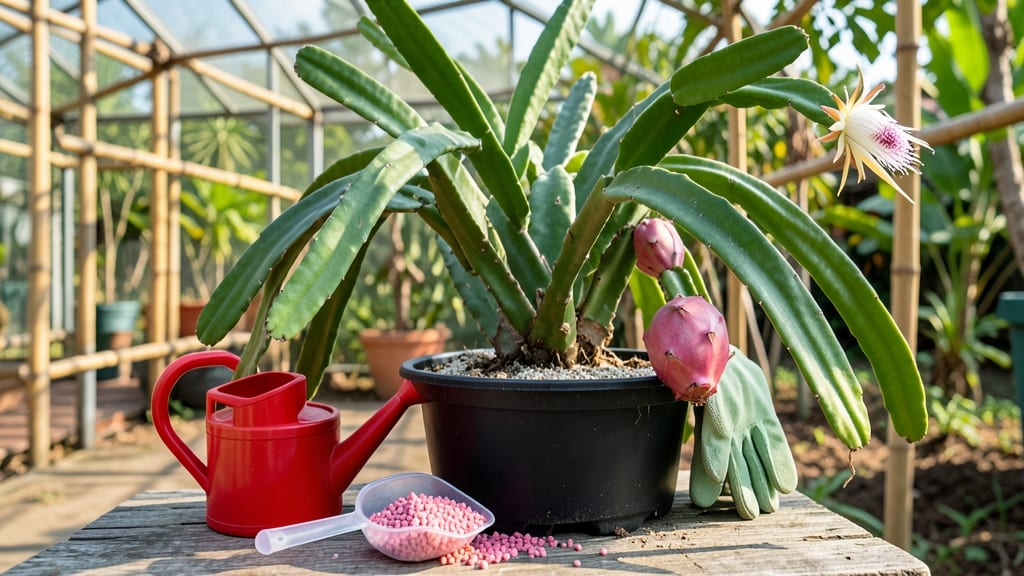
The right dragon fruit fertilizer is the fastest way to boost growth and sweeten those vibrant fruits you’ve been waiting for.
Struggling to get your dragon fruit plant to produce vibrant, sweet fruit? The secret lies in the right fertilizer balance—especially nitrogen and potassium—which directly impact growth speed, flowering, and flavor. Master these ratios to transform your dragon fruit harvest.
Dragon fruit thrives in tropical climates, but even in Zones 10-12, the wrong fertilizer can leave you with lush leaves and no fruit—or bitter, underripe harvests. The key is feeding your plant what it needs at each stage, from leafy growth to flowering and fruiting.
In this guide, I’ll break down the best organic and synthetic fertilizers, the perfect nitrogen-potassium ratios for each growth phase, and how to avoid common mistakes that stunt your dragon fruit’s potential.

Optimal nitrogen-potassium ratios for dragon fruit growth stages
Dragon fruit plants thrive when their fertilizer ratios align with their natural growth cycles. Unlike many fruits, dragon fruit responds dramatically to nitrogen during early growth but demands potassium when flowering and fruiting.
Understanding these shifts ensures lush vines, abundant blooms, and sweet, vibrant fruit. Let’s break down the science-backed ratios for each stage.
The key to success lies in balancing nitrogen (N), which fuels leafy growth, with potassium (K), which strengthens roots and fruit quality. Too much nitrogen late in the season can delay flowering, while insufficient potassium weakens the plant’s ability to handle stress and produce flavorful fruit.
Let’s explore the ideal ratios for each phase.
Vegetative Growth (0-6 months): This early stage focuses on establishing a strong root system and robust vines. A ratio of 3-1-2 (N-P-K) works best here. The higher nitrogen promotes rapid leaf production, while moderate potassium supports early root development. Avoid over-fertilizing with nitrogen, as this can lead to weak stems and fewer flowers later.
Flowering Stage (6-9 months): When your dragon fruit plant begins producing flowers, shift to a 2-3-2 (N-P-K) ratio. The increased phosphorus (P) encourages blooming, while balanced potassium ensures the plant can support the energy demands of flower production. Too much nitrogen here can actually suppress flowering, so reduce it gradually.
Fruiting Stage (9-12 months+): During this phase, prioritize a 1-1-3 (N-P-K) ratio. Potassium becomes critical for fruit sweetness, size, and disease resistance. Phosphorus remains important for energy transfer, but nitrogen should be minimal to prevent excessive foliage at the expense of fruit development.
For organic gardeners, use compost tea (high in nitrogen) during vegetative growth and banana peel compost (rich in potassium) during fruiting. Synthetic fertilizers like 10-10-10 can be adjusted by mixing with potassium sulfate to achieve the right ratios. Always water thoroughly after applying fertilizer to prevent root burn.
Monitor your plant’s response closely. Yellowing leaves may indicate nitrogen excess, while weak stems or small fruit suggest potassium deficiency. Adjust ratios gradually—dragon fruit plants reward precision with healthier growth and sweeter fruit. Start with the recommended ratios and tweak based on your plant’s unique needs.
Pro tip: Use a soil test kit every 6 months to check nutrient levels. This helps you fine-tune your approach without guesswork. Dragon fruit plants are forgiving but respond best when their fertilizer aligns with their natural growth cycles.
With the right ratios, you’ll enjoy a bountiful harvest of vibrant, sweet dragon fruit in as little as 9-12 months. 🐉
Best organic and synthetic fertilizers for dragon fruit plants
Choosing the right fertilizer for dragon fruit can mean the difference between lush vines and abundant fruit or sparse yields. Dragon fruit thrives on a balanced NPK ratio (5-10-10) but needs adjustments during flowering and fruiting stages.
Organic options build soil health long-term, while synthetic fertilizers deliver quick nutrient boosts. Let’s break down the top choices for your dragon fruit plant.
For organic fertilizers, I recommend starting with well-aged compost or worm castings to improve soil structure and provide slow-release nutrients. These options are budget-friendly and perfect for beginners. Synthetic options like balanced NPK mixes or fish emulsion offer faster results but require careful dosing to avoid burning delicate roots.
Each has unique benefits depending on your garden’s needs and your dragon fruit’s growth stage.
Organic vs. Synthetic Fertilizers for Dragon Fruit
Organic Options
- Compost: Improves soil structure, slow-release nutrients, budget-friendly
- Banana Peel Tea: High in potassium for flowering, easy DIY brew, low cost
- Fish Emulsion: Rich in nitrogen, fast absorption, great for leafy growth
- Worm Castings: Gentle on roots, improves microbial activity, long-term benefits
Synthetic Options
- Balanced NPK (5-10-10): Precise nutrient control, fast results, easy to measure
- Potassium Sulfate: Boosts fruit sweetness, targeted potassium, quick uptake
- Slow-Release Granules: Long-lasting feed, reduces over-fertilization risk, convenient
Pros
- 🌱 Compost: Enhances soil health, sustainable, no risk of burn
- 🍌 Banana Peel Tea: Natural potassium source, zero chemical residue
- 🐟 Fish Emulsion: Fast nutrient absorption, improves green growth
Cons
- ⏳ Organic: Slower results, requires frequent reapplication
- 💰 Synthetic: Higher cost, risk of over-fertilization if misused
- 🌡️ Chemical Burn: Synthetics can damage roots if overapplied
When applying organic fertilizers, I mix compost directly into the soil at planting time and top-dress with worm castings every 6-8 weeks. For banana peel tea, I steep peels in water for 24 hours, strain, and dilute to a light brown color before watering.
This method is perfect for boosting potassium levels during flowering. Synthetic options like NPK mixes should be sprinkled around the base of the plant and watered in thoroughly to prevent root burn.
Cost-wise, organic options like compost and banana peels are nearly free if you’re composting kitchen scraps. Worm castings cost around $10-$15 per bag but last for multiple applications. Synthetic fertilizers like potassium sulfate or NPK mixes range from $15-$30 per container, depending on the brand and size.
For home gardeners on a budget, I recommend starting with organic amendments and supplementing with a balanced NPK mix during critical growth stages.
Timing is everything with dragon fruit fertilization. During the vegetative stage (early growth), focus on nitrogen-rich fertilizers like fish emulsion or compost to encourage leafy vines. Shift to phosphorus-potassium blends (like 5-10-10) when buds form to support flowering.
Avoid fertilizing in winter months unless you’re in a frost-free zone, as the plant enters dormancy. Always water your dragon fruit plant after fertilizing to help nutrients absorb into the soil.
For best results, I combine organic and synthetic fertilizers seasonally. Start with a compost base in spring, switch to banana peel tea in summer for flowering, and finish with a slow-release granule in fall.
This approach ensures your dragon fruit gets steady nutrients without overwhelming its system. With the right fertilizer strategy, you’ll see stronger vines, more blooms, and sweeter fruit in no time! 🌱