
Succulent
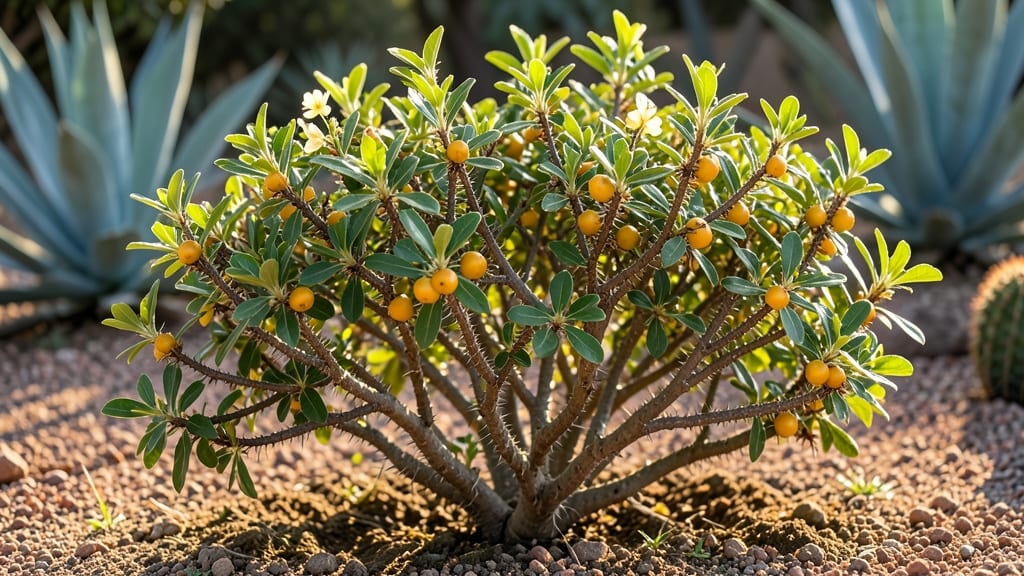
Fruit on cactus, specifically prickly pear fruit, grows on pads of the Opuntia genus and features vibrant colors like red, purple, or yellow. These edible fruits, called tunas, require careful handling due to their spiky exterior but offer sweet, jelly-like flesh when ripe. Harvest when fully colored and firm for optimal flavor and texture.
Prickly pear fruit, or tunas, are nature's candy capsules—bursting with flavor once you learn to handle their protective spines. 🌵 The Opuntia genus produces these fruits on flat, paddle-like pads, and their color shifts from green to deep red, purple, or yellow as they ripen.
What makes them unique is their dual nature: the outer skin is covered in clusters of tiny spines called glochids, while the interior reveals a vibrant, seed-speckled pulp that tastes like a mix of honeydew and watermelon with a hint of citrus.
These fruits thrive in arid climates but can adapt to various conditions, making them a resilient choice for gardeners. The key to enjoying them lies in proper harvesting—waiting until the fruit detaches easily from the pad signals peak ripeness.
Once picked, the real challenge begins: removing the spines without damaging the delicate flesh underneath. With the right techniques, you'll unlock a world of culinary possibilities, from fresh fruit salads to homemade jams and even tequila-infused cocktails.
💡 In This Article
- Identifying Prickly Pear Fruit and Its Growth Stages
- Harvesting and Preparing Prickly Pear Fruit Safely
Identifying prickly pear fruit and its growth stages
The prickly pear fruit, or tuna, begins its life as a small, green bud emerging from the edges of an Opuntia cactus pad. These buds form in clusters along the plant's margins, typically after flowering, and start as firm, oval-shaped protrusions about 1-2 inches long.
The key visual cue during early stages is their glossy, waxy surface—unlike the matte texture of the cactus pads themselves. As they develop, these buds gradually enlarge and shift from green to their mature color, which can range from deep magenta to golden yellow depending on the variety.
For example, the Opuntia ficus-indica variety produces fruits that ripen to a vibrant red, while Opuntia robusta fruits often turn a rich purple. The ripening process takes 4-8 weeks depending on climate, with warmer temperatures accelerating color change.
One telltale sign of ripeness is how the fruit detaches easily when gently twisted—this happens because the fruit's natural sugars increase, causing the stem to weaken. The spines, called glochids, become more pronounced as the fruit matures, forming dense clusters that make handling tricky but essential for identification.
The flesh inside varies in texture: some varieties like Opuntia engelmannii have a firmer, almost granular pulp, while others like Opuntia humifusa offer a softer, jelly-like consistency. The seeds, which are edible but can be fibrous, are embedded throughout the flesh.
What most people don’t realize is that the fruit’s sweetness peaks when it’s fully colored but still slightly firm to the touch—overripe fruits become mushy and lose their vibrant taste. This balance between color and firmness is your best indicator of peak flavor.
Another distinguishing feature is the fruit’s shape: mature tunas are typically 2-4 inches long and 1-3 inches wide, with a slightly oval or pear-like form. Some varieties, like Opuntia streptacantha, develop a more cylindrical shape.
The fruit’s surface may also develop a slight sheen as it ripens, a sign of increased moisture content within. This visual and textural transformation is what makes identifying prickly pear fruit so rewarding—it’s like watching a living piece of art evolve right on the cactus pad.
If you’re comparing prickly pear fruit to other cactus fruits, like those from the Hylocereus genus (commonly known as dragon fruit), you’ll notice key differences.
Dragon fruit grows on hanging vines and has a smooth, leathery skin with no spines, while prickly pear fruits grow directly from the pads and are covered in protective glochids.
The color contrast is also striking: dragon fruit remains green or pink on the outside with white or red flesh, whereas prickly pear fruits showcase their vibrant hues both externally and internally.
To test ripeness at home, try the "thumb press" method: gently press the fruit with your thumb. A ripe tuna will yield slightly under pressure, similar to a ripe peach, without leaving a dent.
Unripe fruits feel rock-hard, while overripe ones may feel soft and leak a syrupy liquid when squeezed. This tactile test, combined with visual cues, ensures you pick fruit at its flavor peak—ready to transform into everything from fresh snacks to gourmet desserts.