
How To
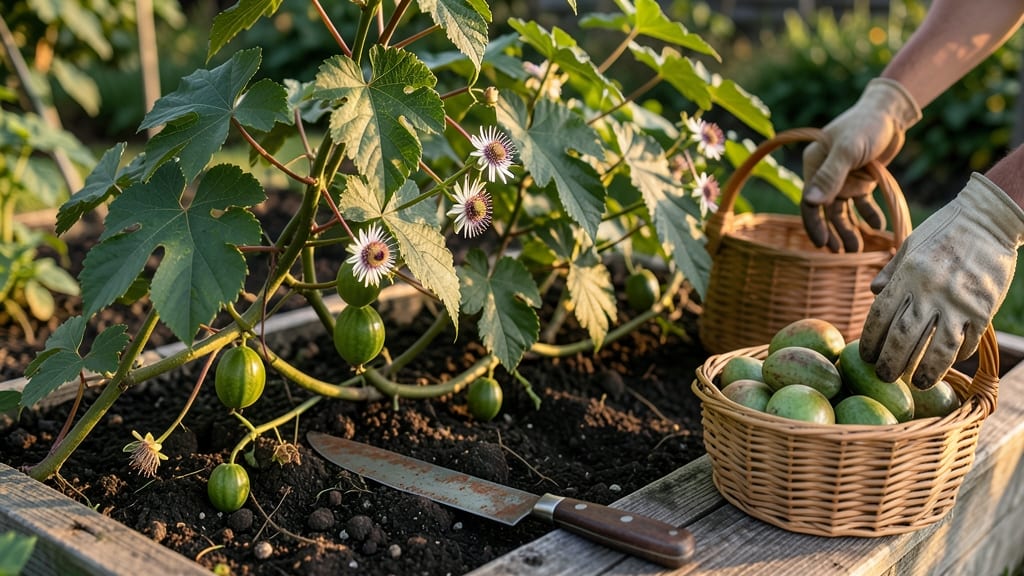
Passion fruit 🍈 is ready to eat when it turns from green to a vibrant yellow-orange, feels soft when gently squeezed, and releases a sweet fragrance.
Picking passion fruit at the perfect moment can mean the difference between a sweet, juicy treat and a bland, seedy disappointment—here’s how to tell when it’s finally ready. One wrong move, and you’ll end up with fruit that’s either too tart or mushy.
Beyond color, the texture and scent are your best clues. A ripe passion fruit should yield slightly under gentle thumb pressure and smell like a mix of citrus and tropical flowers. Overripe fruit? It’ll be too soft and fermented.
In this guide, I’ll walk you through 5 visual cues to spot perfect ripeness, plus how to test it without cutting it open—so you can enjoy that first bite at its absolute best.


5 Visual signs your passion fruit is perfectly ripe for harvesting
Passion fruit ripeness can be tricky to spot—especially if you're new to growing these tropical vines. Unlike many fruits, passion fruit doesn't soften dramatically as it matures, so you'll need to rely on color shifts, skin texture, and even scent cues to know when to harvest.
Missing these visual signals often means picking fruit that's either underripe and seedy or overripe and mealy. Let's break down the exact changes to watch for, including how purple passion fruit differs from yellow varieties.
First, understand that passion fruit ripens on the vine, not after picking like avocados or bananas. This means you must harvest at the perfect moment—no second chances! The fruit starts as a hard green ball and gradually develops its signature colors.
For yellow passion fruit, this means transitioning from green to golden-yellow with slight orange tinges. Purple passion fruit, like the popular 'Granadilla,' turns deep purple-black when fully ripe. Ignoring these color cues is the #1 reason gardeners end up with bland-tasting fruit.
🌱 5 Visual Signs Your Passion Fruit Is Ripe
- 🟡 Color Shift: 70-80% yellow/orange (yellow) or deep purple-black (purple varieties). Green patches mean it needs more time.
- 🤲 Skin Texture: Skin gives slightly when pressed (like a ripe peach) but doesn't dent. Hard fruit is unripe; mushy fruit is overripe.
- 👃 Sweet Aroma: Ripe fruit emits a fruity, floral scent near the stem. No smell = not ready.
- 📏 Size Matters: Fruit reaches full mature size (2-4 inches wide). Small fruit won't ripen properly.
- 🪴 Stem Separation: Fruit twists easily from the vine (no force needed). If it resists, it's not ripe yet.
Let's dive deeper into the color transformation, which is your most reliable indicator. Yellow passion fruit starts as a bright green ball, similar to a lime. As it ripens, the green fades into a pale yellow, eventually deepening to a golden-orange hue.
The key is waiting until at least 70% of the fruit has turned yellow—any less, and the flavor will be underwhelming. For purple passion fruit, the shift is more dramatic: the skin turns from green to a deep indigo or blackish-purple, almost like a ripe blackberry.
Pro tip: If you see white powdery mold on the skin, harvest immediately—this signals overripeness.
The skin texture is another critical clue that many gardeners overlook. A ripe passion fruit should feel slightly yielding when you press it gently with your thumb. Think of it like testing a ripe avocado—it should give just a little but not squish.
If the skin feels rock-hard, the fruit needs more time. Conversely, if it feels mushy or leathery, it's past its prime. This texture test is especially important for yellow varieties, as their color change can be subtle compared to purple types.
For purple passion fruit, the skin may also develop a slightly waxy feel as it ripens.
Don't underestimate the power of scent—your nose is a better ripeness detector than you realize. A ripe passion fruit releases a sweet, tropical aroma near the stem, almost like a mix of mango and citrus.
If you're harvesting in a hot, humid climate, this scent might be more pronounced. In cooler regions, the aroma could be milder, so rely more on the color and texture cues.
If your fruit smells fermented or sour, it's overripe and best used for cooking (like jams or sauces) rather than fresh eating. For purple passion fruit, the scent is often more floral and complex, with hints of blackberry and vanilla.
Size is often the easiest sign to miss because passion fruit grows gradually over weeks. A fully ripe fruit should measure between 2 to 4 inches in diameter, depending on the variety.
If your fruit is smaller than a golf ball, it's not ready—these undersized fruits rarely develop the sweet pulp you crave. In tropical climates, passion fruit can grow faster and larger due to longer daylight hours, while in cooler regions, the fruit may mature more slowly.
Pay attention to the relative size compared to other fruits on the vine—ripe fruit will be noticeably larger than unripe ones.
Finally, the stem separation test is a game-changer for avoiding broken vines. When passion fruit is ripe, it detaches effortlessly when you gently twist it. If you need to pull hard or the stem snaps off, the fruit isn't ready.
This test works best in the morning after dew has dried, when the fruit is firmer. For heavy passion fruit varieties, the fruit might even plop into your hand when ripe. If you're harvesting in windy conditions, hold the vine steady to avoid damaging the plant.
Remember, passion fruit vines are delicate—rough handling can reduce next year's yield.
Regional differences play a huge role in ripeness timing. In tropical zones (USDA 10-12), passion fruit ripens faster due to consistent warmth and humidity, often ready in 4-5 months after flowering.
In subtropical zones (Zone 9), fruit may take 5-6 months to ripen, especially if temperatures dip below 60°F at night.
If you're in a cooler microclimate, consider harvesting slightly earlier (when 50% yellow) and letting it ripen indoors in a paper bag with a banana (the banana's ethylene gas speeds up ripening).
One common mistake is assuming that all passion fruit ripens the same way. For example, 'Sweet Granadilla' (a yellow variety) develops a smooth, thin skin when ripe, while 'Purple Passion Fruit' may have a thicker, slightly rougher texture.
Always check your specific variety's characteristics—some even change color patterns,
How to test passion fruit ripeness without cutting it open
Harvesting passion fruit at the perfect moment is an art—especially when you don’t want to cut open every fruit to check. The good news? You can test ripeness using simple, non-destructive methods that save time and fruit.
These techniques rely on physical cues, weight assessment, and stem separation to confirm when your passion fruit is ready to eat.
Start by examining the fruit’s weight. A ripe passion fruit feels noticeably heavier for its size compared to an underripe one. Gently lift a few fruits in your hand—ripe ones will have a satisfying heft, almost like holding a small melon.
This weight shift happens as the fruit’s sugar content increases and its internal structure softens naturally.
Next, perform the gentle pressure test. Press your thumb against the fruit’s skin near the stem. A ripe passion fruit will yield slightly under pressure but still feel firm—think of it like pressing a ripe avocado.
If the skin springs back immediately, it’s underripe. If it leaves a noticeable dent, it’s overripe and past its prime.
🌱
⚠️ Warning: Overripe Passion Fruit Risks
Fruits that feel mushy or have a fermented smell (sour or yeasty aroma) are overripe. These can cause digestive upset due to high acidity and fermentation. Harvest only when the fruit is firm but yielding—never when it’s soft or wrinkled.
Check the stem separation by gently twisting the fruit at its base. A ripe passion fruit should detach easily from the vine with minimal force—almost like unscrewing a jar lid.
If the fruit resists or the stem snaps off cleanly, it’s not ready yet. This test works best in the morning when the vine is hydrated.
Finally, trust your nose. A ripe passion fruit emits a sweet, floral aroma near the stem. Sniff the fruit before harvesting—if it smells faintly sweet and tropical, it’s ready. Underripe fruits have little to no scent, while overripe ones may smell fermented or overly musky.
Combine these methods for the most accurate results. For example, if a fruit passes the weight test and pressure test but fails the stem separation, wait another day or two. Mastering these techniques ensures you’ll always harvest passion fruit at its peak flavor and texture.
🍈