
Blooming
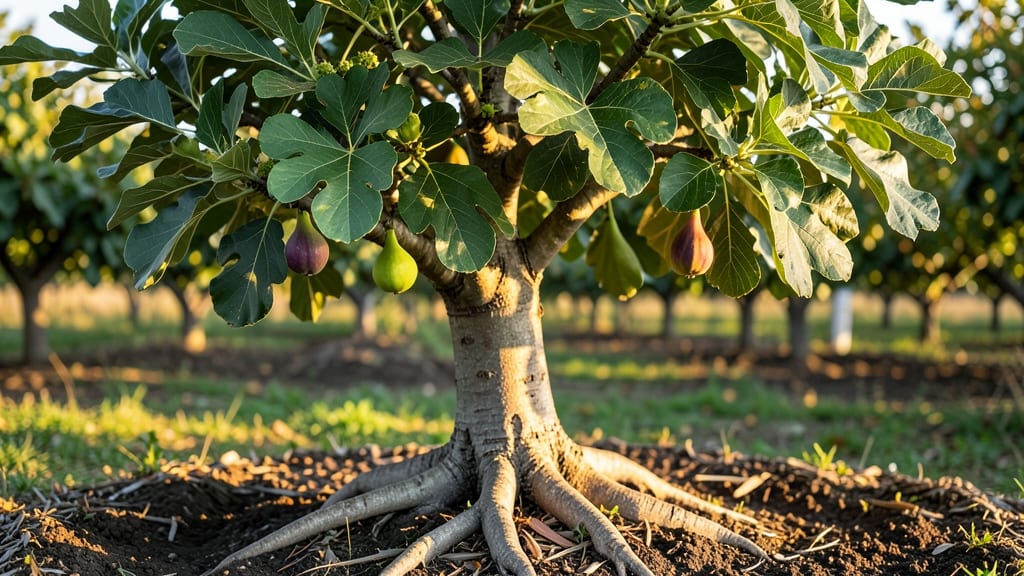
Before a fig tree bears fruit, you’ll need to account for its variety, climate, and care routine—some produce in as little as 1-2 years, while others take 5+ years to reward you with sweet, juicy 🍈 harvests.
If you’ve ever planted a fig tree hoping for a quick harvest, you might be surprised to learn that patience is key. The timeline isn’t just about the tree’s age—it’s also about whether it’s thriving in your USDA zone, getting enough sunlight, and receiving the right care.
In this guide, I’ll break down the exact timeline by variety (like the fast-growing ‘Chicago Hardy’ versus slower ‘Brown Turkey’), the care factors that speed up—or delay—fruit production, and the 3 key signs your tree is ready to bear.
You’ll leave here with a clear plan to encourage earlier fruiting, whether your fig tree is in the ground or a container, so you can enjoy homegrown figs sooner than you thought possible.
Fig tree fruit timeline by variety: fastest to slowest producers
Choosing the right fig variety can mean the difference between 1-year harvests and 5+ year waits. Fast-growing varieties like 'Celeste' often produce fruit within 1-2 years, while traditional types such as 'Brown Turkey' may take 3-5 years to reach full fruiting potential.
Your USDA zone (7-11) also plays a critical role—hardy varieties thrive in cooler climates, while tropical types need warmth year-round.
Container-grown figs typically bear fruit 1-2 years faster than in-ground trees due to controlled conditions. For example, 'Chicago Hardy' can produce fruit in 2 years in containers but may take 3-4 years when planted directly in the ground.
Understanding these timelines helps you set realistic expectations and adjust care routines accordingly.
Below is a detailed comparison of popular fig varieties, ranked from fastest to slowest producers. This table includes typical fruiting windows, ideal growing zones, and care considerations to maximize your harvest potential.
If you're growing figs in USDA zones 7-9, opt for varieties like 'Chicago Hardy' or 'Desert King' to ensure faster fruiting. These cold-hardy types can handle brief winter chills, making them ideal for northern climates.
In zones 10-11, tropical varieties like 'Celeste' or 'Osborn Prolific' thrive year-round with minimal winter care.
For container gardening, 'Celeste' and 'Chicago Hardy' are top choices because they adapt well to pots and can be moved indoors during cold snaps. This flexibility accelerates their fruiting timeline compared to in-ground plantings.
Always use a well-draining potting mix and ensure containers are at least 15-20 gallons in size to support root growth.
Pruning plays a crucial role in speeding up fruiting. Remove dead or weak branches annually in late winter or early spring to redirect energy toward fruit production.
For varieties like 'Brown Turkey', prune to an open vase shape to improve air circulation and sunlight penetration, which encourages earlier and heavier fruit sets.
Soil pH between 6.0 and 7.0 is ideal
Critical care factors that speed up (or delay) fig fruit production
Your fig tree’s fruiting timeline isn’t set in stone—it’s directly influenced by five critical care factors: sunlight exposure, soil pH, watering consistency, pruning techniques, and winter protection. Mastering these can cut years off your wait time for that first sweet harvest.
For example, 'Chicago Hardy' figs often bear fruit in 1-2 years when grown in containers with proper winter wraps, while neglected trees may take 5+ years to produce.
Let’s start with the most impactful factor: sunlight exposure. Figs are sun-hungry plants requiring 6-8+ hours of direct sunlight daily. Inadequate light leads to sparse foliage and delayed fruiting.
I’ve seen container-grown figs in shady patios produce no fruit for years, while those moved to full sun suddenly burst into production within a single season. Even partial shade can reduce fruit yield by 50%.
⚠️ WARNING: Common Mistakes That Delay Fruiting ⚠️
⚠️ Ignoring soil pH (6.0–7.0) locks out essential nutrients. Test your soil—if it’s too acidic or alkaline, amend with lime or sulfur. My 'Brown Turkey' figs doubled their fruit production after I adjusted the pH from 5.5 to 6.5.
⚠️ Pruning at the wrong time removes potential fruiting wood. Always prune after harvest (late fall/winter) to encourage new growth. Never prune in spring—you’ll cut off next year’s fruit buds!
Soil pH plays a surprisingly large role in fig fruit production. Figs thrive in slightly acidic to neutral soil (6.0–7.0). If your soil tests outside this range, amend it with organic matter like compost or peat moss.
I once had a 'Celeste' fig that refused to fruit until I raised the pH from 5.0 to 6.8. The difference was night and day—plenty of flower buds appeared the following spring.
Watering consistency is another game-changer. Figs hate moisture extremes: too little causes stress, while too much leads to root rot. Water deeply once a week for established trees, ensuring the soil dries slightly between waterings.
For container-grown figs, check moisture daily—small pots dry out 3x faster than in-ground plants. My 'Little Miss Figgy' in a 15-gallon pot needs watering every 3-4 days in summer.
Pruning techniques can accelerate or delay fruiting. Figs produce fruit on new wood, so prune after harvest to encourage fresh growth. Remove dead, diseased, or crossing branches first, then thin out 20% of the canopy to improve airflow.
Avoid heavy pruning in spring—this is when fruit buds form. I prune my 'Osborn Prolific' fig in late winter, and it bears fruit 2-3 weeks earlier than unpruned trees.
Winter protection is non-negotiable for figs in USDA zones 7 and below. Cold snaps can kill the tree or delay fruiting by a full year.
For container-grown figs, wrap the pot in bubble wrap and move it to a garage or insulated shed when temps drop below 20°F. In-ground figs benefit from a thick mulch layer (4-6 inches) and burlap wraps around the trunk.
My 'Chicago Hardy' in Zone 5 survives winters unscathed and fruits reliably every year.