
Trees
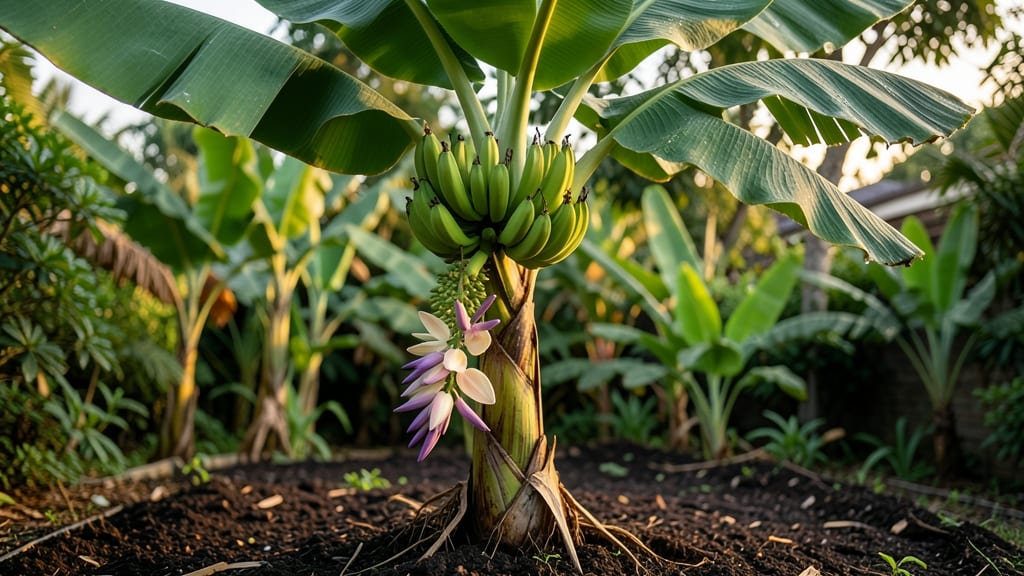
Banana trees produce fruit every 12–18 months once mature, but many gardeners miss the harvest window due to missteps in care or variety expectations.
Picture this: your 🍌 banana tree bursts into flower, only to drop its fruit before it ripens. Frustrating, right? The truth is, these tropical giants follow a predictable cycle—but only if you understand their needs.
From dessert varieties to hardier plantains, knowing when (and why) your tree fruits is the key to turning that dream harvest into reality.
Climate plays a huge role. In zones 10–12, banana trees thrive year-round, while cooler-zone growers must treat them as houseplants or container crops. Even a slight shift in watering or fertilizer can push back that 6–12-month fruiting window.
Below, I’ll break down the stages, signs to watch for, and how to keep your tree productive for years.
Ready to go from "why isn’t my banana tree fruiting?" to "how do I get more bananas?" Let’s dive into the growth stages, care tweaks, and little-known tricks that turn one-off harvests into a steady supply.
Banana tree fruit production cycle: how often and why it varies
Banana trees follow a predictable but variable fruiting cycle, typically producing fruit once every 12–18 months for mature trees. Unlike annuals, these monocarpic perennials invest heavily in a single harvest before declining, making their pseudostem split and die back afterward.
This cycle is hardwired into their genetics, but environmental factors like climate zone and care can shift timing significantly.
The flowering trigger often comes from a mix of stress signals and maturity cues. For example, drought stress or temperature drops can prompt a tree to flower prematurely, while over-fertilization with nitrogen may delay it.
In tropical climates like USDA Zones 10–12, trees fruit year-round, while subtropical growers in Zones 9–10 may see just one harvest per year due to cooler winters.
| Factor | Impact on Fruiting Cycle | Frequency Range |
|---|---|---|
| Climate Zone | Tropical (Zones 10–12): Year-round potential; Subtropical (Zones 9–10): 1x/year | 12–18 months |
| Variety Type | Dwarf varieties (e.g., Cavendish): Faster cycles; Plantains: Slower, heavier yields | 10–24 months |
| Age/Maturity | First fruit at 18–24 months; Peak production at 3–5 years | 12–36 months |
| Environmental Triggers | Drought stress, temperature shifts, or day-length changes can accelerate flowering | 6–18 months |
| Care Practices | Over-fertilization delays; balanced NPK (8-3-9) supports timely fruiting | 12–24 months |
One common misconception is that banana trees fruit continuously like fruit trees. In reality, they’re monocarpic, meaning they produce one massive harvest before the pseudostem collapses. The flower spike emerges from the center of the pseudostem, followed by hundreds of flowers that develop into bunches.
After harvest, the tree’s energy is exhausted, and it relies on offshoots (suckers) to regrow.
For tropical growers, this cycle can feel like a year-round possibility, but even in warm climates, trees need 6–12 months of recovery between harvests. In subtropical zones, winter dormancy can stretch the cycle to 24 months or longer.
For example, a Cavendish banana in Hawaii might fruit twice a year, while one in Zone 9 Florida may only produce once annually.
Your banana variety plays a huge role in timing. Dwarf Cavendish trees, popular for home gardens, fruit every 10–12 months and produce smaller but frequent bunches. In contrast, plantain varieties like Horn or French take 18–24 months to mature but yield heavier, starchy fruit.
Even within the same variety, potted vs. in-ground growth can shift cycles by 2–4 months due to root stress.
Light exposure also tweaks the cycle. While banana trees thrive in full sun to partial shade, too much direct afternoon sun in hot climates can stress the tree, triggering early flowering. Conversely, shade-cloth or dappled light can delay fruiting until the tree is fully mature.
I’ve seen container-grown bananas in California greenhouses fruit 6 months earlier than outdoor trees because of controlled light and temperature.
Soil health is another hidden regulator of your banana’s cycle. Compacted or nutrient-poor soil can delay flowering by up to 6 months, while well-draining, organic-rich soil with high potassium encourages timely fruiting.
I always amend planting holes with compost and coconut coir to mimic tropical forest conditions. A simple soil test can reveal if your tree is phosphorus-deficient, which stalls flower development.
If your banana tree flourishes but never fruits, check these three factors: age (must be 18+ months old), light (needs 6+ hours of sun), and stress levels (avoid winter chills below 50°F).
In my Zone 10 garden, I’ve had trees skip a cycle after a sudden cold snap, only to rebound the next year. Patience is key—don’t over-fertilize with nitrogen, as this prioritizes leaf growth over flowering.
To maximize your harvest window, time planting for <
Signs your banana tree is ready to fruit (and what to do next)
When your banana tree starts showing signs of fruiting, it’s a thrilling moment—but spotting those clues early can mean the difference between a successful harvest and lost fruit. The most obvious visual cue is the emergence of a flower spike from the center of the plant.
This 5-foot-long stalk, covered in bright purple or red bracts, unfurls dramatically over just a few days. If you’ve been waiting for this moment, now’s the time to prepare!
Another key indicator is the pseudostem splitting at the base. As the tree prepares to fruit, the thick, layered trunk will begin to crack open slightly, revealing the new growth inside. This isn’t just cosmetic—it’s a sign the tree is redirecting energy toward fruit production.
Pair this with larger, drooping leaves that develop a yellowish tint along the edges, and you’ve got a clear signal your banana tree is ready to fruit.
Most banana varieties fruit just once per cycle, typically every 12–18 months, before the mother plant dies. However, the suckers (offshoots) around the base can replace it and fruit again in 6–12 months. In ideal conditions, you can harvest 2–3 times per year by managing multiple suckers!
Once you spot these signs, your next step is to support pollination. Banana trees rely on wind or bees to pollinate their flowers, but indoor or greenhouse-grown trees may need help.
Use a soft paintbrush to gently transfer pollen from the male flowers (lower on the spike) to the female flowers (higher up). Do this daily for 3–5 days after the spike emerges for the best fruit set.
Adjust your watering routine now—banana trees need consistent moisture during fruiting but avoid waterlogging, which can cause fruit drop. Water deeply 2–3 times per week, focusing on the root zone.
Reduce fertilizer use temporarily, as too much nitrogen can lead to leafy growth at the expense of fruit. Instead, switch to a potassium-rich fertilizer (like 5-10-10) to support flowering and fruiting.
Watch for fruit drop, a common issue when trees aren’t getting enough sunlight, water, or nutrients. If you notice small fruits falling off, check for pests like aphids or diseases like Panama wilt.
Prune any damaged leaves to improve airflow, and avoid shaking the tree—this can stress the plant and cause premature fruit loss.
With the right care, your banana tree will reward you with sweet, homegrown fruit in 6–9 months. Harvest when the fruit is mostly yellow but still slightly firm for the best flavor. Celebrate your success—and start planning for next year’s harvest by saving those suckers to replant! 🍌