
Size
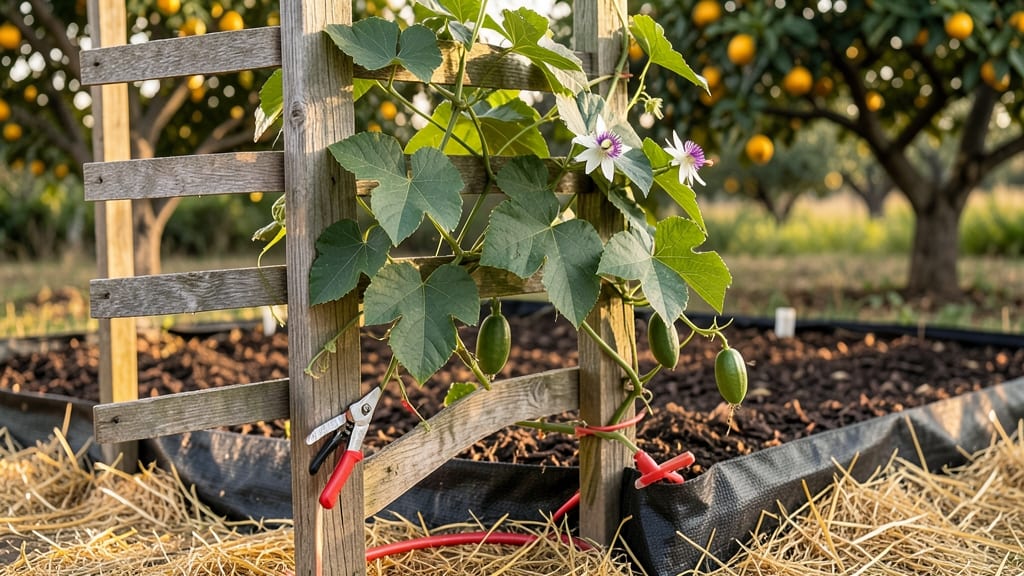
Growing passionfruit from seed to fruit takes three years of patience—but the first taste of that tart-sweet pulp makes it worth every wait. 🌱 I’ve wrestled with these vines through Florida’s humidity and Texas’ heat, and the secret isn’t fancy techniques: it’s matching their tropical needs to your space.
Whether you’re trellising a balcony or letting it sprawl in a corner, these vines deliver exotic fruit with almost no fuss once established.
The real magic happens in the soil and sunlight. Passionfruit thrives in well-draining, slightly acidic soil (think compost-rich loam) and full sun—at least 6-8 hours daily. Most beginners overwater, but these vines hate soggy roots.
A 5-gallon container works for dwarf varieties, while sprawling types need 10+ feet of trellis space. The key? Start small—you’ll prune anyway to shape the vine and encourage fruit production.
By year three, you’ll see those golf-ball-sized fruits hanging heavy with flavor—purple passionfruit bursting with seeds or yellow passionfruit with a sweeter tang. The vines flower prolifically, but you’ll need hand-pollination (gentle brushes work) if bees are scarce.
Even in containers, they reward you with harvests for decades if you keep them fed and pruned.
Here’s the plot twist: passionfruit handles heat better than cold. In cooler zones, grow them in pots you can winter indoors. And no, you don’t need a greenhouse—just a sunny spot and a little extra TLC during chilly snaps. Let’s get those vines climbing!
📚 In This Guide
- What you need
- Instructions
- Tips and common mistakes
- Wrapping up and next steps
What you need
- ● Passionfruit vines: 2–3 healthy plants (purple or yellow varieties work best). Choose disease-resistant varieties like Passiflora edulis or Passiflora ligularis.
- ● Potting mix or garden soil: Well-draining, fertile soil with a pH of 6.0–7.5. For containers, use a mix of 50% potting soil + 50% compost.
- ● Compost or organic fertilizer: 1–2 cups of balanced 10-10-10 fertilizer or a slow-release option like worm castings.
- ● Support structure: For containers: A 5–6 ft tall trellis, stake, or obelisk (diameter: 4–6 inches for stability).
- ● For ground planting: A 10–12 ft long fence or pergola with horizontal wires (spaced 12–18 inches apart).
- ● Mulch: 2–3 inches of straw, wood chips, or pine bark to retain moisture and suppress weeds.
- ● Gloves (heavy-duty for thorny vines).
- ● Trowel or shovel (for digging planting holes or pots).
- ● Pruning shears (sterilized with rubbing alcohol).
- ● Watering can or hose with a gentle spray nozzle (passionfruit hates soggy roots!).
- ● Measuring tape or ruler (to monitor vine growth and spacing).
- ● Drip irrigation system (for consistent watering in hot climates).
- ● Epsom salt (1 tbsp/month in water for magnesium boost).
- ● Frost cloth (if you live in cooler zones—passionfruit hates frost!).
- ● Pollination aid: A soft paintbrush to hand-pollinate flowers (if bees are scarce).
Step-by-step instructions for growing passionfruit
Here’s my tested approach—passionfruit vines reward patience with lush growth and exotic fruit.
🪴 Step 1: Select a Sunny Location and Prepare the Soil
Passionfruit vines thrive in full sun (at least 6-8 hours daily) and need well-draining soil with a slightly acidic to neutral pH (6.0-7.5). Choose a spot with 6-8 feet of horizontal space—these vines grow aggressively. If your soil is heavy clay, amend it with 3-4 inches of compost and a handful of sand to improve drainage.
I always dig a hole twice as wide as the root ball but only as deep as the container it came in. Loosen the sides of the hole to encourage root spread. The key here is avoiding waterlogged roots—passionfruit hates soggy soil. If your area gets heavy rain, consider a raised bed or mound the soil slightly.
🌱 Step 2: Plant and Water Deeply
Remove the vine from its container and gently tease the roots apart if they’re circling. Place it in the hole so the top of the root ball sits level with the soil surface—burying too deep can suffocate the plant. Backfill with the amended soil, pressing lightly to remove air pockets but not compacting it.
Water deeply right after planting—1-2 gallons for each vine—until the soil is moist 6 inches down. Passionfruit roots are shallow but spread widely, so consistent moisture is critical. Mulch with 2-3 inches of organic mulch (like wood chips) to retain moisture and regulate soil temperature. Keep the mulch 2 inches away from the stem to prevent rot.
☀️ Step 3: Provide Support and Prune for Airflow
Passionfruit vines are heavy and need strong trellising—install a 6-8 foot tall post or wire trellis at planting time. Train the main vine along the support, tying it loosely with soft plant ties every 12-18 inches. The vine’s tendrils will cling naturally, but extra support prevents breakage during storms or fruit growth.
Prune lightly in early spring to remove dead or crossing branches, focusing on opening the center of the vine for airflow. Passionfruit is prone to fungal issues in humid climates, so thin out crowded growth to let sunlight and air circulate. I always leave 3-5 strong canes as the main framework—they’ll bear the most fruit.
💧 Step 4: Fertilize and Monitor for Fruit Set
Feed passionfruit vines every 6-8 weeks during the growing season with a balanced fertilizer (10-10-10) or one high in phosphorus (like 5-10-10) to encourage flowering. Apply it 6 inches away from the stem and water deeply afterward. Over-fertilizing leads to leafy growth at the expense of fruit—less is more with passionfruit.
Watch for white or purple flowers in late spring to early summer—this signals fruit will follow in 8-10 weeks. If flowers drop without setting fruit, your vine may need more pollinators (hand-pollinate with a small brush if bees are scarce) or warmer temperatures (below 55°F halts pollination). Keep soil consistently moist but not soggy—stress reduces fruit set.
✂️ Step 5: Harvest and Prune for Next Season
Passionfruit ripens when the skin turns deep purple or yellow, depending on the variety, and the fruit feels slightly soft when gently squeezed. Harvest by twisting gently or cutting with pruners—never pull to avoid damaging the vine. Expect 4-6 fruits per vine in the first year, with yields doubling in subsequent seasons.
After harvest, prune back one-third of the oldest canes to encourage new growth. Remove any weak, diseased, or unproductive wood. In colder climates, protect vines with mulch or frost cloth—passionfruit is tender and won’t survive below 20°F. With minimal pruning and consistent care, your vine will thrive for years, producing fruit well into autumn.
Tips & tricks for perfect passionfruit vine growth
These insights will help you avoid common pitfalls while maximizing your tropical vine's potential.
Site Selection: Passionfruit vines need that full sun (6-8 hours daily) to thrive, but location matters beyond sunlight. Choose a spot protected from strong winds—these vines grow heavy with fruit and can snap easily. I always plant mine near a sturdy fence or wall that can provide additional wind protection while still allowing maximum sunlight exposure. This simple placement can mean the difference between a thriving vine and one struggling with breakage.
Soil Preparation: The soil pH range of 6.0-7.5 is crucial, but don't overlook texture. Passionfruit roots are shallow but extensive, so they need soil that drains well but retains moisture. I've found that mixing in 3-4 inches of compost and a handful of sand creates the perfect balance—like a well-draining sponge for the roots. For heavy clay soils, consider building a raised bed instead of amending in place, as the drainage improvement will be more dramatic and consistent.
Watering Strategy: Those initial 1-2 gallons of water after planting are just the beginning. Passionfruit vines need consistent moisture, but here's the trick: water deeply but infrequently. Aim for about 1 inch of water per week during the growing season, delivered through deep waterings rather than frequent shallow ones. This encourages deep root growth, which makes the vine more drought-resistant. I always check soil moisture by sticking my finger about 2 inches down—if it feels dry, it's time to water.
Pruning Precision: When pruning in early spring, focus on creating an open center rather than just removing dead branches. The goal is to improve airflow and sunlight penetration to the inner growth. I use sharp pruners to make clean cuts at a 45-degree angle just above a leaf node. This technique promotes faster healing and encourages new growth from the right spots. Remember, you're not just shaping the vine—you're creating an environment where fruit can develop properly.
Pro Tips for Grow Passionfruit
- These insights will help you avoid common pitfalls while maximizing your tropical vine's potential.
- Site Selection: Passionfruit vines need that full sun (6-8 hours daily) to thrive, but location matters beyond sunlight.
- Soil Preparation: The soil pH range of 6.0-7.5 is crucial, but don't overlook texture.
Frequently asked questions
Got questions about growing passionfruit?
You’re not alone! Here are answers to the most common concerns—from timing to troubleshooting—so you can cultivate a thriving vine with confidence.
What’s the best climate for growing passionfruit?
Passionfruit thrives in USDA Zones 8–11 with warm temperatures (70–90°F) and full sun (6+ hours daily). In cooler zones, grow it in containers and move it indoors during winter. If you’re in a frost-prone area, choose cold-hardy varieties like 'Purple Haze' or opt for greenhouse growing.
How long does it take for passionfruit to bear fruit?
Patience is key! Vines take 1–3 years to produce fruit, depending on growing conditions. Young vines focus on leafy growth first, so avoid heavy pruning. Provide consistent water, fertilizer, and support (like a trellis) to speed up fruiting. Once established, expect harvests in late summer to fall.
Can I grow passionfruit in containers? Yes—and here’s how!
Use a large pot (15+ gallons) with drainage holes and a well-draining mix (like cactus soil + perlite). Place it in full sun and water deeply 2–3 times weekly. Container-grown vines may fruit slightly later but are perfect for patios or balconies. Pro tip: Rotate the pot occasionally for even sunlight exposure!
Why are my passionfruit leaves turning yellow or dropping?
Yellow leaves usually signal overwatering, nutrient deficiency, or pests. Check the soil—it should be slightly moist but not soggy. Common fixes:
Overwatering? Reduce frequency and improve drainage.
Nutrient deficiency? Feed with a balanced fertilizer (10-10-10) every 4–6 weeks.
Pests (like spider mites)? Spray with neem oil or insecticidal soap.
What’s the difference between passionfruit and granadilla? Can I grow both?
Passionfruit (Passiflora edulis) has hard, wrinkled skin and sweet-tart pulp, while granadilla (Passiflora ligularis) has smooth skin and jelly-like seeds. Both are easy to grow—just ensure they get full sun, support, and similar care. Bonus: Granadilla is more cold-tolerant (Zone 7+).
Wrapping up and next steps
Growing passionfruit is a rewarding journey that brings sweet, tropical flavors to your backyard—with just a little patience and care! 🌱 Whether you’re a beginner or a seasoned gardener, these vines thrive with minimal fuss, offering delicious rewards for years.
Now that you’ve got the know-how, why not start your own passionfruit patch today? Grab your gloves, pick a sunny spot, and let nature do the rest—your taste buds (and future smoothies!) will thank you.
Pro tip: Share your progress with fellow gardeners or tag us—we’d love to see your tropical harvest grow! 🌿