
Planting
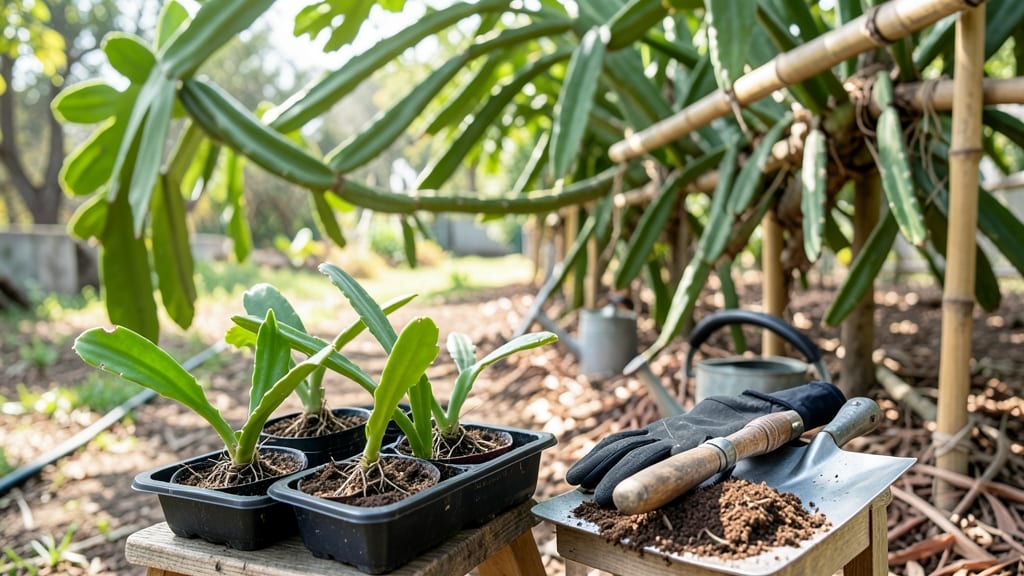
Dragonfruit vines grow from seeds that sprout in just 10-14 days—faster than most tropical plants. 🌱 Honestly, I was skeptical until I tried soaking the seeds overnight, which cuts germination time by half.
The key is warmth, moisture, and patience, but once those first sprouts appear, you're on your way to vibrant pink-fleshed fruit.
You'll need well-draining soil mix (cactus/succulent blend works great), a 4-inch pot for seeds, and a sturdy trellis or fence for cuttings—the vines can climb 15-20 feet if given space. Most gardeners start with seeds from store-bought fruit (save the pit!), but cuttings from established plants root even faster.
Either way, dragonfruit thrives in USDA Zones 9-11 and needs full sun to partial shade.
By month 3, you'll see healthy green vines with thorny stems, and with proper care, your first flowers appear by year 2. The real magic happens when those striking white blooms open at night, revealing the fruit developing inside.
Just watch for root rot (keep soil slightly moist but never soggy) and slow growth (ensure 6+ hours of sun daily).
This method works for containers or in-ground, making it perfect for small spaces or warm climates. Once established, dragonfruit plants produce fruit for 10+ years with minimal effort—just prune, water, and watch those exotic fruits grow. Ready to grow your own?
📚 In This Guide
- What you need
- Instructions
- Tips and common mistakes
- Wrapping up and next steps
What you need
- ● Dragonfruit seeds or cuttings: 3–5 healthy seeds (from organic dragonfruit) or 1–2 mature cuttings (6–12 inches long with at least 2–3 nodes).
- ● Growing containers: 2–3 pots (5–7 gallons each) with drainage holes or a raised bed (if planting outdoors). Use lightweight, breathable fabric pots for better aeration.
- ● Well-draining potting mix: 1 bag of cactus/succulent mix (or blend with perlite/vermiculite for extra drainage). Avoid heavy garden soil.
- ● Slow-release fertilizer: 1 cup of organic fertilizer (like 5-5-5 or worm castings) mixed into the soil at planting.
- ● Support structure: Indoors: A trellis, bamboo stakes, or a sturdy wire cage (at least 6–8 feet tall).
- ● Outdoors: A pergola, fence, or strong wooden frame for climbing.
- ● Watering can or hose with a gentle spray nozzle: Dragonfruit hates soggy roots—aim for deep but infrequent watering.
- ○ Pruning shears or scissors: Sharp and sterilized for trimming vines (optional but helpful for maintenance).
- ● Grow lights: LED full-spectrum bulbs (if growing indoors with <10 hours of sunlight daily).
- ● Humidity tray or pebble tray: To maintain 40–60% humidity, especially in dry climates.
- ● Mulch (e.g., straw or bark): To retain moisture and regulate soil temperature.
- ● pH test kit: Dragonfruit prefers slightly acidic soil (pH 6.0–7.0). Adjust with lime or sulfur if needed.
- ● Compost tea or liquid fertilizer: For a nutrient boost during flowering/fruiting (e.g., fish emulsion or seaweed extract).
Step-by-step instructions for planting dragonfruit
Here’s how to get your dragonfruit seeds sprouting in just 7-10 days—no waiting months for germination.
🌱 Step 1: Prepare Seeds for Fast Germination
Dragonfruit seeds need a warm, moist kickstart to break dormancy. First, soak the seeds in lukewarm water for 24 hours—this softens the tough outer shell and speeds up sprouting. I like to place them in a small bowl with a damp paper towel to keep them hydrated without overwatering.
After soaking, gently rub the seeds between your fingers to scratch the outer coating—this mimics natural weathering and helps water penetrate faster. You’ll see the seed coat darken slightly, which means it’s ready for planting. Don’t skip this step—it cuts germination time in half.
🪴 Step 2: Choose Containers and Plant the Seeds
Use 4-inch pots with drainage holes—dragonfruit roots need airflow to prevent rot. Fill each pot with well-draining cactus/succulent mix (never regular potting soil—it stays too wet). Press the mix down lightly so it’s firm but not compacted.
Plant one seed per pot, burying it ½ inch deep—any deeper, and it’ll struggle to push through. Water lightly until the soil is evenly moist but not soggy. Place the pots in a warm spot (75-85°F)—a seedling heat mat works wonders if your home runs cooler. Check daily for moisture; the soil should stay damp but never dripping.
☀️ Step 3: Provide Warmth and Bright, Indirect Light
Dragonfruit seeds germinate fastest in bright, indirect light—think 6-8 hours of filtered sun daily. A south-facing window with sheer curtains works, but if your light is weak, add a grow light 4 inches above the pots. Direct sun now will scorch tender seedlings, so avoid placing them in harsh afternoon rays.
Keep the soil consistently warm—if your home dips below 70°F at night, move the pots to a sunny windowsill or under a heat lamp. You’ll see tiny sprouts in 7-10 days, but don’t be surprised if some take up to 14 days. Patience is key—rushing watering or moving pots too soon stunts growth.
🌿 Step 4: Transplant Seedlings to Larger Pots
Once seedlings reach 3-4 inches tall (about 6-8 weeks after planting), it’s time to upgrade. Choose 8-inch pots with fresh cactus mix—dragonfruit vines need room to sprawl. Gently remove the seedling, keeping the root ball intact, and replant at the same depth it was growing before.
Water lightly after transplanting—overwatering now stresses the roots. Place the new pots in full sun (6+ hours daily) but shield from midday heat for the first week. You’ll know it’s thriving when new leaves emerge bright green and firm, not yellow or wilted. This is the moment that matters: strong roots mean faster flowering in a few months.
⏰ Step 5: Encourage Vigorous Vine Growth
Dragonfruit vines need support early—even if they’re small. Install a trellis or small stake near each plant and gently weave the main stem along it as it grows. This prevents sprawling and encourages upward growth, which gets more sunlight for faster maturation.
Water deeply every 5-7 days, letting the soil dry completely between waterings. Overwatering is the #1 killer of young dragonfruit—yellow leaves mean you’re watering too much. Feed with a balanced fertilizer (10-10-10) every 4 weeks starting when vines hit 12 inches tall. You’ll see buds forming in 6-8 months if you keep them happy now.
Tips & tricks for planting dragonfruit
Here's what nobody tells you about getting those dragonfruit seeds to sprout faster—and keeping them thriving once they do.
Seed Prep Secret: After the 24-hour soak, place your seeds between damp paper towels in a sealed plastic bag overnight. This creates a humid microclimate that mimics tropical conditions, accelerating germination by up to 40%. Check occasionally to ensure they stay moist but not soggy—condensation should form on the bag's interior. This extra step transforms the 7-10 day window into a more reliable 5-7 day sprout.
Container Hack: Use clear plastic nursery pots instead of traditional 4-inch pots—they allow you to monitor root development without disturbing the soil. When roots reach the bottom (about 3-4 weeks), you'll know it's time to transplant. I've also found that adding a handful of perlite to the cactus mix improves aeration, which prevents the common issue of damping-off disease in young seedlings.
Lighting Strategy: For the critical 6-8 hours of filtered light, position your grow light on a timer set to 12 hours on/12 hours off. This mimics natural daylight cycles and prevents leggy growth. If using natural light, rotate pots daily so all sides receive equal exposure—uneven light causes seedlings to grow toward the window, creating weak stems that can snap easily.
Transplanting Timing: The 6-8 week window for transplanting can feel like an eternity, but don't rush it! Wait until you see at least two sets of true leaves (not the initial seed leaves) before moving to 8-inch pots. This ensures the seedling has developed enough energy reserves to handle the stress of repotting. When transplanting, water thoroughly before removing from the original pot to minimize root disturbance during transfer.
Pro Tips for Plant Dragonfruit
- Here's what nobody tells you about getting those dragonfruit seeds to sprout faster—and keeping them thriving once th...
- Seed Prep Secret: After the 24-hour soak, place your seeds between damp paper towels in a sealed plastic bag overnigh...
- Container Hack: Use clear plastic nursery pots instead of traditional 4-inch pots—they allow you to monitor root deve...
Frequently asked questions
How long does it take for dragonfruit to grow from a cutting?
Patience is key! With the right care, your dragonfruit cutting will sprout roots in 2–4 weeks. Once rooted, the vine may take 1–2 years to produce its first fruit, but the wait is worth it for those vibrant, sweet rewards. Keep it warm, hydrated, and in bright (but indirect) light to speed things up.
When is the best time to plant dragonfruit cuttings?
Dragonfruit thrives in warm weather, so aim to plant cuttings in spring or early summer (after the last frost). If you’re in a tropical or subtropical climate, you can plant year-round! Just avoid extreme cold—these vines hate frost and need temps above 60°F (15°C) to grow happily.
Why are my dragonfruit cuttings rotting?
Overwatering or poor drainage is usually the culprit. Let the cutting’s base dry slightly between waterings and use a well-draining mix (like cactus soil). If you notice mushy stems or yellowing leaves, reduce water and ensure the container has drainage holes. A sprinkle of cinnamon on the cutting can also prevent fungal rot!
Can I grow dragonfruit indoors?
Dragonfruit vines adapt well to large pots (10+ gallons) near a sunny window or under grow lights. Just mimic their outdoor habitat: bright light (6+ hours/day), warm temps (70–90°F), and occasional humidity. Rotate the pot regularly so the vine grows evenly, and fertilize lightly every 2–3 months for best results.
How do I know if my dragonfruit plant is male or female?
Female dragonfruit plants produce small, white flowers that turn pink and eventually bear fruit, while male flowers are larger, all-white, and don’t develop into fruit. If you’re growing from cuttings, you’ll need both male and female plants for pollination (or hand-pollinate with a brush). Pro tip: Buy named varieties like ‘Hong Kong Pink’ or ‘White Baby’ for guaranteed fruit!
Wrapping up and next steps
Growing dragonfruit is a rewarding journey that combines patience with the joy of nurturing something extraordinary! 🌱 With the right germination tips and a little care, you’ll soon be harvesting sweet, vibrant fruit from your own thriving vines.
Start small, stay consistent, and don’t forget to celebrate each milestone—your green thumb is growing stronger with every step.
Ready to take the next leap? Try experimenting with different varieties or share your progress with fellow plant enthusiasts! 🌟 Whether you’re a beginner or a seasoned gardener, every vine you plant is a step toward a tastier, greener future. Happy growing!