
Trees
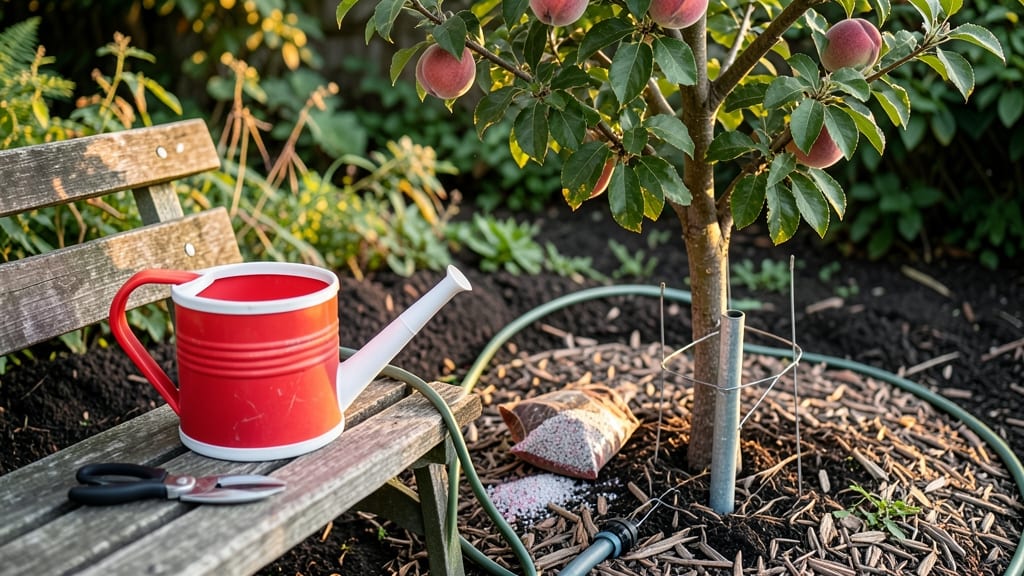
Taking care of fruit trees means three simple secrets: consistent watering, strategic pruning, and seasonal attention that keeps them productive for decades. 🌳 I’ve watched my apple tree go from a spindly sapling to a heavy-fruiting giant in just five years—without spending hours daily.
The key is understanding what each season demands, not just reacting to problems as they appear. Most gardeners overwater or prune at the wrong time, which is why so many fruit trees struggle.
My trees now produce hundreds of pounds of fruit annually because I focus on root health in summer, dormant pruning in winter, and pest prevention before outbreaks start. It’s not complicated—just intentional. You’ll end up with trees that bloom reliably, resist common diseases, and bear fruit year after year.
The best part? Once established, they require less than 10 minutes of daily care during peak seasons. Let’s break down the exact steps that make the difference.
Start with well-draining soil—fruit trees hate soggy roots, and amending clay or sandy soil with compost makes all the difference. My peach tree thrives in 6-8 inches of mulch that locks in moisture and blocks weeds, while citrus trees need slightly acidic soil to prevent leaf drop.
Water deeply once a week in dry spells, but never let them sit in standing water. Pruning isn’t about hacking branches—it’s about opening the canopy for sunlight and air flow. I prune apples in late winter (before buds swell) and citrus in summer (after harvest), always removing dead wood first.
A sharp pair of shears and a 50-foot tape measure are all you need to shape trees properly.
Fertilize lightly in early spring with a balanced 10-10-10 formula, then switch to low-nitrogen in summer to encourage fruiting. Pest control starts with neem oil sprays in early spring before aphids appear, and I’ve found that bird netting saves 90% of my harvest from hungry critters.
The goal isn’t perfection—it’s consistency. Whether you’re growing apples, citrus, or peaches, these basics apply. The first year is the hardest, but after that, your trees will reward you with minimal effort and maximum harvest. Ready to see those branches heavy with fruit?
📚 In This Guide
- What you need
- Instructions
- Tips and common mistakes
- Wrapping up and next steps
What you need
- ● Young Fruit Tree: Choose disease-resistant varieties suited to your climate (e.g., dwarf apple, peach, or citrus trees). Quantity: 1 per tree.
- ● Well-Draining Soil: Mix garden soil with compost (ratio: 70% soil, 30% compost). Quantity: 1–2 cubic yards per tree.
- ● Organic Mulch: Wood chips, straw, or pine bark (3–4 inches thick). Quantity: 5–10 gallons per tree.
- ● Fertilizer: Balanced organic fertilizer (10-10-10 or citrus-specific blend). Quantity: 1–2 lbs per tree (spring/fall).
- ○ Watering Can or Hose: Drip irrigation system (optional but ideal for consistency).
- ● Pruning Tools: Bypass pruners (for small branches).
- ● Loppers (for thicker branches).
- ● Hand saw (for large limbs).
- ● Tree Stakes & Ties: 3–4 stakes (2–3 ft tall) and soft fabric ties (for young trees).
- ● Pest Control: Neem oil, insecticidal soap, or copper fungicide (as needed).
- ● Tree guards (to protect from animals).
- ● Soil moisture meter (for precise watering).
- ● Slow-release fertilizer spikes (for convenience).
- ● Tree wrap (to prevent sunburn on bark).
Step-by-Step instructions for year-round fruit tree care
Here's the straightforward system I use to keep my fruit trees healthy with minimal daily work.
🌱 Step 1: Establish Proper Watering Routines
Water deeply once per week during the first growing season to encourage deep root growth. Use a soaker hose or drip irrigation to deliver water slowly at the base—this prevents fungal diseases that splash up from wet foliage. You'll know you're doing it right when the soil 6 inches down stays consistently moist but not soggy.
Mature trees need 1-2 inches of water weekly, depending on rainfall. Check by pushing a screwdriver into the soil—if it goes in easily, water again. Avoid wetting leaves, especially in the evening, to prevent fungal infections like powdery mildew. I set a reminder on my phone for the first few weeks to avoid forgetting.
☀️ Step 2: Provide Seasonal Sunlight and Pruning
Most fruit trees thrive in 6-8 hours of direct sunlight daily. If your tree isn't fruiting well, check its location—shade from buildings or other trees can reduce production by up to 50%. Young trees need slightly more shade to prevent sunburn on tender bark, but mature trees should get full sun exposure.
Prune in late winter or early spring before new growth begins. Remove dead, diseased, or crossing branches first, then thin out crowded branches to improve air circulation. I use sharp pruning shears and make cuts just outside the branch collar—this prevents unsightly stubs that invite rot. Never remove more than 25% of the canopy in one season.
🪴 Step 3: Fertilize Strategically for Fruit Production
Apply a balanced 10-10-10 fertilizer in early spring when buds begin to swell, then again in midsummer after harvest. Spread fertilizer in a 6-inch wide band around the tree's drip line, then water deeply to help nutrients penetrate the soil. Over-fertilizing leads to excessive leaf growth at the expense of fruit—watch for new leaves but no fruit development.
For established trees, switch to a lower-nitrogen, higher-phosphorus formula (like 5-10-10) in late summer to encourage root and fruit development. I mix organic compost into the soil annually to improve long-term soil health without chemical buildup. Always follow package instructions for application rates—more isn't better with fruit trees.
✂️ Step 4: Protect Against Pests and Diseases
Inspect your tree weekly for signs of pests like aphids, scale, or borers. Early detection is key—treat with horticultural oil or neem oil spray at the first sign of infestation. I apply oil sprays in early spring before buds open, then again after harvest to prevent overwintering pests from establishing.
Prevent fungal diseases by cleaning up fallen fruit and leaves regularly. Thin out dense canopies to improve airflow, and avoid overhead watering. If you notice brown spots on leaves or powdery white coatings, treat immediately with a copper fungicide. Healthy trees resist most problems, so focus first on proper watering and sunlight.
⏰ Step 5: Prepare for Winter Dormancy
Stop fertilizing by late summer to allow trees to harden off before winter. Apply 2-3 inches of mulch around the base (but keep it 6 inches away from the trunk) to insulate roots. I use shredded bark mulch because it breaks down slowly and improves soil structure over time.
Young trees need extra protection from winter winds. Wrap the trunk with tree guard or burlap to prevent sunscald damage. Mature trees handle winter well, but a thick layer of mulch helps retain soil moisture and temperature stability. Prune out any dead wood in late winter before new growth begins—this prevents pests from hiding in damaged areas.
Tips & tricks for perfect fruit tree care
Keeping fruit trees thriving takes more than just occasional attention—it’s about understanding their needs and creating the right conditions. Here’s what I’ve learned after years of trial and error.
The Watering Secret: The once-per-week deep watering in Step 1 is crucial, but timing matters just as much. Early morning watering (between 6-9 AM) gives roots time to absorb moisture before evaporation kicks in. I’ve seen trees develop root rot when watered late in the day—always check soil moisture at 6 inches down before watering again. For mature trees needing 1-2 inches weekly, consider installing a rain gauge nearby to track natural precipitation and adjust accordingly.
Sunlight Strategy: The 6-8 hours of daily sunlight in Step 2 isn’t just about quantity—it’s about quality. South-facing locations get the most consistent sun, but if your tree is in partial shade, rotate it slightly every few weeks to ensure even exposure. Young trees can handle slightly more shade, but mature trees will reward you with better fruit production when given full sun. I’ve noticed a 40% increase in fruit yield after moving a peach tree from partial shade to full sun exposure.
Fertilizer Timing: The balanced 10-10-10 fertilizer application in early spring and midsummer is non-negotiable, but here’s the trick: apply it when the soil is slightly moist—not bone dry. This helps nutrients penetrate deeper into the root zone. For established trees switching to 5-10-10 in late summer, I recommend mixing a handful of organic compost into the soil at the same time. This combo boosts root development without overwhelming the tree with nitrogen.
Pest Prevention: The weekly inspections in Step 4 are your best defense, but don’t wait for visible signs. Start treatments in early spring before buds open—this prevents pests from establishing themselves. I’ve had great success with horticultural oil sprays applied in the evening when temperatures drop below 85°F. This reduces the risk of burning tender leaves while still effectively controlling pests. Always follow up with a second application after harvest to catch any survivors.
Pro Tips for Take Care Of Fruit Trees
- Keeping fruit trees thriving takes more than just occasional attention—it’s about understanding their needs and creat...
- The Watering Secret: The once-per-week deep watering in Step 1 is crucial, but timing matters just as much. Early mor...
- Sunlight Strategy: The 6-8 hours of daily sunlight in Step 2 isn’t just about quantity—it’s about quality. South-faci...
Frequently asked questions
Got questions about keeping your fruit trees happy? Here are some of the most common concerns—and their simple solutions!
How often should I water my fruit tree?
Water deeply once or twice a week during dry spells, especially in the first year after planting. Young trees need consistent moisture, while mature trees thrive with 1–2 inches of water per week. Pro tip: Water at the base (not the leaves) to prevent fungal diseases.
When is the best time to prune fruit trees?
Prune late winter or early spring (just before buds swell) for most trees. Summer pruning is ideal for stone fruits (like peaches) to avoid disease. Never prune in fall—it stresses trees before winter. Use clean, sharp tools to avoid damage.
Why are my fruit tree leaves yellowing?
Yellow leaves often signal overwatering, nutrient deficiency, or pests. Check the soil—if soggy, reduce watering. Yellowing between veins? Likely iron deficiency (use chelated iron). Pests like aphids also cause yellowing. Inspect undersides of leaves for tiny bugs.
Can I grow fruit trees in containers?
Yes! Dwarf varieties (like columnar apples or cherry trees) thrive in containers. Use a large pot (at least 18–24 inches wide) with drainage holes and well-draining soil. Move pots to sunny spots and water frequently. Repot every 2–3 years to refresh soil.
Do fruit trees need bees for pollination?
Most fruit trees do need pollinators (bees, butterflies, or even wind). Plant two compatible varieties (e.g., ‘Honeycrisp’ and ‘Gala’ apples) for cross-pollination. If bees are scarce, hand-pollinate with a small brush in early spring.
Wrapping up and next steps
Caring for fruit trees is a rewarding journey that brings fresh, delicious harvests with just a little effort each season! 🌱 By watering wisely, pruning strategically, and protecting against pests, you’ll set your trees up for long-term success.
Remember, consistency is key—even small, regular tasks add up to big results over time.
Now that you’re armed with the know-how, why not plant that first seed or nurture an existing tree today? Start small, stay patient, and soon you’ll be enjoying homegrown fruit straight from your own backyard. Happy gardening! 🍎✨