
Aphids
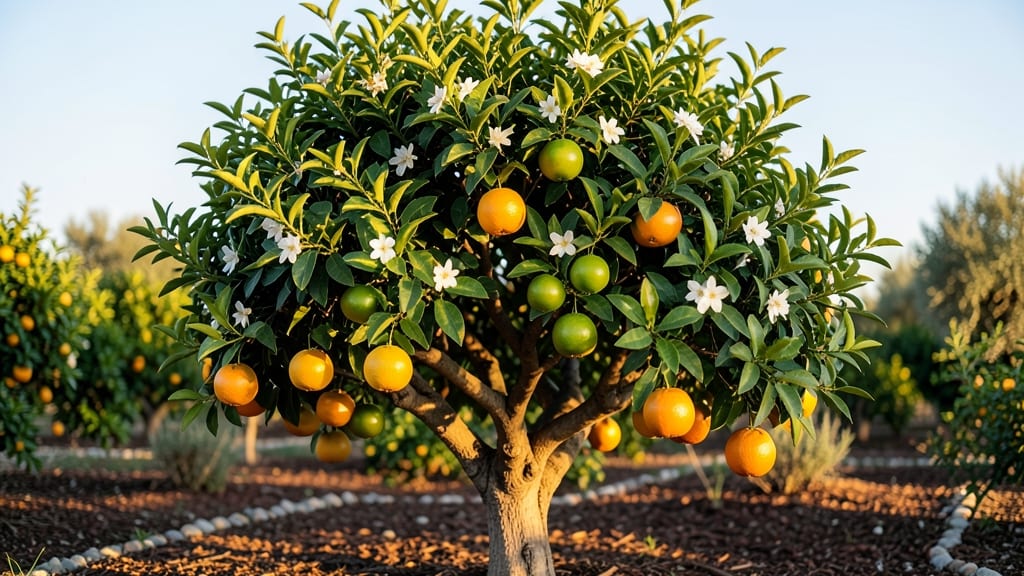
The life cycle of an orange fruit starts with pollination of its fragrant white blossoms, continues through fertilization and a 9-12 month growth phase, and culminates in ripening stages where color deepens and sugars develop. Proper care at each stage maximizes fruit quality from bloom to harvest.
The orange fruit's journey begins when citrus trees—typically needing chilly winter nights—produce fragrant blossoms that attract pollinators like bees.
Once fertilized, the tiny fruits form but often drop early; only the strongest survive to grow. 🍊 During the development phase, the fruit's cells expand, its skin transitions from green to orange, and its sweetness builds.
Ideal conditions—full sun, well-draining soil, and consistent moisture—keep the process on track, while neglect can lead to issues like blossom end rot or stunted growth.
Ripening is the final act, where the fruit's sugars peak and its vibrant color signals readiness. Harvesting too early means tartness; waiting too long risks overripening. Understanding these stages helps growers—and home gardeners—produce juicy, flavorful oranges year after year.
💡 In This Article
- Orange Tree Flowering and Pollination Process
- Stages of Orange Fruit Development and Ripening
Orange tree flowering and pollination process
The flowering phase kicks off when citrus trees experience a period of chilly winter nights (50-60°F) followed by warm days, a process called "chilling requirement." This temperature shift triggers the tree to produce those iconic white, four-petaled blossoms that fill the air with a sweet, citrusy fragrance.
The flowers typically bloom in late winter or early spring, with each blossom containing both male and female reproductive parts—a trait called self-compatible, though cross-pollination often improves fruit quality.
Pollination happens primarily through bees (especially honeybees and native solitary bees), which are drawn to the blossoms' nectar and inadvertently transfer pollen between flowers. Wind also plays a minor role, especially in commercial groves where bee populations may be limited.
Once pollen lands on a compatible stigma, fertilization occurs within 24-48 hours, forming a tiny fruit called an ovule.
Here's where things get interesting: about 50-70% of fertilized ovules naturally drop off in a process called "fruit set drop," as the tree prioritizes resources for the strongest developing fruits.
This natural selection ensures only the healthiest fruits continue growing, but it also explains why citrus growers often see a 10-20% yield loss early on. The remaining fruits enter the development phase, where their cells begin rapid division.
What most people don't realize is that the fruit's size is genetically predetermined—the tree can't make larger oranges than its variety's potential (e.g., Valencia oranges typically max out at 3-4 inches in diameter). 🌸 Proper pollination sets the stage for this growth, but environmental stressors like extreme heat or drought can still disrupt the process.
The science behind fruit set involves plant hormones, particularly auxin and ethylene. Auxin promotes cell division in the developing fruit, while ethylene later triggers the fruit drop if conditions aren't ideal.
Commercial growers sometimes use pollination sprays or hand-pollination techniques to boost yields, especially in regions with limited bee activity. The result? A more predictable harvest—but nature's selective process often produces sweeter, higher-quality fruit when left to its own devices.
Temperature extremes during flowering can cause another challenge: aborted blossoms. If nights stay too warm (above 70°F), the flowers may fail to open properly or produce viable pollen. This is why citrus growers in warm climates often see lower yields compared to regions with cooler winters.
The ideal scenario combines cool nights and warm days, creating perfect conditions for both flowering and pollination success.