
Vegetables
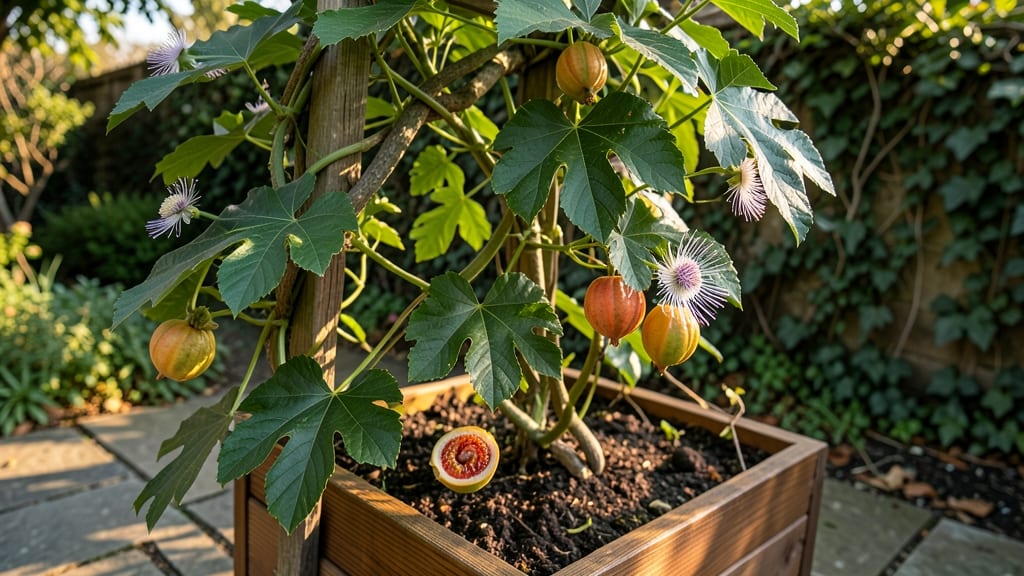
The orange fruit with red seeds you're thinking of isn't the classic passion fruit—it's the granadilla (Passiflora ligularis), a sweeter, larger tropical fruit with a thick rind and juicy orange pulp, perfect for desserts and smoothies.
The granadilla stands out from its tart cousin (Passiflora edulis) with its sweeter, almost honey-like flavor and thicker, fibrous rind that protects its vibrant orange flesh. 🌿 While regular passion fruit has a puckery tang and tiny black seeds, granadilla offers a milder, more approachable taste with edible crimson seeds that add a fun texture to dishes.
This tropical gem thrives in warmer climates and is often used in Latin American cuisine for its versatility in both sweet and savory recipes.
What makes granadilla particularly exciting is its dual-purpose appeal—it's fantastic fresh but also shines in cocktails, jams, and even savory marinades. The thick rind means it stores well, giving you flexibility to enjoy its tropical goodness whenever inspiration strikes.
For those who love the classic passion fruit but want something more dessert-friendly, granadilla delivers that perfect balance of sweetness and complexity.
💡 In This Article
- Granadilla vs Passion Fruit: Key Botanical and Flavor Differences
- Growing and Harvesting Granadilla for Home Gardens
Granadilla vs passion fruit: key botanical and flavor differences
The granadilla (Passiflora ligularis) and passion fruit (Passiflora edulis) belong to the same botanical family but offer completely different sensory experiences.
Granadilla grows to 3-5 inches long with a thick, leathery rind that can be up to 1/4-inch thick, while passion fruit typically measures 2-3 inches with a thin, papery skin.
This structural difference explains why granadilla's flesh remains intact even when dropped, whereas passion fruit's delicate skin bruises easily.
The flavor contrast is equally dramatic. Granadilla's pulp delivers a sweet, honey-like taste with notes of citrus and tropical fruit, scoring around 12-15 on the Brix scale (a measure of sugar content), compared to passion fruit's 8-10 Brix tartness.
The crimson seeds in granadilla are edible and gelatinous, adding a fun pop of texture, while passion fruit seeds are tiny, hard, and bitter when consumed in large quantities. This makes granadilla far more approachable for children and those who dislike the puckery aftertaste of passion fruit.
Botanically, these differences stem from their evolutionary paths. Granadilla developed in South America's high-altitude regions where its thick rind protects against temperature fluctuations, while passion fruit thrives in coastal tropical zones with its thinner skin optimized for humidity.
The granadilla's larger size also means it contains 2-3 times more pulp—about 1/2 cup per fruit versus passion fruit's 1-2 tablespoons—making it more practical for juicing or blending. 🌿
When using these fruits in recipes, the texture differences become crucial. Granadilla's flesh has a slightly fibrous, almost custard-like consistency when ripe, while passion fruit pulp is gelatinous and watery.
This makes granadilla ideal for sorbets, ice creams, and fillings where structure matters, whereas passion fruit excels in cocktails and sauces where its acidity cuts through richness. The granadilla's seeds also release a mild floral aroma when crushed, adding depth to dishes.
One surprising difference lies in their nutritional profiles. Granadilla contains higher levels of vitamin C (about 30% DV per serving) and more dietary fiber due to its thicker rind, while passion fruit offers more antioxidants like polyphenols.
This makes granadilla a better choice for immune support, while passion fruit's compounds show potential for anti-inflammatory benefits. The choice often comes down to whether you prioritize sweetness and texture (granadilla) or tartness and antioxidants (passion fruit).
For visual learners, imagine cutting both fruits open side by side: the granadilla reveals a vibrant orange sunburst with seeds arranged in a perfect spiral, while passion fruit shows a dark purple or yellow center with seeds scattered randomly.
This visual contrast mirrors their culinary personalities—granadilla as the showstopper dessert ingredient, passion fruit as the bold, tangy accent. 💫