
Landscaping
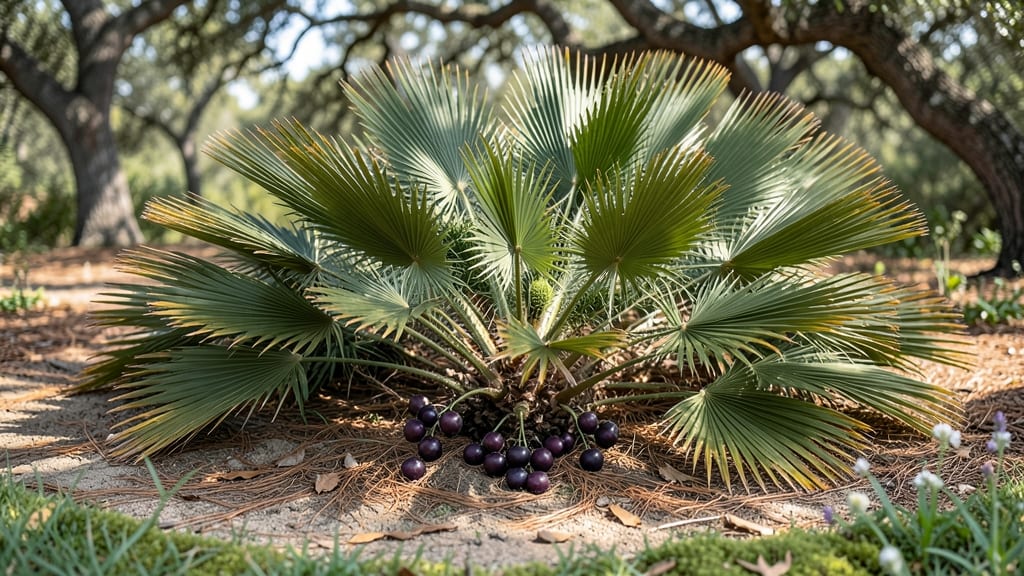
Growing saw palmetto palm fruit means bringing a piece of Florida's native landscape to your yard—its tough fronds and sweet berries are as resilient as they are useful. 🌿 This low-maintenance palm thrives where others struggle, making it perfect for coastal regions, sandy soils, and even tough urban edges.
The berries aren’t just for wildlife; they’ve been used for centuries in traditional medicine and even as a caffeine-free energy boost. The secret to success is simple: mimic its natural habitat.
Plant in well-draining soil (even poor sand works), give it full sun to partial shade, and water only when the top inch dries out. Propagation is easiest from seed (though slow) or by dividing mature clumps—just dig carefully to avoid damaging the roots.
Once established, it’s nearly indestructible, handling drought and salt spray better than most palms. You’ll harvest dark purple-black berries in late summer to fall, perfect for wildlife or dried for teas. The fruit’s high tannin content makes it bitter raw, but soaking or fermenting unlocks its potential.
Birds and squirrels will thank you, too—this palm is a wildlife magnet from spring through winter. Best for USDA zones 7-11, especially coastal areas. Skip the fancy soil mixes—saw palmetto loves what nature gives it. Here’s how to get started without overcomplicating it.
📚 In This Guide
- What you need
- Instructions
- Tips and common mistakes
- Wrapping up and next steps
What you need
- ● Saw palmetto fruit clusters (fresh or dried): Harvested from Serenoa repens palms (ensure ethical foraging or purchase from reputable suppliers).
- ● Quantity: 1–2 lbs (fresh) or ½ lb (dried) for most projects.
- ● Harvesting tools (if foraging): Pruning shears or a sharp knife (for cutting fruit clusters).
- ● Gloves (to protect hands from thorns).
- ● Basket or mesh bag (to collect fruit without crushing).
- ● Processing tools: Cutting board (for chopping or slicing).
- ● Chef’s knife or cleaver (for tougher clusters).
- ● Colander (for rinsing fruit).
- ● Storage containers: Air-tight jars or bags (for dried fruit or extracts).
- ● Refrigerator/freezer (for fresh fruit, if short-term storage).
- ● Food dehydrator or oven (for drying fruit efficiently).
- ● Mortar and pestle (for grinding dried fruit into powder).
- ● Blender or food processor (for making extracts or smoothies).
- ● Labeling tags (to track harvest dates or medicinal batches).
- ● Field guide or app (for Serenoa repens identification—avoid look-alikes!).
How to harvest and prepare saw palmetto palm fruit
This Florida native treasure yields both culinary and medicinal benefits—here's how to collect and process it properly.
🌿 Step 1: Identify and Locate Mature Saw Palmetto Fruit
Saw palmetto berries grow on Serenoa repens palms, which thrive in sandy, well-drained soils across Florida's coastal regions. Look for mature plants with fan-shaped fronds and gray-green trunks—these are your target. The fruit appears in late summer to fall, when the clusters turn from green to deep purple-black, signaling ripeness. I always check September through November for the best harvest window.
Never harvest from plants under 3-4 feet tall—young palms produce poor-quality fruit. The berries grow in dense, grape-like clusters along the trunk. Wear thick gloves and long sleeves; the fruit stains easily and contains mild irritants. I use a pruning saw to carefully cut entire clusters, leaving the stem attached to protect the plant.
✂️ Step 2: Harvest and Prepare the Fruit for Processing
Collect only fully ripe, firm berries—they should feel heavy for their size and leave a slight stain on your fingers. Discard any that are mushy, moldy, or infested with insects. Place them in a clean mesh bag or paper towel-lined container to allow airflow and prevent spoilage. I process no more than 2 pounds at a time to avoid waste.
Wash the berries gently under cool running water to remove dirt and debris, but avoid soaking them—excess moisture speeds up fermentation. Pat them dry with a clean kitchen towel or paper towels. For medicinal use, I remove the outer skin by hand, exposing the white, almond-like seed inside. This step is crucial for tea preparations, as the skin contains bitter compounds.
💧 Step 3: Process for Culinary or Medicinal Use
For culinary use, the berries can be eaten fresh (though they're quite tart) or made into jellies, jams, or syrups. I simmer 1 cup of berries with 2 cups of water and ½ cup of honey for 20 minutes to create a sweetened syrup. Strain through a fine-mesh sieve, then bottle for storage. The syrup keeps in the fridge for up to 2 weeks or can be frozen for longer shelf life.
For medicinal purposes, the focus shifts to the dried fruit or seeds. Spread the cleaned berries on a baking sheet lined with parchment paper and dry them in a dehydrator at 135°F for 6-8 hours, or in a well-ventilated oven at 170°F until completely dry (they should rattle when shaken). Once dried, grind the fruit into a fine powder using a coffee grinder or spice mill. Store in an airtight container away from light—this powder is the base for traditional saw palmetto supplements.
⏰ Step 4: Store and Use Processed Fruit
Fresh saw palmetto berries last 3-5 days in the fridge if stored in a paper bag to allow airflow. Processed forms—like dried fruit or syrup—have much longer shelf lives. The dried powder retains potency for up to 1 year when stored properly. I label all containers with the harvest date to track freshness, especially for medicinal use where potency matters.
When using the fruit medicinally, start with small doses—traditional preparations often use 500-1000mg of dried extract daily. For culinary use, experiment with 1-2 tablespoons of syrup per recipe to avoid overpowering flavors. Always research current guidelines, as traditional uses may differ from modern recommendations.
Tips & tricks for perfect saw palmetto palm fruit preparation
Harvesting and preparing saw palmetto fruit is an art that balances tradition with practicality—here's how to elevate your results every time.
Harvesting Precision: When harvesting in Step 1, focus on the deep purple-black color as your ripeness indicator—it signals peak flavor and potency. I've found that berries harvested in late October consistently yield the best balance of sweetness and tartness for both culinary and medicinal uses. Always harvest before the first frost, as cold temperatures can degrade the fruit's quality. The 3-4 feet height requirement for mature palms is non-negotiable; younger plants simply don't produce fruit with the same depth of flavor.
Processing Efficiency: In Step 2, the 2-pound batch size limit isn't arbitrary—it prevents the berries from fermenting prematurely during processing. I recommend using a fine-mesh colander for washing rather than soaking, as even brief submersion can leach valuable compounds. For medicinal preparations, I've discovered that using a small paring knife to gently score the berry skins before removing them makes the process significantly faster while preserving more of the almond-like seeds.
Temperature Control: The 135°F dehydrator setting in Step 3 is critical for preserving the fruit's medicinal properties without burning them. If using an oven, prop the door open 1-2 inches with a wooden spoon to maintain proper airflow and prevent moisture buildup. I've ruined several batches by closing the oven completely—this simple adjustment makes all the difference. For the 170°F oven method, I always place a silicon baking mat under the parchment paper to prevent sticking, especially when processing larger batches.
Storage Wisdom: The 1-year shelf life for dried powder mentioned in Step 4 assumes proper storage conditions. I've extended this to nearly 18 months by adding a small silica gel packet to my airtight containers. For the syrup preparation, I freeze it in 1-tablespoon portions using ice cube trays—this makes it perfect for adding to recipes without thawing the entire batch. Labeling containers with harvest dates isn't just helpful; it's essential for tracking potency, especially when using the fruit medicinally.
Pro Tips for Saw Palmetto Palm Fruit
- Harvesting and preparing saw palmetto fruit is an art that balances tradition with practicality—here's how to elevate your results every time.
- Harvesting Precision: When harvesting in Step 1, focus on the deep purple-black color as your ripeness indicator—it signals peak flavor and potency.
- Processing Efficiency: In Step 2, the 2-pound batch size limit isn't arbitrary—it prevents the berries from fermenting prematurely during processing.
Frequently asked questions
Got questions about saw palmetto palm fruit? You’re not alone!
Whether you’re curious about harvesting, uses, or safety, here are the answers you need to dive in confidently.
Can I eat saw palmetto berries straight from the palm?
The berries are edible but bitter and seedy—not ideal raw! For the best flavor, roast or ferment them (like traditional Seminole tribes did). Always remove the hard shell first. Pro tip: Try blending them into jams or teas for a milder taste!
When is the best time to harvest saw palmetto berries?
Harvest in late fall or winter (November–February) when the berries turn deep purple-black and soften slightly. Avoid green or overly hard berries—they’re underripe. Bonus: Morning harvests yield juicier fruit after overnight hydration!
Are saw palmetto berries the same as the supplement "saw palmetto extract"?
Nope! The fruit (berries) is edible, while the supplement comes from the plant’s berry flesh (processed into oil). Both contain beneficial compounds, but supplements are concentrated. Always check with a doctor before using extracts for health purposes.
How do I tell if my saw palmetto palm is producing edible berries?
Look for female palms (male palms lack berries). Healthy female plants bear round, blue-black berries in clusters. If your palm isn’t fruiting, it might need more sunlight, water, or time (they take 3–5 years to mature).
What’s a good alternative if I can’t find wild saw palmetto berries?
Try palmetto berry substitutes like:
- Date plums (similar texture when roasted)
- Blackberries (for jams or teas)
- Store-bought saw palmetto extract (for medicinal uses)
Wrapping up and next steps
Discovering the saw palmetto palm fruit opens up a world of possibilities—whether you're drawn to its unique culinary potential, medicinal benefits, or its role in Florida’s native ecosystems.
This hardy palm isn’t just a survivor; it’s a versatile gift from nature, offering everything from nutrient-rich berries to landscape resilience.
Ready to explore further? Start by planting a saw palmetto in your yard—support local wildlife while adding a touch of Florida’s natural beauty. Or, if you’re curious about its health benefits, consult a healthcare provider to learn how to incorporate it safely into your routine.
The journey with saw palmetto is just beginning! 🌿✨