
Blooming
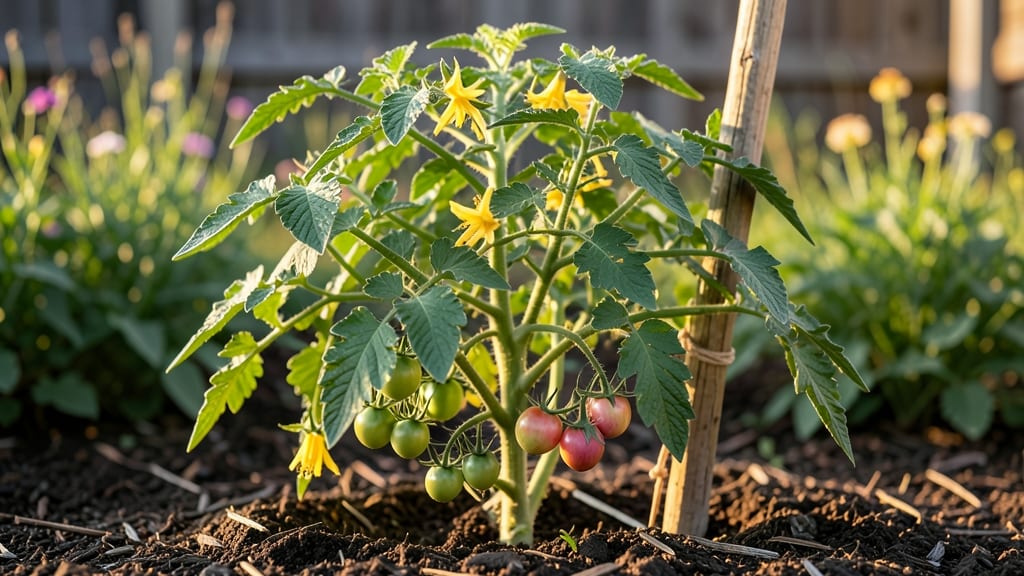
It takes tomatoes 60 to 90 days to produce fruit after transplanting seedlings, though heirloom varieties may require up to 120 days. Early varieties like 'Early Girl' fruit in 50-60 days, while beefsteak types take 70-90 days under optimal conditions of full sun, consistent moisture, and warm soil temperatures above 60°F.
Understanding this timeline helps gardeners plan their planting schedule effectively. The process begins with germination, where seeds sprout within 5-10 days under warm conditions.
Once seedlings are transplanted, they enter a critical growth phase where consistent care determines how quickly they'll flower and set fruit. 🌱 For instance, cherry tomatoes often mature faster than larger varieties because their smaller size requires less energy to develop.
The key factors influencing this timeline include soil fertility, water consistency, and protection from pests, all of which can either accelerate or delay the fruiting process.
Many gardeners overlook how temperature fluctuations impact development. If nights dip below 55°F, tomato plants may struggle to set fruit, even if they're flowering. That's why I always monitor weather forecasts and use row covers during cool evenings.
Additionally, pruning suckers and providing support for vines helps redirect energy toward fruit production rather than leaf growth.
💡 In This Article
- Tomato Growth Stages: Seed to Fruit Timeline Breakdown
- Factors That Speed Up or Delay Tomato Fruit Production
Tomato growth stages: seed to fruit timeline breakdown
The tomato's journey from seed to fruit involves four distinct stages, each with specific timeframes and requirements. First comes germination, where seeds sprout in 5-10 days when kept in 70-80°F soil. This stage is purely about breaking dormancy—think of it like waking from a deep sleep.
The seed's radicle (root) emerges first, followed by the shoot breaking through the soil surface within 3-5 days after germination. 🌱
Next is the seedling phase, lasting 3-4 weeks, where the plant focuses on building its root system and foliage. During this time, seedlings need 6-8 hours of sunlight daily to prevent leggy growth.
Varieties like 'Early Girl' develop stronger stems faster than heirlooms because they've been bred for rapid vegetative growth. At this stage, you'll notice the first true leaves (not the initial seed leaves) forming—these are your indicators that the plant is ready for transplanting.
The third stage is flowering, which begins 4-6 weeks after transplanting under ideal conditions. Here's where temperature becomes critical: flowers only pollinate effectively between 55-85°F. Below 55°F, pollen fails to release, and above 90°F, flowers may drop before setting fruit.
This is why early morning hand-pollination (gentle shaking of plants) boosts yields in greenhouse settings. 🌸
Finally, the fruit development stage begins when flowers are successfully pollinated. Here's where variety matters most: cherry tomatoes like 'Sweet 100' develop in 50-60 days because their small size requires less energy, while beefsteaks like 'Brandywine' take 70-90 days to reach maturity.
The fruit's growth rate accelerates when soil temperatures stay above 60°F—this is why gardeners in cooler climates often use black plastic mulch to warm the soil faster.
What most people don't realize is that tomatoes actually grow fastest during their first 2-3 weeks of fruit development. After that, growth slows as the plant redirects energy toward ripening.
This is why consistent watering (about 1-1.5 inches per week) is crucial—fluctuations can cause uneven fruit sizes or blossom-end rot.
The plant's natural growth hormones also play a role: ethylene production peaks during the final 10-14 days of ripening, which is why you'll often see clusters of tomatoes ripening simultaneously.
Consider these key milestones for planning:
- Germination: 5-10 days (soil 70-80°F)
- Seedling: 3-4 weeks (transplant when 4-6 inches tall)
- Flowering: 4-6 weeks post-transplant (temperature-sensitive)
- Fruit development: 50-120 days (variety-dependent)