
Plants
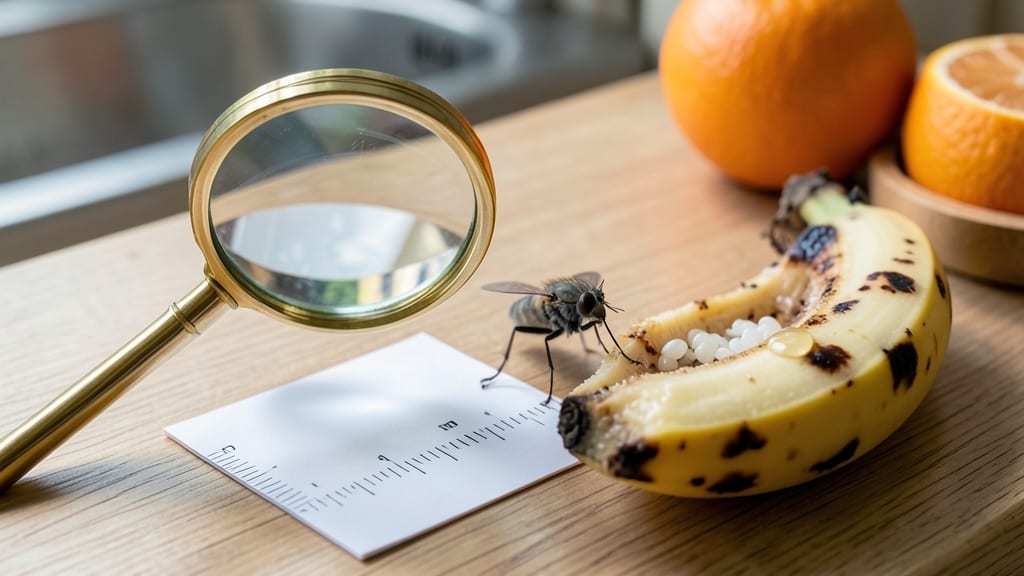
Fruit fly eggs look like microscopic white grains of rice, measuring about 0.5mm in length, and typically gather in damp organic materials such as rotting fruit, moist soil, or compost piles.
These minuscule eggs are so small that they're almost impossible to see without a magnifying tool or microscope. 🔥 Their translucent appearance can make them blend seamlessly into decaying plant matter, which is why they often go unnoticed until adult flies emerge.
Understanding their appearance helps gardeners and homeowners identify potential breeding sites before an infestation takes hold.
Unlike larger insect eggs, fruit fly eggs lack any visible markings or distinct shapes, making them harder to spot during routine inspections. Their clustered arrangement in moist environments is a key clue for identifying their presence early on.
Once laid, these eggs hatch within 24-48 hours under ideal conditions, releasing larvae that will eventually become the pesky adult flies we know. This rapid lifecycle explains why fruit fly populations can explode so quickly in warm, humid conditions.
💡 In This Article
- Microscopic Features of Fruit Fly Eggs
- Where to Spot Fruit Fly Eggs in Gardens
Microscopic features of fruit fly eggs
Under magnification, fruit fly eggs reveal a smooth, oval shape with a slightly elongated form—about 0.5mm long and 0.15mm wide.
Their surface appears translucent white, almost like tiny beads of water, which helps them blend into organic matter. 🔥 Unlike moth eggs (which often have hair-like projections) or fly eggs (like houseflies, which are barrel-shaped), fruit fly eggs lack any distinct texture or markings, making them harder to identify without close inspection.
The eggs' microscopic structure is perfectly adapted for survival in moist environments. Their smooth surface reduces friction, allowing them to stick to damp substrates like rotting fruit or compost.
When viewed under a 10x magnifier, you'll notice they often cluster in groups of 10-15, laid in a single layer—this pattern helps prevent desiccation and maximizes oxygen exposure for developing larvae.
What sets fruit fly eggs apart is their rapid development cycle. After laying, they hatch in just 8-30 hours (depending on temperature), releasing legless larvae called maggots. These maggots then burrow into organic matter to feed, completing their lifecycle in about 7-10 days under ideal conditions.
This speed explains why infestations can appear seemingly overnight, especially in warm, humid climates.
For comparison, housefly eggs are slightly larger (1.2mm long) and laid in clusters of 75-150, while fungus gnat eggs (another common pest) are even smaller (0.3mm long) but more elongated.
Fruit fly eggs' size and clustering behavior make them unique identifiers for gardeners and pest control experts.
If you're inspecting potential breeding sites, look for these eggs in areas with high moisture and organic decay. Their tiny size means they often go unnoticed until adult flies emerge, so using a handheld magnifier (10x-20x) can make all the difference in early detection.
Understanding these microscopic features helps explain why fruit flies thrive in kitchens, gardens, and compost piles. Their ability to exploit moist organic matter makes them one of the most persistent household pests, but knowing what to look for gives you a critical advantage in prevention.