
Propagation
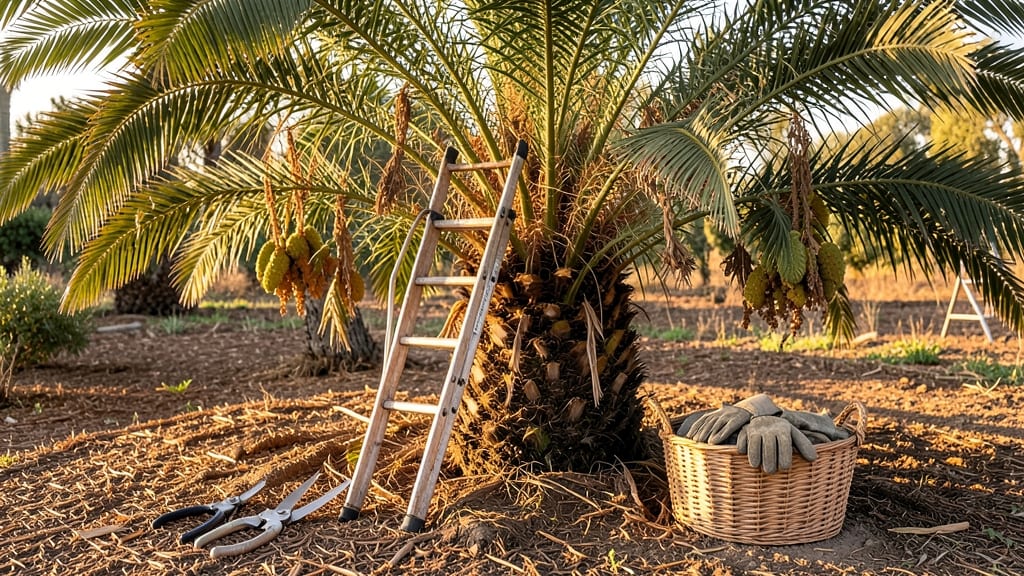
Dates come from the fruit of the date palm tree (Phoenix dactylifera), a naturally sweet fruit that develops in dense clusters on tall desert palms originally from the Middle East and North Africa. These fruits start green and gradually turn golden-brown as they ripen over months.
Dates are the edible fruit of the date palm tree, scientifically known as Phoenix dactylifera. 🌱 This palm thrives in arid climates, where its deep roots access water while its fronds provide shade.
The fruit begins as tiny green buds that swell and sweeten as they mature, with varieties like Medjool developing a rich, caramel-like texture. What's fascinating is how the palm's male and female flowers work together—only female flowers produce fruit after successful pollination, typically requiring cross-pollination from male palms.
The ripening process transforms the fruit's chemistry, increasing natural sugars while reducing moisture content. This gradual change explains why dates taste milder when fresh and more intense when dried.
Cultivators often harvest at different stages to balance sweetness and texture, with some varieties requiring up to 6 months to reach peak flavor.
💡 In This Article
- Date Palm Tree Anatomy and Fruit Development
- Cultivating Date Palms for Optimal Fruit Production
Date palm tree anatomy and fruit development
The date palm tree (Phoenix dactylifera) produces dates through a fascinating botanical process that begins with its unique flowering system. Unlike many plants, date palms have separate male and female flowers on the same tree.
Male palms produce pollen that must transfer to female flowers for fruit development, a process often aided by wind or manual pollination in commercial orchards. This cross-pollination is critical—female flowers that aren't pollinated will simply drop off without developing into fruit. 🌿
After successful pollination, the fruit starts as small, hard, green buds that contain minimal sugar and high moisture. As they mature over 4-6 months, the fruit's chemistry transforms dramatically. The sugar content increases from about 10-20% in unripe dates to 60-70% in fully ripe varieties like Medjool.
This sweetening process occurs alongside a reduction in moisture, which concentrates the flavors and gives dates their characteristic chewy texture. The fruit's color shifts from green to golden-brown as chlorophyll breaks down and carotenoids develop.
Environmental factors play a crucial role in this development. Date palms thrive in hot, dry climates with 100-120°F daytime temperatures and minimal rainfall, conditions that prevent fungal growth while allowing gradual sugar concentration.
The palm's deep root system (reaching up to 10 feet) accesses groundwater, while its fronds provide shade to protect the developing fruit from excessive sun exposure. What's particularly interesting is how the fruit's texture changes—starting firm and astringent when young, then softening and becoming velvety as it ripens.
There are three main ripening stages that determine a date's final characteristics: Khalal (green, firm, and tangy), Rutab (brown, soft, and sweet), and Tamar (fully ripe, dark, and very sweet). Harvesting at different stages produces dates with varying textures and sugar levels.
For example, Medjool dates are typically harvested at the Rutab stage for their signature caramel-like consistency, while Deglet Noor dates are often left to ripen fully for a drier, firmer texture. 🍯
The palm's growth cycle itself is impressive—it takes about 3-5 years for a date palm to produce its first fruit after planting, with mature palms yielding 50-100 pounds of dates annually. The fruit grows in dense clusters called "spathes," which can contain hundreds of individual dates.
What's often overlooked is how the palm's architecture supports this production: the trunk stores water and nutrients, while the fronds create a microclimate that regulates temperature and humidity around the fruit.
One fascinating aspect of date development is how the fruit's natural sugars are stored. Unlike many fruits that store energy in starch, dates convert starches directly into simple sugars like glucose and fructose during ripening.
This biochemical process is what gives dates their intense sweetness without the need for artificial additives. The transformation from a hard, green bud to a soft, sweet date is a perfect example of nature's ability to concentrate flavor through gradual physiological changes. 🌟