
Trees
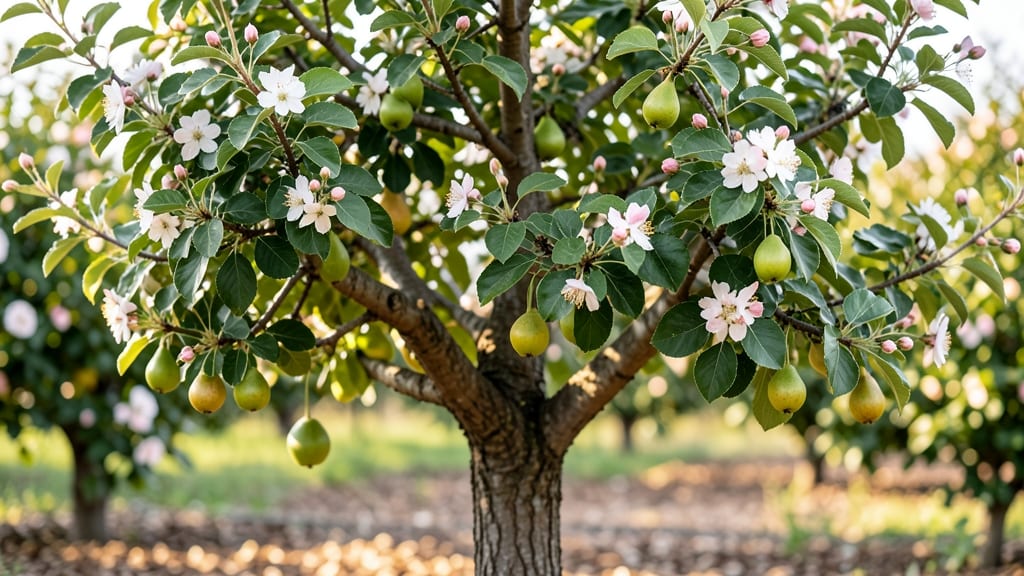
Pear trees produce fruit after 3 to 5 years of proper care, but the real secret lies in their chill-hour needs—a hidden factor that determines whether your tree will ever bear those sweet 🍐 treats.
Wondering why your pear tree isn’t bearing fruit yet? The answer lies in its chill-hour requirements—a critical factor that determines when (and if) your tree will produce those sweet, juicy pears.
Most varieties need between 300 and 900 chill hours (temperatures between 32°F and 45°F) to trigger flowering. If your area doesn’t meet this, your tree might just be waiting for the right climate—or the right care to help it along.
In this guide, I’ll break down the exact timeline for fruit production, how to calculate chill hours for your zone, and the 3 key steps to speed up your pear tree’s fruiting—so you can finally enjoy that first harvest in August or October.
How many chill hours do pear trees need to produce fruit?
Pear trees are finicky about when they produce fruit, and their chill-hour requirements are the secret to success. These hours—measured during winter dormancy—tell your tree when it’s safe to bloom and set fruit.
Without enough cold exposure, your tree might just sit there looking pretty without a single pear to show for it.
Most pear varieties need between 300 and 900 chill hours to trigger flowering. This range covers everything from low-chill varieties like Moonglow (300–400 hours) to high-chill varieties like Bartlett (600–900 hours). If you’re in a warm climate, you’ll need to pick a variety that matches your local winter cold exposure.
Chill hours are calculated by adding up the hours your tree experiences temperatures between 32°F and 45°F during dormancy. This typically happens in late fall and winter.
For example, if your area gets 500 chill hours annually, you’d want a pear variety like Seckel (400–500 hours) or Anjou (500–600 hours) for reliable fruit production.
To find your local chill hours, check your USDA Hardiness Zone and use resources like the National Oceanic and Atmospheric Administration (NOAA) or local agricultural extension offices. For example, Zone 7 typically gets 500–700 chill hours, while Zone 9 might only see 300–400 hours.
If you’re in a warmer zone, consider planting a low-chill variety or using chill-hour accumulation charts for your area.
Even if your tree meets its chill-hour needs, it won’t produce fruit right away. Young pear trees usually take 3–5 years to mature enough for fruiting. During this time, focus on proper pruning, balanced fertilization, and consistent watering to encourage strong growth and future fruit production.
A well-cared-for tree in the right climate will reward you with bountiful harvests.
If you’re unsure about your local chill hours, you can also use online chill-hour calculators or ask your local nursery for recommendations. They often have firsthand experience with what grows best in your region.
Choosing the right variety for your climate is the first step to a fruitful pear tree!
Once your tree has met its chill-hour requirements and is old enough, it typically blooms in early spring, followed by fruit development over 6–8 months. With patience and the right variety, you’ll be enjoying homegrown pears in no time.
🌱 Remember, chill hours aren’t the only factor—proper pollination, soil health, and seasonal care all play a role in a successful pear harvest. Stay tuned for tips on optimizing fruit production in your garden!
When can you expect your first pear harvest: Year-by-Year timeline
If you’ve planted a pear tree hoping for quick rewards, patience is key. Most pear trees take 3 to 5 years to produce their first fruit, depending on the variety and growing conditions.
Understanding this timeline helps you set realistic expectations and care for your tree properly during its early years.
Your pear tree’s journey to fruiting begins with root establishment. In the first year, focus on deep watering and mulching to encourage strong root growth.
The tree’s energy goes into developing its root system and trunk, not fruit production. This foundational work is what sets the stage for future harvests.
🌱 Year-by-Year Pear Tree Fruit Production Timeline
- 🌱 Year 1: Focus on root and trunk growth—no fruit expected. Water deeply and mulch to protect roots.
- 🌿 Year 2: Tree may produce a few small, underdeveloped fruit (called "puffs"). These won’t mature but signal potential for future harvests.
- 🍑 Year 3: First marketable fruit may appear if conditions are ideal. Expect a small harvest (5–10 pears) on dwarf varieties.
- 🌳 Year 4–5: Full production begins. Standard varieties yield 50–100 pears, while dwarf trees produce 20–40 pears annually.
- 🍐 Year 6+: Peak production! With proper care, your tree can yield hundreds of pears per season.
Accelerating fruit production starts with choosing the right pear variety. Dwarf varieties like Bartlett or Anjou fruit faster than standard trees. For example, a dwarf Bartlett might produce its first harvest in 2–3 years, while a standard tree takes 5–7 years.
Always check the variety’s chill-hour requirements to match your climate.
Proper pruning in the first 3 years shapes your tree for better fruit production. Remove water sprouts and thin out crowded branches to improve air circulation. In late winter, prune to open the canopy, ensuring sunlight reaches the center where fruit forms.
This simple step can double your harvest in just a few years.
Fertilization plays a critical role in fruit development. Use a balanced fertilizer (10-10-10) in early spring to encourage blooms, then switch to a low-nitrogen, high-phosphorus blend (like 5-10-10) when fruit sets.
Avoid over-fertilizing with nitrogen—it promotes leafy growth at the expense of fruit. A soil test every 2–3 years ensures your tree gets the right nutrients.
Climate and pollination also impact your harvest timeline. Most pear trees are self-pollinating, but planting two compatible varieties nearby increases fruit set.
In warmer climates (like USDA Zone 8+), pears may ripen earlier, while colder zones (like Zone 5) could delay fruiting until Year 5 or 6. Always monitor your tree’s progress and adjust care accordingly.