
Tools
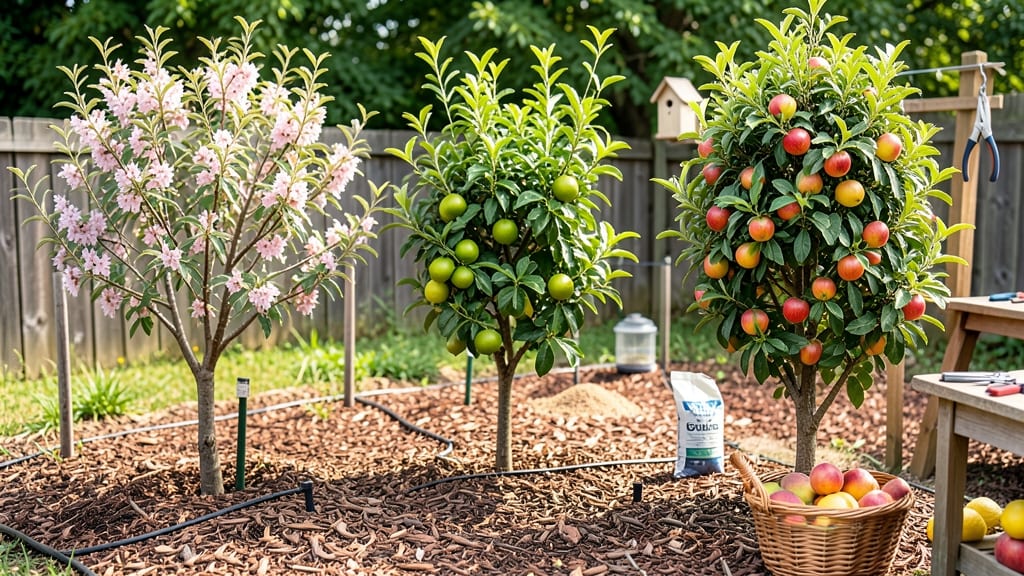
Creating a fruit tree garden that fits your space and delivers year-round harvests is easier than you think—even in a tiny backyard or urban patio. 🌳 I designed mine around dwarf varieties that produce peaches, plums, and apples within reach, and the secret is matching the right tree to your sunlight, soil, and available square footage.
The beauty of compact varieties is they let you grow a full orchard's worth of fruit without needing acres. My 6-foot-tall trees produce just as much as their full-size cousins, but they fit neatly into raised beds or even large containers.
Start with 2-3 varieties for pollination, and you'll have fresh fruit from early summer through fall—plus, some varieties even bear in winter with proper care.
You'll end up with a garden that's as pretty as it is productive: fragrant blossoms in spring, lush foliage all summer, and colorful fruit that ripens in waves.
The key is proper spacing (10-15 feet between standard trees, 6-8 feet for dwarfs) and a well-draining soil mix that prevents root rot—both problems I solved after my first season's mistakes.
Works for any yard size, from a single patio tree to a full orchard-style layout. Let's get your fruit trees planted and producing!
📚 In This Guide
- What you need
- Instructions
- Tips and common mistakes
- Wrapping up and next steps
What you need
- ● Fruit tree saplings or bare-root trees: Choose compact, dwarf, or columnar varieties (e.g., Apple ‘Columnar’, Peach ‘Bonanza’, or Fig ‘Little Miss Figgy’). Quantity: 1–5 trees, depending on space.
- ● High-quality potting mix or garden soil: Well-draining, organic-rich soil (e.g., Miracle-Gro Garden Soil or Espoma Organic Potting Mix). Quantity: 1–2 cubic yards (for in-ground) or 5–10 gallons (for containers).
- ● Compost or organic fertilizer: Slow-release (e.g., 10-10-10 NPK) or composted manure. Quantity: 5–10 lbs per tree.
- ● Mulch: Wood chips, straw, or shredded bark to retain moisture. Quantity: 2–3 inches per tree.
- ● Shovel & spade: For digging holes (12–18 inches wide/deep for dwarf trees).
- ● Pruning shears or saw: Sharp, sterilized tools for trimming.
- ● Garden gloves: Heavy-duty to protect hands.
- ● Watering can or hose with nozzle: For gentle watering (1–2 gallons per tree, 2–3x/week).
- ○ Container pots (optional): 15–25 gallon pots with drainage holes for urban gardens.
- ○ Trellis or stakes (optional): For supporting climbing varieties like apricots or kiwi.
- ● Sunlight: 6–8 hours of full sun daily (south-facing spot ideal).
- ● Space: Minimum 6–8 feet apart for dwarf trees; 10+ feet for standard varieties.
- ● Water access: Drip irrigation or hose nearby.
- ● Climate check: Verify your USDA Hardiness Zone (e.g., citrus thrives in Zones 9–11).
Step-by-Step guide to designing a compact fruit tree garden
Here's how to create a small but productive orchard in your yard or patio.
🪴 Step 1: Select the Right Dwarf Varieties
Choose dwarf or semi-dwarf rootstock varieties that fit your space—apple, peach, and citrus trees work beautifully in containers or small plots. I always pick disease-resistant types like 'Columnar Honeycrisp' apples or 'Patio Pearl' peaches, which stay under 8 feet tall and bear fruit reliably. Check your hardiness zone to ensure the tree thrives year-round.
If you're planting in containers, select self-pollinating varieties to avoid needing multiple trees. Citrus like 'Calamondin' or 'Meyer Lemon' are perfect for pots and can produce fruit indoors with enough light. The key is matching the tree's needs to your microclimate—some compact varieties need winter chill, while others thrive in warm climates.
☀️ Step 2: Choose the Perfect Location
Find a spot with 6-8 hours of direct sunlight daily—most fruit trees need full sun to set fruit. I always check the sunniest part of my yard, even if it's just a south-facing corner or balcony. If you're planting in containers, ensure they're close to a water source and can be moved indoors during extreme weather.
Consider wind exposure too—trees need protection from strong winds that can damage branches. A fence or building can act as a natural windbreak. For container trees, place them where they won't get knocked over, like near a sturdy wall. The goal is to mimic the tree's natural growing conditions as closely as possible.
🌱 Step 3: Prepare the Soil or Container
For in-ground planting, till the soil to a depth of 12-18 inches to loosen roots. Mix in 2-3 inches of compost to improve drainage and fertility. If your soil is heavy clay, add a handful of perlite or sand to help roots establish. I always test the soil pH—most fruit trees prefer a slightly acidic to neutral range of 6.0-7.0.
For containers, use a well-draining potting mix designed for fruit trees. A 15-20 gallon pot is ideal for dwarf varieties, with drainage holes to prevent root rot. Place a layer of broken pottery or mesh over the holes to keep soil in while allowing excess water to escape. The right mix ensures roots get both air and moisture without sitting in soggy conditions.
🌿 Step 4: Plant and Support Young Trees
Dig a hole twice as wide as the root ball but no deeper—this encourages roots to spread outward. Place the tree in the hole so the graft union (the bump near the base) sits 2-3 inches above soil level. This prevents the union from being buried, which can cause the tree to grow like a suckering weed instead of producing fruit.
Fill the hole with soil and water deeply to settle it around the roots. Add a 2-3 inch layer of mulch (like wood chips) around the base, keeping it 6 inches away from the trunk to prevent rot. Install a small stake or tree guard to protect young trees from wind or curious pets. Water immediately after planting to help roots establish contact with the soil.
⏰ Step 5: Maintain Through the Seasons
Water deeply once a week during the first year, ensuring the soil stays moist but not waterlogged. After that, most dwarf trees tolerate drought better but still need consistent moisture during fruit development. I check soil moisture by sticking my finger 2 inches deep—if it's dry, it's time to water.
Fertilize in early spring with a balanced fruit tree fertilizer (like 10-10-10) and again after harvest. Prune in late winter to remove dead wood and shape the tree, and thin fruit clusters in early summer to improve size and quality. Compact varieties need less pruning, but regular care keeps them healthy and productive year after year.
Tips & tricks for perfect fruit tree garden
Here's what I've learned after years of growing compact fruit trees—these tricks will help you avoid common mistakes and maximize your harvest.
Variety Matters: When selecting your compact varieties, pay special attention to their specific sunlight needs. Some like 'Patio Pearl' peaches need full sun (6-8 hours daily), while others like 'Calamondin' citrus can tolerate partial shade. I always check the tag for light requirements—this makes all the difference in fruit production. The 6-8 hours of sunlight mentioned in Step 2 is non-negotiable for most varieties, but positioning matters too. South-facing spots get the most consistent light.
Soil Prep Secret: For in-ground planting, don't just till the soil—test it first. Most fruit trees prefer a pH between 6.0-7.0, but you'd be surprised how many gardeners skip this step. I use a simple soil test kit from the hardware store. If your soil is too acidic, add lime; if too alkaline, work in composted pine needles. The 2-3 inches of compost in Step 3 is a great start, but amending the soil properly can double your tree's productivity in just one season.
Container Care: If you're growing in pots, remember that containers dry out faster than ground soil. I water my container trees every other day during summer, even though Step 5 suggests weekly watering for in-ground trees. The 15-20 gallon pot size is ideal, but larger pots mean less frequent watering. Always check soil moisture by sticking your finger 2 inches deep—this is the most reliable way to avoid over or under-watering. And never skip the drainage holes—they're non-negotiable for preventing root rot.
Pruning Pro Tip: When pruning in late winter (as mentioned in Step 5), focus on opening up the center of the tree to improve airflow. This prevents fungal diseases that can ruin your harvest. I always make cuts just above outward-facing buds. For compact varieties, you don't need to remove much—just shape and remove dead wood. The key is to prune when the tree is dormant, which gives it time to heal before spring growth begins.
Pro Tips for Fruit Tree Garden
- Here's what I've learned after years of growing compact fruit trees—these tricks will help you avoid common mistakes and maximize your harvest.
- Variety Matters: When selecting your compact varieties, pay special attention to their specific sunlight needs.
- Soil Prep Secret: For in-ground planting, don't just till the soil—test it first.
Frequently asked questions
How much space do I really need for a fruit tree garden?
A compact fruit tree garden thrives in surprisingly little space! Dwarf varieties (like columnar or spindle trees) can fit in containers or small yards, while standard trees need 8–12 feet of space. Consider vertical gardening or espalier techniques to maximize space—even a balcony can work!
When is the best time to plant fruit trees?
Plant in early spring (after the last frost) or late fall (before the ground freezes) for the best success. Bare-root trees (sold without soil) plant best in dormancy, while container-grown trees can go in year-round. Check your USDA hardiness zone to time it right!
Can I grow fruit trees in containers, or do I need a yard?
Many fruit trees (apples, peaches, cherries, and citrus) thrive in containers with proper drainage and sunlight. Use large pots (at least 18–24 inches deep) and well-draining soil. Just be ready to move them indoors or to a sheltered spot in winter if you’re in a cold climate.
What’s the biggest challenge when growing fruit trees, and how do I fix it?
The top issues are pests (aphids, borers) and disease (fungus, blight). Prevent problems with neem oil, copper fungicide, and proper pruning. If you spot trouble, act fast—remove infected leaves, thin fruit to reduce stress, and keep your garden clean!
How long until I get fruit from my trees?
Patience is key! Dwarf varieties may bear fruit in 2–3 years, while standard trees can take 4–7 years. Choose early-bearing cultivars (like ‘Anna’ apples or ‘Bonanza’ peaches) for faster rewards. Feed with compost or organic fertilizer annually to speed up the process!
Wrapping up and next steps
Creating a fruit tree garden with compact varieties is a rewarding way to enjoy fresh, homegrown produce year-round—no sprawling orchard required! 🌱 From selecting dwarf trees to mastering pruning and pest control, every step brings you closer to a bountiful harvest.
Whether you’re a beginner or a seasoned gardener, the key is patience, consistency, and a little creativity.
Now that you’re armed with the knowledge, take the first step today! Start small—pick one or two trees to begin—and watch your garden grow. Before you know it, you’ll be savoring sun-ripened fruit straight from your backyard. Happy planting! 🍎✨