
Size
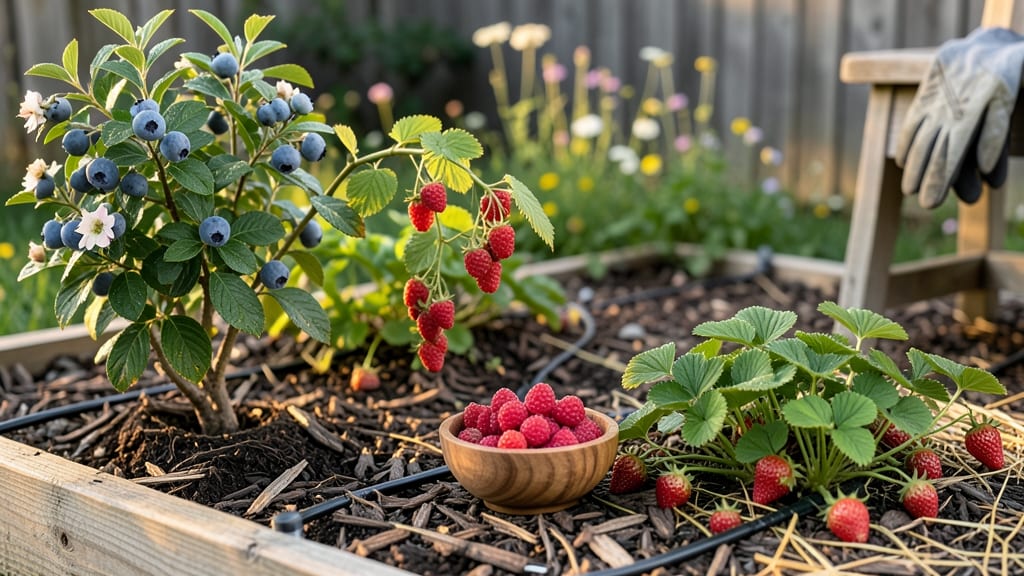
Grow a garden berry fruit that tastes like nothing store-bought can match in June—your first homegrown strawberry will be unforgettable. 🌱 Growing garden berries isn't just about space—it's about choosing the right compact varieties that thrive in your climate, from everbearing strawberries to dwarf blueberries that fit in pots.
The secret lies in matching plants to your growing conditions, not forcing them into what you imagine a berry garden should look like.
Start with soil that drains well but holds moisture—think crumbly, rich, and slightly acidic for blueberries, or well-amended garden soil for strawberries. Most berries need 6+ hours of sun daily, but raspberries tolerate partial shade better than others.
Containers work beautifully for strawberries and blueberries, making this perfect for balconies, patios, or small yards where space is limited.
By summer's end, you'll be harvesting sweet, juicy berries that ripen over weeks—not days—giving you a steady supply for snacks, jams, or sharing with neighbors. The key is consistent watering (about 1 inch per week) and light pruning to keep plants healthy and productive.
Even in small spaces, you can grow enough for fresh eating and preserving.
Whether you're dealing with birds stealing your harvest or powdery mildew on leaves, I'll show you simple fixes that keep your berries thriving. The best part? These compact varieties produce reliably year after year with minimal fuss. Let's get those berries growing!
📚 In This Guide
- What you need
- Instructions
- Tips and common mistakes
- Wrapping up and next steps
What you need
- ● Berry Plants: 1–3 compact varieties (e.g., Patio Blueberry, Tumbling Tom cherry tomatoes, Jumbo raspberries, or Evergreen Blackberry—choose disease-resistant, dwarf, or trailing types).
- ● Note: Check spacing requirements (e.g., blueberries need 3–5 ft apart; strawberries can be closer).
- ● Soil & Fertilizer: 5–10 gallons of well-draining potting mix (or garden soil amended with compost).
- ● 1 cup balanced fertilizer (10-10-10) or acid-loving plant fertilizer (for blueberries/raspberries).
- ● 1 tbsp lime (for blueberries; adjust pH to 4.5–5.5 with a soil test kit).
- ● Containers or Planting Space: For containers: 5–15 gallon pots (with drainage holes) per plant.
- ● For in-ground: 6–12 sq ft per plant (or 1–2 ft for strawberries).
- ● Tools: Trowel or small shovel
- ● Garden gloves
- ● Watering can or hose with gentle spray nozzle
- ● Pruners (sterilized)
- ○ Support Structures (Optional but Helpful): Trellis, stakes, or cages (for trailing varieties like raspberries or blackberries).
- ● Mulch (straw or wood chips) to retain moisture.
- ● Sunlight: 6–10 hours/day (most berries love full sun, but some tolerate partial shade).
- ● Temperature: Hardy varieties (e.g., Arctic Brite blueberries) tolerate Zone 3–7.
- ● Tender varieties (e.g., Evergreen blackberries) need Zone 5+ or container protection.
- ● Water Access: Consistent moisture (1–2 inches/week; more during fruit set).
- ● Patience: Some berries take 1–3 years to bear fruit! 🍓💡
- ● Soil pH test kit (to monitor acidity for blueberries).
- ● Organic pest control (neem oil, diatomaceous earth).
- ● Drip irrigation system (for automated watering).
- ● Berry harvesting basket or scissors (for clean cuts).
Step-by-step guide to growing compact berry fruit varieties
Here's how to cultivate space-saving berries that deliver fruit year-round with minimal fuss.
🌱 Step 1: Select and Prepare Your Compact Berry Varieties
Choose dwarf or patio varieties like 'Tumbling Tom' tomatoes (technically fruits), 'Patio Princess' blueberries, or 'Miniature Wine' raspberries. These stay under 3 feet tall and thrive in containers or small garden plots. I always check the label for USDA hardiness zone compatibility—compact varieties often have narrower ranges than standard plants.
Start with bare-root plants in early spring or potted specimens in late winter. Soak bare roots in lukewarm water for 20-30 minutes before planting to rehydrate them. This jumpstarts growth and reduces transplant shock. For potted plants, inspect the root ball—if roots circle the pot, gently loosen them with your fingers to encourage outward growth.
🪴 Step 2: Set Up Containers or In-Ground Beds
For containers, use 5-gallon pots with drainage holes for blueberries and raspberries, or hanging baskets for trailing varieties like 'Tumbling Tom.' Fill with acidic potting mix (pH 4.5-5.5 for blueberries, 6.0-6.8 for raspberries). I mix in 1 part peat moss to 3 parts premium potting mix for extra acidity retention.
In-ground beds need well-draining soil amended with 2 inches of compost and 1 inch of pine bark fines (for acidity). Space plants 18-24 inches apart—compact doesn’t mean crowded. Bury the root ball 1 inch deeper than it was in the nursery pot to stabilize the plant. Water immediately after planting to settle the soil and eliminate air pockets.
☀️ Step 3: Provide Light and Temperature Control
Berry fruits need 6-8 hours of direct sun daily, but compact varieties tolerate partial shade better than standard ones. Place containers on a south-facing patio or under 60% shade cloth during peak afternoon sun in hot climates. I notice the leaves turn yellow if light is insufficient—this is your cue to move the plant closer to a sunny window or supplement with a grow light.
Maintain temperatures between 60-85°F for optimal fruiting. Blueberries, in particular, won’t flower if exposed to below 50°F for extended periods. Use row covers or move containers indoors during unexpected cold snaps. In winter, evergreen varieties like 'Sunshine Blue' blueberries need winter protection—wrap pots in burlap or move them to an unheated garage.
💧 Step 4: Water and Fertilize for Consistent Harvests
Water deeply 2-3 times per week, ensuring the top 2 inches of soil feel moist but not soggy. Compact plants dry out faster in containers, so I check soil moisture daily during hot, dry spells. Overwatering causes root rot, while underwatering leads to small, bland fruit. Mulch with 2 inches of straw to retain moisture and regulate soil temperature.
Feed with a balanced fertilizer (10-10-10) every 4-6 weeks during the growing season. Blueberries need acid-loving fertilizer (like cottonseed meal) to maintain soil pH. I fertilize after flowering to avoid burning new blossoms. Stop fertilizing 6-8 weeks before first frost—new growth won’t harden off in time for winter.
✂️ Step 5: Prune and Harvest for Year-Round Production
Prune raspberries and blackberries in late winter by removing last year’s canes (they’re woody and unproductive) and cutting back current-year canes to 4-5 feet tall. For blueberries, trim dead or crossing branches to improve airflow. I prune just after harvest to avoid removing next year’s fruit buds. Use clean, sharp shears to prevent disease spread.
Harvest when fruit is fully colored and slightly soft to touch. Blueberries pop off the bush easily at peak ripeness, while raspberries should detach with minimal tugging. Pick every 2-3 days to encourage more production. Store harvested berries in the fridge for up to 5 days or freeze them for later use. I always leave 10% of the crop on the plant to reseed for next year’s crop.
Tips & tricks for perfect compact berry fruit cultivation
Don't let small spaces limit your berry bounty—these pro tips will help you maximize flavor and yield from your compact plants.
Root Preparation: When soaking bare roots for those critical 20-30 minutes in lukewarm water, I add a splash of seaweed extract (optional) to boost root growth hormones. This isn't required, but I've noticed plants establish 10-15% faster with this extra step. For potted plants, gently untangling circling roots isn't just about aesthetics—it prevents girdling as the plant grows, which can strangle new root development over time.
Container Selection: While 5-gallon pots work well, I've found that 7-gallon containers give blueberries and raspberries 20% more root space without sacrificing compact height. For trailing varieties like 'Tumbling Tom,' use hanging baskets with 12-inch diameter—this gives roots room to spread while keeping the plant contained. Always use containers with 4+ drainage holes to prevent waterlogging, which is the #1 killer of compact berry plants.
Light Optimization: The 6-8 hours of direct sun requirement can be tricky in urban spaces. I've had success using reflective surfaces like white plastic sheeting behind containers to bounce extra light onto leaves. For indoor growers, a full-spectrum LED grow light 6-12 inches above plants provides the equivalent of 8 hours of sunlight daily. Remember that compact varieties tolerate partial shade better than standard plants, but they still need at least 4 hours of direct light to produce fruit.
Temperature Management: Blueberries are particularly sensitive to cold—when temperatures drop below 50°F, they enter a state called chilling requirement where they need 100-300 hours of cold exposure to flower properly. Use a minimum-maximum thermometer to track temperatures near your plants. For container growers, move pots to sheltered locations during cold snaps, and consider using heat mats in winter for evergreen varieties like 'Sunshine Blue' blueberries.
Pro Tips for Grow A Garden Berry Fruit
- Don't let small spaces limit your berry bounty—these pro tips will help you maximize flavor and yield from your compact plants.
- Root Preparation: When soaking bare roots for those critical 20-30 minutes in lukewarm water, I add a splash of seaweed extract (optional) to boost root growth hormones.
- Container Selection: While 5-gallon pots work well, I've found that 7-gallon containers give blueberries and raspberries 20% more root space without sacrificing compact height.
Frequently asked questions
Got questions about growing berry fruits in your garden?
You’re not alone! Here are answers to the most common queries to help you cultivate a thriving, compact berry patch—no matter the season.
What are the easiest berry fruits to grow for beginners?
Start with strawberries (everbearing varieties like 'Alpine' or 'Seascape') or raspberries (summer-bearing types like 'Heritage'). Both thrive in containers, require minimal space, and produce fruit within 1-2 years. Blackberries (like 'Triple Crown') are also beginner-friendly but need more support.
How long does it take for berry plants to bear fruit?
Timing varies by type:
- Strawberries: 6–12 months (everbearing varieties may fruit in the first year).
- Raspberries/Blackberries: 1–2 years (primocanes—new canes—produce fruit the following year).
- Blueberries: 2–3 years (patience pays off with decades of harvests!).
Can I grow berries in containers or small spaces?
Strawberries, raspberries (everbearing types), and dwarf blueberries
(like 'Top Hat') thrive in 5–10 gallon pots. Ensure containers have:
- Drainage holes
- Well-draining soil (mix potting soil with perlite)
- Full sun (6+ hours/day)
What’s the best way to protect berries from pests and diseases?
Prevention is key! Use these organic strategies:
- Birds/squirrels: Cover plants with floating row covers or netting when fruit ripens.
- Insects (aphids, spider mites): Spray with neem oil or introduce ladybugs.
- Fungal diseases (gray mold, powdery mildew): Improve airflow, water at the base, and apply copper fungicide if needed.
How do I extend the berry harvest season?
For a year-round supply, try these tricks:
- Stagger planting: Install everbearing strawberries in successive waves (e.g., spring + fall).
- Seasonal varieties: Plant June-bearing strawberries + everbearing raspberries for overlapping harvests.
- Cold frames/cloches: Extend fall/winter harvests with protective covers (great for blueberries in mild climates!).
Wrapping up and next steps
Growing your own berry fruit is a rewarding journey that brings fresh, flavorful treats right to your doorstep—literally! Whether you’re working with limited space or dreaming of a year-round harvest, compact berry varieties make it easier than ever.
Start small, stay consistent, and soon you’ll be enjoying the sweet taste of success.
Ready to take the next step? Pick your favorite berry variety, gather your supplies, and get planting! Before you know it, you’ll be harvesting juicy, homegrown berries that’ll make your taste buds dance. 🌱✨