
How To
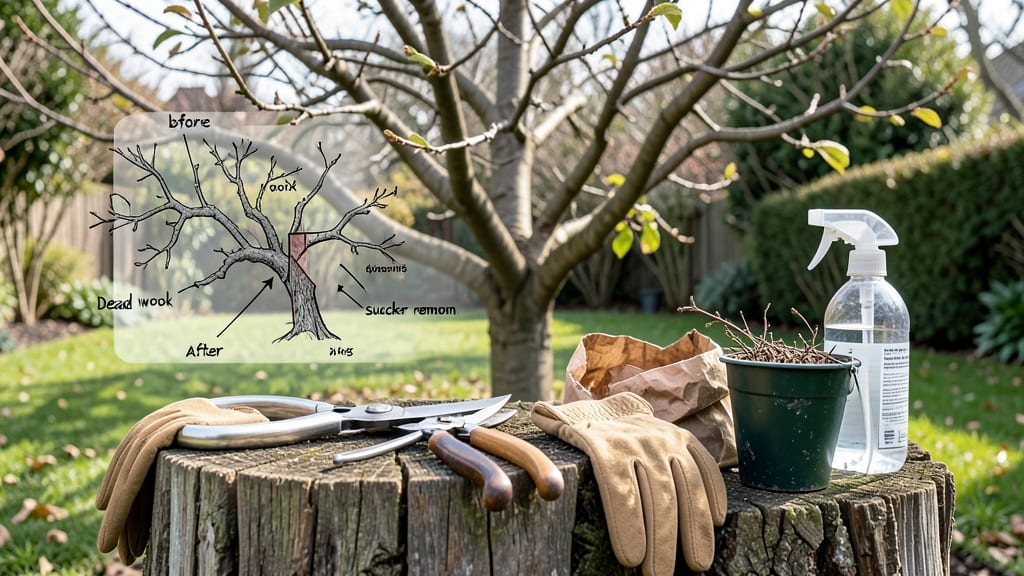
Pruning fruit trees isn't just about cutting branches—it's the secret to doubling your harvest next summer. 🌳 I learned the hard way when my peach tree produced just three pitiful fruits after years of neglect.
The right cuts at the right time transform a scraggly mess into a productive powerhouse that bears fruit for decades.
Timing matters most: prune dormant trees in late winter before buds swell, or lightly after harvest to shape growth. You'll focus on three key cuts—removing dead wood, thinning crowded branches, and opening the center for sunlight and airflow.
Each snip should have a purpose, whether it's improving fruit size, preventing disease, or keeping the tree manageable. Grab your pruners and let's make your orchard work smarter, not harder.
📚 In This Guide
- What you need
- Instructions
- Tips and common mistakes
- Wrapping up and next steps
What you need
- ● Pruning shears: Bypass pruners (for small branches, 2–4” diameter) or anvil pruners (for thicker branches, up to 1” diameter). Quantity: 1–2 pairs (keep a backup!).
- ● Loppers: Bypass-style (for branches 1–2” thick). Quantity: 1 pair.
- ● Pruning saw: Curved-tooth saw (for branches 2–4” thick). Quantity: 1.
- ● Rubbing alcohol (70%+) or bleach solution: (1 part bleach to 9 parts water) to sterilize tools between cuts. Quantity: Small bottle or spray bottle.
- ● Garden gloves: Cut-resistant (to protect hands from thorns and rough bark). Quantity: 1 pair.
- ● Ladder or step stool: Sturdy, non-slip (if trees are over 6–8 ft tall). Quantity: 1.
- ● Heavy-duty trash bags: For collecting pruned branches. Quantity: 2–3.
- ● Tree wound paint/sealer: Not always necessary (modern research suggests it’s often skipped, but useful for large cuts on susceptible trees like citrus).
- ● Pole pruner: For high branches (extends reach up to 12–15 ft).
- ● Tarp or drop cloth: To protect lawn/ground from falling debris.
- ● Notebook & pen: To sketch tree structure or note cuts for future reference.
- ● Safety glasses: If working near eyes or in dusty conditions.
Step-by-step guide to pruning fruit trees for optimal growth
Here's the method I've used for years to keep fruit trees healthy, productive, and easy to care for.
✂️ Step 1: Identify the Right Time for Each Seasonal Cut
Timing matters more than technique. For most fruit trees, late winter to early spring—just before buds swell—is ideal for structural pruning. This removes dead wood and shapes the tree while it's dormant. Summer pruning comes after harvest to control size and improve airflow, while fall pruning should be minimal to avoid stimulating new growth that won't harden off before winter.
Watch for bud break—when tiny green buds appear along branches—as your cue to stop pruning. If you cut after this point, you risk encouraging tender new growth that won't survive frost. For tropical fruit trees, prune when growth slows naturally, usually in late winter. Always use sharp, clean pruners to prevent tearing bark and inviting disease.
🌿 Step 2: Remove Dead, Diseased, or Crossing Branches First
Start with sanitation cuts—this is non-negotiable. Look for branches that are dead (no green bark), diseased (mushrooms, oozing sap, or discolored spots), or rubbing against each other. These compete for energy and create entry points for pests. Cut these out first, making your cuts at the branch collar—the swollen area where the branch meets the trunk—to promote fast healing.
If a branch is larger than ½ inch thick, use three-cut method: First, make an undercut on the underside of the branch, then top-cut just outside the branch collar, and finally twist the branch off. This prevents bark from tearing. I always sterilize my pruners with rubbing alcohol between cuts to stop pathogen spread.
☀️ Step 3: Thin Out the Canopy for Light and Airflow
Next, focus on selective thinning—removing branches that crowd the center or grow inward. Aim for an open vase shape with sunlight reaching the inner branches. Start from the outside in, removing branches that grow toward the center or cross others. You're not just cutting for shape; you're creating a well-ventilated canopy that reduces humidity and fungal diseases like powdery mildew.
Look for water sprouts—fast-growing, vertical shoots with no leaves. These steal energy from fruit production. Cut these back to a side branch or bud that faces outward. For apples and pears, I also remove suckers (shoots growing from the base) to direct energy upward. Never remove more than 25% of the tree's foliage in one season—this stresses the tree.
⏰ Step 4: Shape for Fruit Production and Future Growth
Now it's time for fruitwood development. For most trees, you want to encourage scaffold branches—the main limbs that form the tree's framework. Prune back overly vigorous shoots to a bud that faces outward, which encourages wider growth. For stone fruits like peaches, head back (shorten) last year's growth by ⅓ to promote flowering spurs.
Watch for dominant leaders—a single strong central stem that can make the tree top-heavy. If your tree has one, select 3-4 strong scaffold branches spaced evenly around the trunk and prune the leader just above an outward-facing bud. This creates a balanced, multi-leader structure that supports heavier fruit loads. I always step back to visualize the tree's shape—it's easier to see what needs adjustment from a distance.
🌱 Step 5: Clean Up and Monitor for Recovery
After pruning, remove all debris from under the tree—this prevents pests and diseases from overwintering. Rake up fallen leaves and branches, then dispose of them in the trash (not compost). If you have large branches, chip them into mulch for the garden, but avoid using them under the same tree species to prevent disease spread.
In the weeks following pruning, watch for new growth. Healthy trees will show bright green leaves within 4-6 weeks. If you see yellowing leaves, wilting, or oozing sap, you may have over-pruned or introduced a pathogen. Keep the area around the tree weed-free and water deeply once a week to help the tree recover. I also apply a balanced fertilizer in early spring to support new growth.
Tips & tricks for pruning fruit trees like a pro
Took me years of trial and error to master these pruning secrets—here's how to avoid common mistakes and maximize your tree's potential.
Timing is Everything: The late winter to early spring window (just before buds swell) is your best bet for structural pruning. If you're working with tropical fruit trees, late winter still applies, but focus on pruning when growth naturally slows. I've seen trees stressed by summer pruning when done too late—always watch for bud break as your stopping point. This timing prevents tender new growth that won't survive frost, especially critical for temperate climate trees.
The Three-Cut Method Matters: For branches thicker than ½ inch, the three-cut technique prevents bark tearing and promotes faster healing. I've ruined too many cuts by skipping this step—first undercut, then top-cut just outside the branch collar, and finally twist. Sterilize your pruners between cuts with rubbing alcohol to prevent disease spread. This method also makes cleanup easier when dealing with larger branches that might otherwise damage your tools.
Visualize the Canopy: Step back and look at your tree from all angles before making cuts. You're not just shaping—you're creating an open vase shape that allows sunlight to penetrate all branches. I always start from the outside in, removing branches that grow inward or cross others. This creates that crucial well-ventilated canopy that reduces fungal diseases. Think of it like opening a window in your tree's home—better airflow equals healthier fruit production.
Recovery Monitoring: After pruning, watch for bright green leaves within 4-6 weeks as your success indicator. Yellowing leaves or oozing sap signal potential issues—either over-pruning or introduced pathogens. I keep a weed-free zone around the base and water deeply once weekly to support recovery. The 25% foliage rule is non-negotiable: removing more stresses the tree and can reduce next year's harvest. This monitoring period is where you'll see if your cuts were too aggressive or too light.
Pro Tips for Prune Fruit Trees
- Took me years of trial and error to master these pruning secrets—here's how to avoid common mistakes and maximize your tree's potential.
- Timing is Everything: The late winter to early spring window (just before buds swell) is your best bet for structural pruning.
- The Three-Cut Method Matters: For branches thicker than ½ inch, the three-cut technique prevents bark tearing and promotes faster healing.
Frequently asked questions
Got questions about pruning fruit trees? You’re not alone! Here are answers to the most common concerns—from timing to tools and troubleshooting—to help you prune like a pro.
When is the best time to prune fruit trees?
The ideal time depends on your tree type:
- Dormant season (late winter/early spring): Best for most fruit trees (e.g., apples, peaches). Prune before buds swell to minimize disease risk.
- Summer (after harvest): Light pruning for shape or damage control—avoid heavy cuts to stress the tree.
- Avoid fall: Pruning too late can stimulate new growth vulnerable to frost or pests.
Do I need to sterilize my pruning tools?
Absolutely!
Sterilizing tools (with rubbing alcohol or a 10% bleach solution) prevents spreading fire blight or other diseases between cuts. Wipe blades before and after each tree, especially if switching between infected and healthy branches.
What if I prune at the wrong time?
Mistakes happen! Light pruning errors (e.g., minor timing off) often heal fine. Big red flags:
- Heavy cuts in active growth (spring/summer) can stress the tree.
- Pruning too late in fall/winter may invite pests or frost damage.
Can I prune fruit trees without shears?
Yes! For small branches or shaping, use:
- Hand pruners: Best for branches <½-inch thick.
- Loppers: Handle thicker branches (up to 2 inches).
- Saw: For stubborn, large limbs (3+ inches).
- DIY tools: A sharp knife or even a clean, heavy-duty scissors in a pinch (sterilize first!).
How do I know if I’ve pruned too much?
Signs of over-pruning include:
- Excessive leaf drop or wilting.
- Slow recovery (no new growth after 4–6 weeks).
- Exposed large wounds (bigger than a silver dollar).
Wrapping up and next steps
Pruning your fruit trees is the secret sauce to healthier growth and bigger, juicier harvests—but it’s all about timing, technique, and a little patience! 🌳✂️ Whether you’re trimming in winter for structure or summer for shape, remember: less is more.
Start small, observe your tree’s response, and soon you’ll be a pruning pro.
Ready to take the next step? Grab your tools, pick a sunny day, and get pruning! Your future fruit baskets will thank you. 🍏🍊