
How To
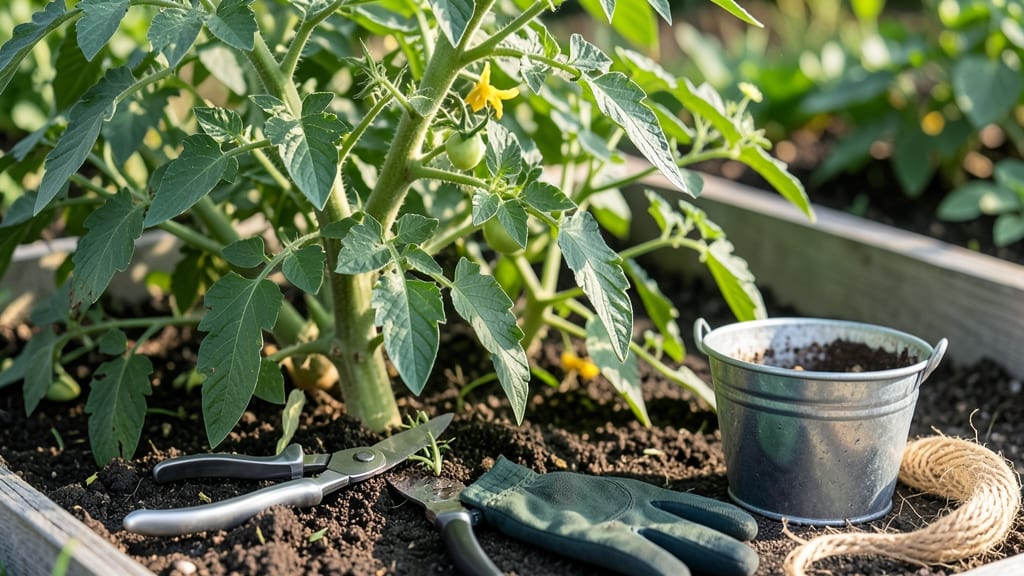
Pruning tomato plants for more fruit isn't about hacking away—it's about guiding energy where it matters most. ✂️ I learned this the hard way after over-pruning my first vine and ending up with fewer tomatoes than my neighbor's unpruned bush.
The right cuts boost yields by directing the plant's focus to fruit production instead of leafy growth.
You'll need just three tools: sharp pruning shears, a small notebook for tracking cuts, and a sunny morning to work. The key is timing: remove suckers (those little shoots between stems) when they're pencil-sized, and trim lower leaves to improve airflow—both tricks prevent disease and push energy upward.
For indeterminate varieties, this means more fruit all season long, while determinate types need minimal pruning to avoid stress.
📚 In This Guide
- What you need
- Instructions
- Tips and common mistakes
- Wrapping up and next steps
What you need
- ● Pruning shears or sharp scissors – Clean, sterilized tools (alcohol wipe or bleach solution) to prevent disease spread. Bypass pruners (not anvil) are ideal for clean cuts.
- ● Gloves – Garden gloves (nitrile or leather) to protect against thorns and dirt.
- ● Garden twine or soft ties – 3–5 feet per plant (if staking or trellising). Use jute or plastic-coated twine to avoid damaging stems.
- ● Stakes or trellis system – 5–6 ft tall stakes (for indeterminate varieties) or cages (for determinate). Opt for bamboo, metal, or wooden stakes with a diameter of 1–2 inches.
- ● Disinfectant solution – 1 part bleach to 9 parts water (for sterilizing tools between cuts).
- ● Garden mulch – Straw, grass clippings, or wood chips (2–3 inches thick) to retain moisture and suppress weeds.
- ● Hand pruners with ergonomic grips – For comfort during long pruning sessions.
- ● Plant markers or labels – To track varieties and pruning schedules.
- ● Compost bin or bucket – For collecting pruned leaves (add to compost later).
- ● Sun hat and sunscreen – Because pruning sessions can get hot! ☀️
Step-by-Step guide to pruning tomato plants for maximum fruit
Here's the method I've used for years to turn lush tomato plants into fruit factories.
✂️ Step 1: Remove Suckers Early and Often
Suckers are those little shoots that grow in the V-shaped junction between the main stem and a branch. These energy thieves compete with your fruit for nutrients. I start checking plants when they're about 12-18 inches tall—usually 3-4 weeks after transplanting.
Use your thumb and forefinger to gently pinch suckers when they're about 1-2 inches long. Never cut with scissors—you'll risk introducing disease. I always prune on a dry morning so wounds heal quickly. Watch for new suckers forming every 2-3 weeks and remove them immediately.
🌿 Step 2: Open the Plant's Canopy for Airflow
When your plant reaches 3-4 feet tall, focus on creating an open, airy structure. Remove any leaves that touch the soil—these create damp conditions that breed disease. I also trim leaves on the lower 18 inches of the plant to improve airflow and sunlight penetration.
Leave only the top 6-8 leaves above the first flower cluster. This might seem extreme, but it forces the plant to direct energy upward where it counts. You'll notice fruit setting improves dramatically within 1-2 weeks of this pruning. Always use clean, sharp pruners to avoid tearing plant tissue.
☀️ Step 3: Limit Main Stem Growth at the Right Time
For determinate varieties, stop pruning once the plant reaches 4-5 feet tall—they naturally stop growing. Indeterminate varieties need more attention. When your plant hits 5-6 feet, pinch off the growing tip just above a flower cluster. This redirects energy to fruit development instead of leaf growth.
Here's the thing—don't overdo it. You want to maintain 3-4 main stems for indeterminates. Watch for new suckers forming at the top and remove them immediately. You'll know you're on track when your plant looks like an open umbrella rather than a dense bush.
⏰ Step 4: Maintain Through Fruit Set
Once flowers appear, reduce aggressive pruning. Focus on removing only yellow or diseased leaves and any suckers that form below the first flower cluster. I check my plants every 5-7 days during fruit set season—this is when small adjustments make the biggest difference.
Water at the base only during this stage. Wet leaves encourage blight, and you don't want to disturb the delicate flowers. You'll see the difference in fruit production within 2-3 weeks—plants pruned this way develop larger, healthier tomatoes with fewer empty blossom ends.
Tips & tricks for pruning tomato plants
These simple adjustments will help you maximize your tomato harvest without sacrificing plant health.
Timing Secret: In Step 1, when you're pinching those 1-2 inch suckers every 2-3 weeks, I've found that early morning is the best time. The plant's natural sugars are highest then, so wounds heal faster and you reduce stress on the plant. If you must prune later in the day, do it at least 2 hours before sunset to give the plant time to recover.
Tool Tip: Never use scissors or shears for pruning—you risk introducing disease through cuts. Instead, use your fingers to pinch suckers cleanly at their base. For larger branches, invest in a pair of clean, sharp pruners that you can disinfect with rubbing alcohol between uses. This keeps your plants healthy and prevents the spread of fungal spores.
Visual Cue: When you reach Step 2 and need to leave only 6-8 leaves above the first flower cluster, think of your plant as an open umbrella. The goal is sunlight penetration to the lower fruit while maintaining enough foliage to support photosynthesis. If you're unsure, take a photo of your plant after pruning—you'll notice the dramatic difference in light exposure within just a few days.
Variety Matters: For indeterminate varieties in Step 3, when you pinch off the growing tip at 5-6 feet, remember that each plant can handle 3-4 main stems. This creates a balanced structure that supports heavy fruit loads. Determinate varieties don't need this step—they naturally stop growing, so just let them be. The key is knowing your plant type before you start pruning.
Pro Tips for Prune Tomato Plants For More Fruit
- These simple adjustments will help you maximize your tomato harvest without sacrificing plant health.
- Timing Secret: In Step 1, when you're pinching those 1-2 inch suckers every 2-3 weeks, I've found that early morning is the best time.
- Tool Tip: Never use scissors or shears for pruning—you risk introducing disease through cuts.
Frequently asked questions
Got questions about pruning tomato plants to maximize fruit production? You’re not alone! Here are some of the most common concerns—and their straightforward answers—to help you prune like a pro.
When is the best time to start pruning tomato plants?
Prune your tomato plants after they’ve developed a strong stem (about 12–18 inches tall) and show signs of early flowering. For indeterminate varieties, start pruning when the plant is 3–4 feet tall. Wait until the plant is established—early pruning can stress young plants and delay fruit production.
How often should I prune tomato plants for maximum yield?
Prune indeterminate tomatoes every 1–2 weeks during the growing season (spring to early fall) to encourage airflow and fruit development. Determinate varieties (bush tomatoes) typically don’t need pruning—focus on removing suckers if they appear. Consistency is key! Over-pruning can reduce yield, so avoid aggressive cuts.
What if I skip pruning? Will my tomatoes still produce fruit?
Yes! Determinate tomatoes (like Roma or Celebrity) thrive without pruning and produce fruit in clusters. Indeterminate varieties (like Cherry or Beefsteak) will still fruit if unpruned, but yields may be smaller, and disease risk increases due to poor airflow. Pruning boosts fruit size, quality, and quantity—worth the effort!
What should I do if my tomato plant looks stressed after pruning?
If your plant wilts or stops growing after pruning, it’s likely a sign of over-pruning or shock. Stop pruning immediately and focus on hydration—water deeply and mulch to retain moisture. Avoid fertilizing for a week to let the plant recover. Prune less aggressively next time and watch for new growth within 7–10 days.
Can I prune tomato plants in hot or cold weather?
Avoid pruning during extreme heat (above 90°F) or cold snaps (below 50°F), as it stresses the plant. Opt for mild, overcast days to minimize shock. Early morning or late afternoon are ideal times. Wait until temperatures stabilize if your region has unpredictable weather.
Wrapping up and next steps
Pruning your tomato plants doesn’t have to be intimidating—it’s all about strategic cuts to redirect energy toward fruit production!
By removing suckers, opening the canopy, and trimming lower leaves, you’re giving your plants the best shot at a bountiful harvest. 🌱 With patience and the right technique, you’ll soon be enjoying juicier, healthier tomatoes straight from your garden.
Ready to put your new skills to the test? Grab your pruners and start pruning today—your future meals (and happy plants!) will thank you. 🍅✨