
Pruning
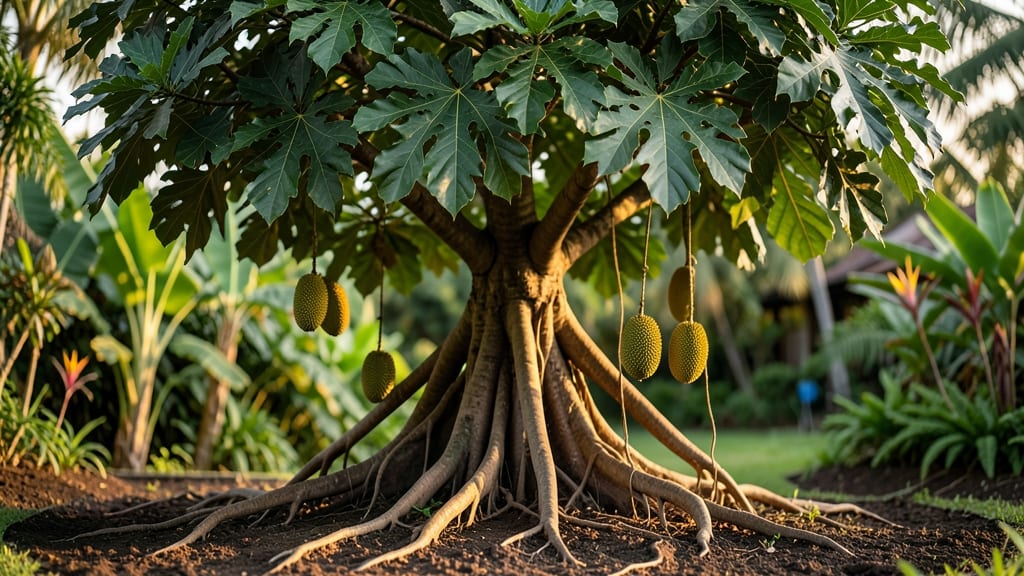
Caring for a jackfruit tree means turning your backyard into a tropical oasis with 30-foot-tall giants producing fruit that tastes like a cross between pineapple and mango. 🌿 I’ve watched mine go from a spindly sapling to a lush canopy in just three years—and the secret isn’t complicated.
It’s all about mimicking the humid, well-drained conditions of its Southeast Asian homeland, even if you’re not in a true tropical zone.
The right soil mix is your foundation: 60% sandy loam, 30% compost, and 10% perlite to prevent root rot. Watering’s the next game-changer—keep the soil consistently moist but never soggy, especially during the first two years.
Mulch heavily to retain moisture and cool the roots, because jackfruit trees hate temperature swings. And yes, they will grow in containers if you’re in a cooler climate, though they’ll need a 20-gallon+ pot and winter protection.
By summer, you’ll see glossy, compound leaves unfurling into that signature tropical shape, and with proper pruning, you’ll encourage a sturdy trunk and manageable height. The first harvest might take 5-7 years, but the journey—watching vines thicken and flowers bloom—is what makes it worth it.
Even in suburban yards, these trees thrive with the right care.
Here’s the kicker: jackfruit trees reward patience. They’re drought-tolerant once established, resistant to most pests, and their massive roots actually improve soil over time. The biggest challenge? Finding a nursery that carries them—but once you do, you’re planting a legacy. Ready to grow one?
📚 In This Guide
- What you need
- Instructions
- Tips and common mistakes
- Wrapping up and next steps
What you need
- ● Soil: Well-draining, slightly acidic soil (pH 5.5–7.0) – mix 1 part compost with 2 parts garden soil or potting mix.
- ○ Optional: Perlite or coarse sand (10–20%) to improve aeration.
- ● Planting: Seedlings or grafted saplings (available at nurseries or online).
- ● 5-gallon pot or larger (for young trees) or direct planting hole (2–3x wider than root ball).
- ● Organic mulch (wood chips or straw, 2–3 inches thick) to retain moisture.
- ● Watering: Drip irrigation system or garden hose with adjustable nozzle.
- ● Water storage (5–10 gallons) for deep watering sessions.
- ● Pruning: Bypass pruners (sharp, 6–8 inch blades) for small branches.
- ● Loppers (12–18 inch blades) for thicker branches (up to 2 inches).
- ● Pruning saw (for branches 2+ inches thick).
- ● Disinfectant (70% isopropyl alcohol or bleach solution) to sterilize tools between cuts.
- ● Fertilizing: Balanced fertilizer (e.g., 10-10-10 or 8-3-9) – 1–2 lbs per tree every 2–3 months.
- ● Slow-release organic options (e.g., composted manure or worm castings).
- ● Shade cloth (30–50% coverage) for young trees in hot climates.
- ● Tree support stakes (2–3 per tree) for windy areas.
- ● Pest control: Neem oil, insecticidal soap, or beneficial nematodes.
- ● Soil moisture meter to monitor watering needs.
- ● Tree banding (aluminum or plastic) to protect trunks from pests.
Step-by-step jackfruit tree care for year-round growth
Here’s how to nurture a thriving jackfruit tree with seasonal adjustments—no guesswork, just proven techniques.
🪴 Step 1: Select the Right Location and Soil
Jackfruit trees demand full sun exposure—at least 6-8 hours daily—and thrive in well-draining, slightly acidic soil (pH 5.5-6.5). I always test soil pH before planting; a cheap test kit from a garden center saves headaches later. If your soil is heavy clay, amend with compost and coarse sand to improve aeration.
Dig a hole twice as wide as the root ball but no deeper. The tree’s root flare (where roots meet trunk) should sit 1-2 inches above ground level—burying it too deep suffocates roots. Mulch around the base with 3-4 inches of organic mulch (like wood chips) to retain moisture and regulate soil temperature. Keep mulch 6 inches away from the trunk to prevent rot.
☀️ Step 2: Water Deeply and Strategically
Jackfruit trees hate soggy roots but need consistent moisture, especially in their first year. Water deeply once a week (or more in 90°F+ heat) until water drains 6-8 inches down. You’ll know it’s enough when the top 2 inches of soil feel dry—stick your finger in to check. Overwatering is the #1 killer; yellowing leaves or wilting despite damp soil means you’re drowning the roots.
During fruiting season (spring/summer), increase watering to twice weekly if the tree shows signs of stress—drooping leaves or small, hard fruits. Drip irrigation or soaker hoses work best; overhead watering encourages fungal diseases. I always water early morning to let foliage dry before evening humidity sets in.
✂️ Step 3: Prune for Shape and Fruit Production
Prune jackfruit trees twice yearly: late winter (before new growth) to remove dead/diseased branches, and summer (after fruiting) to shape the canopy. Use clean, sharp pruners to make cuts just above a bud or lateral branch. Avoid heavy pruning—jackfruit trees produce fruit on new growth, so don’t trim more than 20% of the canopy at once.
Focus on opening the center of the tree to improve airflow and sunlight penetration. Remove suckers (shoots from the base) immediately—they sap energy from fruit production. If your tree is young, prune to encourage a strong central leader (main trunk). Older trees benefit from selective thinning to prioritize larger branches bearing fruit.
🌿 Step 4: Fertilize for Optimal Growth and Fruiting
Feed jackfruit trees every 3 months with a balanced, slow-release fertilizer (10-10-10 or 8-3-9 ratio). In spring, use a higher-nitrogen mix (like 12-4-8) to encourage leafy growth. Switch to a phosphorus-heavy fertilizer (like 5-10-10) in early summer to boost flowering and fruiting. Avoid synthetic fertilizers—jackfruit trees respond better to organic options like composted manure or worm castings.
Apply fertilizer 6 inches away from the trunk and water it in immediately to prevent root burn. I always split the recommended dose into two applications, 2 weeks apart, for gentler uptake. If leaves turn yellow with brown edges, it’s a sign of over-fertilizing—flush the soil with water and reduce frequency. Healthy trees show deep green leaves and steady growth (6-12 inches per year).
⏰ Step 5: Protect Against Pests and Seasonal Stress
Jackfruit trees face few pests, but scale insects and mealybugs can appear on new growth. I treat them with neem oil spray (1 tbsp neem oil + 1 quart water + a drop of dish soap) every 2 weeks during outbreaks. For fungal issues (like powdery mildew), prune for airflow and apply copper fungicide at the first sign of white powder on leaves.
In winter, jackfruit trees enter dormancy but still need care. Reduce watering to every 2-3 weeks unless temperatures drop below 40°F, then protect the tree with burlap wraps or a frost cloth. If you’re in a frost-prone zone, plant near a south-facing wall to capture heat. Watch for leaf drop—it’s normal in cold snaps, but new growth should return by early spring.
Tips & tricks for jackfruit tree care
A few targeted strategies will help you avoid common pitfalls and keep your jackfruit tree thriving year-round.
Soil Preparation Secret: Before planting, mix in one part compost and one part coarse sand for every three parts native soil—this creates the ideal well-draining, slightly acidic environment (pH 5.5-6.5) jackfruit trees crave. I've seen trees planted in unamended clay soil struggle for years, while amended soil produces fruit within three seasons. Test your soil pH before planting; if it's above 7.0, add elemental sulfur to lower it gradually over a month.
Watering Technique: The key to consistent moisture is checking soil depth—insert a trowel or your finger 6-8 inches down after each watering. If the soil feels dry at that depth, it's time to water again. In extreme heat (above 90°F), I increase frequency to every 2-3 days while monitoring for signs of stress like drooping leaves. Early morning watering prevents fungal diseases by allowing foliage to dry completely before nighttime humidity sets in.
Pruning Precision: When pruning in late winter, focus on removing branches that cross or rub against each other—these create entry points for diseases. For summer shaping, I prioritize branches that block sunlight from reaching the center of the tree. Always make cuts just above a bud or lateral branch to encourage new growth. Remember the 20% rule: never remove more than one-fifth of the canopy at once, especially on fruiting trees.
Fertilizer Timing: The two-week split application method prevents root burn while delivering nutrients efficiently. For spring feeding, I use a 12-4-8 ratio fertilizer and apply it when new growth appears—this signals the tree is ready for nitrogen. In early summer, switch to a 5-10-10 mix when you notice flower buds forming. Organic options like worm castings release nutrients slowly, mimicking natural decomposition patterns that jackfruit trees respond to beautifully.
Pro Tips for Jackfruit Tree Care
- A few targeted strategies will help you avoid common pitfalls and keep your jackfruit tree thriving year-round.
- I've seen trees planted in unamended clay soil struggle for years, while amended soil produces fruit within three seasons.
- Watering Technique: The key to consistent moisture is checking soil depth—insert a trowel or your finger 6-8 inches down after each watering.
Frequently asked questions
Got questions about keeping your jackfruit tree happy and productive?
Here are answers to the most common concerns—from pruning to pests and everything in between!
How often should I prune my jackfruit tree?
Prune your jackfruit tree twice a year: once in late winter (before new growth) to shape the canopy and remove dead wood, and again in early summer to encourage fruiting. Avoid heavy pruning during fruiting season—focus on light trimming to avoid stressing the tree.
What are the most common pests for jackfruit trees, and how do I treat them?
Watch for fruit flies, scale insects, and mealybugs—they’re the usual culprits! Treat infestations early with neem oil or insecticidal soap. For severe cases, introduce beneficial predators like ladybugs or consult a local arborist.
Can jackfruit trees survive frost? What’s the best way to protect them?
Jackfruit trees are tropical and cannot tolerate frost—temperatures below 32°F (0°C) will damage or kill them. If you live in a cooler climate, grow them in containers and move them indoors or to a greenhouse during winter. Use row covers or mulch heavily for ground-planted trees.
How do I know when jackfruit is ripe and ready to harvest?
Ripe jackfruit is heavy for its size, emits a sweet, tropical aroma, and has a yellowish-green skin (varies by variety). Tap the fruit—if it sounds hollow, it’s ready! Harvest carefully with pruning shears to avoid damaging the tree.
Can I grow a jackfruit tree in a pot? What size container do I need?
Yes! Jackfruit trees thrive in large containers (at least 20 gallons) with well-draining soil. Ensure the pot has drainage holes and use a balanced fertilizer every 2–3 months. Repot every 2–3 years to accommodate growth.
Wrapping up and next steps
Caring for a jackfruit tree is a rewarding journey that blends patience, passion, and a little green-thumb magic! 🌿 By mastering pruning techniques, understanding seasonal needs, and troubleshooting common issues, you’ll nurture a thriving canopy that yields bountiful fruit.
Remember, consistency is key—whether you’re shaping young branches or managing pests, each step brings you closer to a lush, productive tree.
Ready to take the next step? Start small: pick one pruning task this week—like removing dead branches or thinning the canopy—and watch your jackfruit tree flourish! 🌱 For deeper insights, explore our pruning calendar or join a tropical fruit-growing community to share tips and triumphs.