
Trees
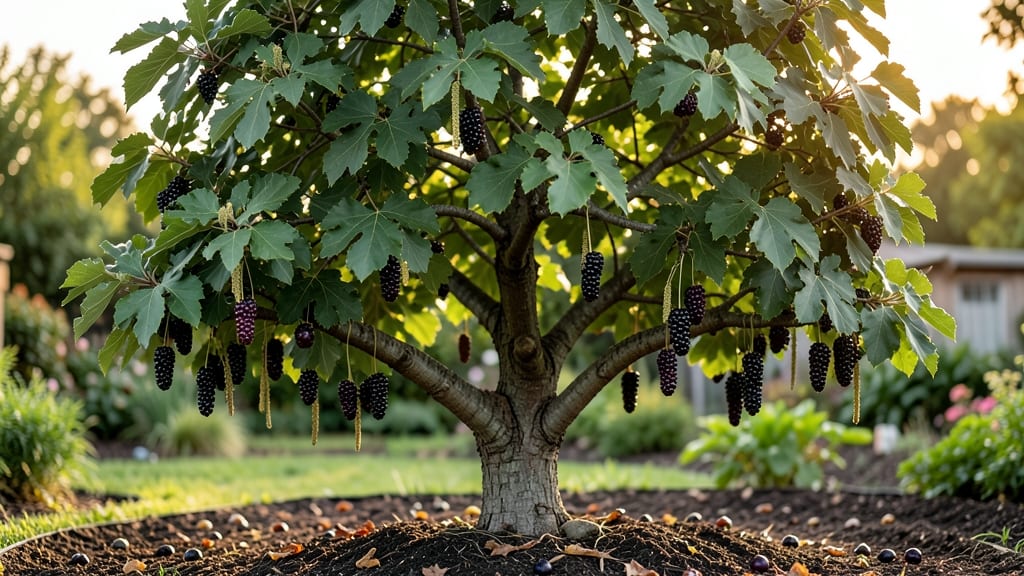
Edible mulberry fruit ripens to a deep purple-black color and delivers a refreshing sweet-tart taste reminiscent of blackberries. Since some ornamental mulberry trees produce toxic berries, always confirm the tree type and avoid picking berries that taste bitter or haven't fully ripened.
Identifying safe mulberries starts with the tree itself—true edible varieties like Morus nigra (black mulberry) or Morus rubra (red mulberry) produce berries that soften and darken as they ripen. 🌿 The skin should feel slightly waxy rather than hard, and ripe berries release easily when gently pressed.
Ornamental types often have smaller, paler berries that stay firm and bitter, even when fully grown. I always cross-reference with local gardening resources or university extension guides to double-check before harvesting, since visual cues alone can be misleading in some regions.
Once confirmed, mulberries shine in both simple and creative preparations. Fresh berries work beautifully in salads or as a topping for yogurt, while their natural sweetness makes them perfect for jams or smoothies.
For longer storage, spread them on a baking sheet and freeze for up to six months, or dry them in a dehydrator to concentrate their flavor. The key is speed—mulberries bruise easily, so handle them gently during harvest and preparation.
💡 In This Article
- How to Identify Safe Mulberry Fruit for Eating
- Best Ways to Prepare and Store Mulberry Fruit
How to identify safe mulberry fruit for eating
The key to spotting edible mulberries lies in understanding the botanical differences between varieties.
True edible species like Morus nigra (black mulberry) and Morus rubra (red mulberry) produce berries that soften dramatically as they ripen, reaching a deep purple-black color when fully mature. 🌱 Ornamental types, such as Morus alba (white mulberry), often have berries that stay lighter in color (pale pink or yellowish) and remain firm to the touch, even when "ripe."
The skin of edible mulberries also develops a slight waxy sheen, while toxic varieties typically have a dull, matte finish.
Ripening stages are critical—unripe mulberries taste bitter and can cause stomach upset, while fully ripe ones burst with a sweet-tart flavor similar to blackberries but with a unique floral note.
Size matters too: edible mulberries typically grow to 1-2 centimeters in diameter, while ornamental varieties often stay smaller (0.5-1 centimeter).
Press a berry gently—if it leaves a slight stain on your thumb, it's likely ripe and safe to eat. 🍇 Another trick is the "float test": drop a few berries in water. Edible mulberries sink immediately (high water content), while some toxic lookalikes may float or sink slowly.
Visual cues alone aren't foolproof, so cross-reference with local resources. University extension offices often publish guides comparing edible and ornamental mulberries in your region.
I once mistook pale pink berries from a Morus alba for edible ones—until I researched and discovered they contain hydrocyanic glycosides, which can cause nausea or worse.
When in doubt, avoid harvesting from trees in urban areas, as they're more likely to be ornamental varieties planted for their foliage rather than fruit.
Seasonal timing helps too. Edible mulberries typically ripen in late summer to early fall, while ornamental types may produce berries earlier or later in the season.
Pay attention to local bird activity—birds often avoid toxic berries, so if you see them feasting on a tree's fruit, it's a good (though not guaranteed) sign the berries are safe. 🐦 For absolute certainty, consult with a local botanist or gardening club before your first harvest.
Texture is your final checkpoint. Ripe mulberries should feel plump and yielding when squeezed gently, almost like overripe blueberries. Any resistance or graininess suggests the berries are unripe or from a non-edible variety. The flesh should also release easily from the skin—if it clings stubbornly, that's another red flag.
Remember, mulberries bruise easily, so handle them with care during inspection to avoid crushing and releasing bitter compounds.
If you're still unsure, start with a small taste test on just one berry. Chew thoroughly and wait 15-20 minutes for any reactions. A pleasant sweet-tart flavor with no tingling or burning sensation is a green light.
Bitter or metallic tastes mean it's best to discard those berries. 💡 Pro tip: Keep a small notebook during your first few harvests, recording tree locations, berry colors, and taste results to build your own reliable identification system over time.