
Flowers
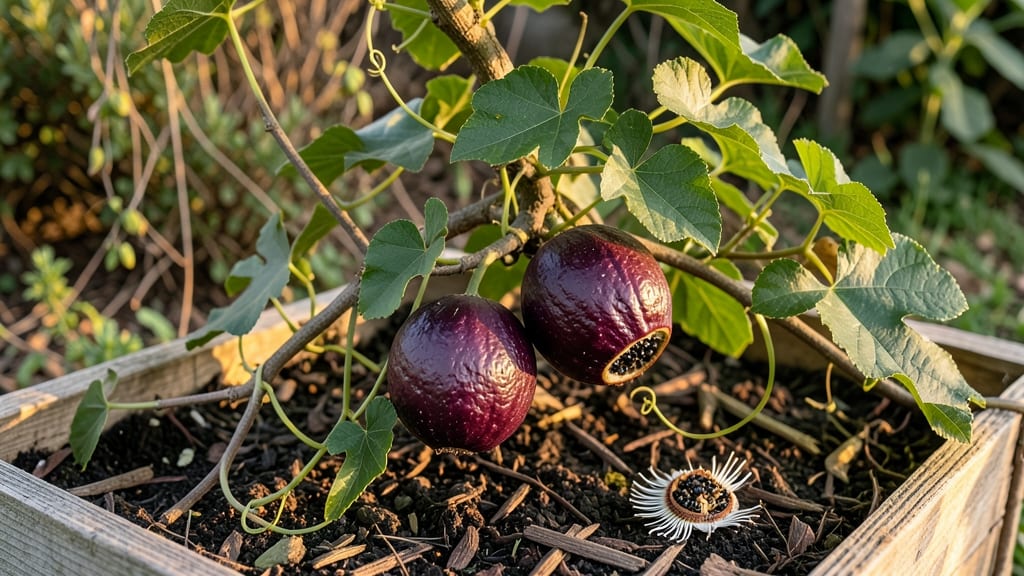
Growing the purple passion flower fruit is like cultivating a piece of the tropics right in your backyard—those sweet, tangy fruits taste like sunshine in every bite. 🌿 The key starts with warm soil, a sturdy trellis, and a little patience, because this vine rewards you with year-round harvests once it’s established.
I’ve grown mine for three seasons now, and the first time I tasted that deep purple fruit straight off the vine, I knew I’d never buy store-bought again.
This vine thrives in full sun (at least 6-8 hours daily) and craves well-draining soil—think sandy loam mixed with compost. Plant in spring after the last frost, and give it space to climb, because passion vines can spread 15-20 feet if left unchecked.
Water consistently but avoid soggy roots, and feed with a balanced fertilizer every 6-8 weeks during growing season. The real magic happens when bees and butterflies pollinate those striking flowers—each one holds the promise of future fruit.
By mid-summer, you’ll start seeing those grapelike clusters forming, and with proper care, a single vine can produce 50-100 fruits per season. The fruit itself is a showstopper—purple-skinned with juicy, gelatinous pulp that’s perfect for juices, smoothies, or eating fresh.
Even the flowers are edible, adding a delicate floral note to salads. The vine also doubles as a stunning ornamental, with its glossy leaves and exotic blooms that attract pollinators all season.
Here’s the thing about passion fruit—it’s frost-sensitive, so in colder zones, you’ll need to grow it in containers and overwinter indoors. And yes, it can be slow to start, but once it takes off, it’s a low-maintenance powerhouse.
The biggest mistake? Skipping the trellis—those vines get heavy with fruit, and without support, they’ll snap under the weight. With the right setup, you’ll be harvesting within a year, and your neighbors will be asking for cuttings.
📚 In This Guide
- What you need
- Instructions
- Tips and common mistakes
- Wrapping up and next steps
What you need
- ● Passiflora edulis (Purple Passion Flower) Seeds or Nursery Plants – 3–5 plants (choose disease-resistant varieties for best results).
- ● Well-draining Potting Mix – 5–10 gallons per plant (blend 60% coconut coir, 20% perlite, 20% compost).
- ● Large Containers or Raised Beds – 15+ gallon pots (with drainage holes) or 6+ ft. long beds (if growing in-ground).
- ● Support System – 6–8 ft. trellis, arbor, or sturdy stakes (passion vines climb aggressively!).
- ● Slow-Release Fertilizer – Balanced 10-10-10 or organic options (e.g., worm castings) for planting.
- ● Pruning Shears – Sharp, sterilized shears (for trimming vines and deadheading).
- ○ Mulch (Optional but Helpful) – Straw or wood chips to retain moisture and suppress weeds.
- ● USDA Zones 8–11 (or greenhouses for cooler climates). Purple passion thrives in full sun (6+ hours/day).
- ● Warmth-Loving – Minimum winter temps: 30°F (-1°C) (protect with frost cloth if needed).
- ● Watering Can or Drip Irrigation – Consistent moisture (avoid soggy roots—let soil dry slightly between waterings).
- ○ pH Test Kit (Optional) – Ideal soil pH: 6.0–7.0 (adjust with lime or sulfur if needed).
- ● 🌿 Start seeds indoors 8–10 weeks before last frost (or buy established plants for faster fruiting!).
- ● 🔄 Rotate containers every 2–3 years to refresh soil nutrients.
- ● 🐝 Encourage pollinators—plant nearby flowers like sunflowers or marigolds!
Step-by-Step instructions for cultivating purple passion flower fruit
Here's how to coax these exotic vines into producing vibrant fruit—even in warmer climates.
🌱 Step 1: Select the Right Location and Plant Your Vine
Purple passion flowers thrive in full sun (at least 6-8 hours daily) and need a sturdy trellis or fence to climb—these vines can grow 15-20 feet in a single season. I plant mine near a south-facing wall where they get afternoon warmth. The soil should drain well but retain moisture, so amend heavy clay with 2-3 inches of compost before planting.
Dig a hole twice as wide as the root ball but only as deep. Place the plant so the top of the root ball sits 1 inch below soil level—this prevents stem rot. Water deeply right after planting to settle the soil around roots. Purple passion vines establish slowly at first, so don't rush—wait until new growth appears before expecting flowers.
☀️ Step 2: Provide Consistent Water and Nutrients
Keep the soil evenly moist (not soggy) during the first 6-8 weeks after planting—this encourages strong root development. Once established, water 1-2 times weekly, giving 1-2 gallons per plant each time. You'll know you're nailing it when the soil feels damp 2 inches down but not waterlogged.
Feed with a balanced fertilizer (10-10-10) every 4-6 weeks during growing season. I switch to a low-nitrogen, high-phosphorus formula (like 5-10-10) when buds form to boost flowering. Purple passion vines are heavy feeders, so don't skimp—yellowing leaves usually mean it's time for another feeding.
🪴 Step 3: Train and Prune for Maximum Fruit Production
Guide the main vine along your trellis, securing it with soft plant ties every 12 inches. Let side shoots grow freely—they'll produce most of your flowers and fruit. Prune back any growth that crowds the main stem, as this reduces air circulation and invites disease. I also trim back overly leggy growth in early spring to encourage bushier, more productive vines.
Deadhead spent flowers by pinching them off at the base—this redirects the plant's energy toward new blooms. The key is balance: prune enough to maintain shape, but not so much that you stunt growth. You'll see the best results when your vine has plenty of new green growth alongside flower buds.
⏰ Step 4: Protect Flowers and Harvest Fruit Properly
Passion flowers are self-pollinating, but their unique shape makes them vulnerable to rain. Cover plants with a lightweight row cover during heavy rain to protect developing buds. I also hand-pollinate occasionally by gently touching stamens to pistils with a small paintbrush—this boosts fruit set, especially in humid climates.
Fruit takes 8-12 weeks to ripen after flowering. Harvest when the skin turns deep purple and yields slightly to gentle pressure. Twist gently to avoid damaging the vine. Purple passion fruit has a tropical aroma when ripe—take a sniff before cutting to confirm. Store harvested fruit at 55-60°F for up to 5 days or freeze for longer storage.
🌿 Step 5: Prepare for Winter and Next Season
In colder climates, cut back vines to 6-12 inches above ground before first frost. Mulch heavily with 4-6 inches of straw to protect roots. Purple passion vines are tropical and won't survive freezing temps, but they regrow vigorously from the base each spring. In warmer zones, minimal pruning is needed—just remove dead growth.
I always take cuttings in late winter to propagate new plants. Dip 4-inch stem cuttings in rooting hormone and plant in sandy potting mix. Keep them in bright, indirect light and maintain 70-75°F until roots form (about 4-6 weeks). This ensures you'll have replacements ready for next season's planting.
Tips & tricks for perfect purple passion flower cultivation
Growing purple passion flowers can be incredibly rewarding once you know these key strategies—here's what I've learned after years of trial and error.
Sunlight Strategy: Those 6-8 hours of daily sun are non-negotiable for vibrant blooms and fruit production. If your location gets less than 6 hours, consider using a reflective surface like white walls or mirrors to bounce extra sunlight onto the vine during peak afternoon hours. Morning sun is especially important—it helps dry dew quickly, preventing fungal issues on the delicate flowers.
Pruning Precision: When trimming back overly leggy growth in Step 3, focus on removing stems that are growing toward the center of the plant. These compete for sunlight and nutrients with more productive side shoots. I make my cuts just above a leaf node where new growth can emerge—this encourages bushier, more productive vines. Remember, you're shaping the plant's energy toward fruit production, not just foliage.
Watering Wisdom: The 6-8 week critical period for root establishment requires consistent moisture, but don't let the soil become waterlogged. I test moisture by sticking my finger 2 inches down—if it feels dry, it's time to water. For established plants, the 1-2 gallons per plant guideline works well, but adjust based on your climate. In hotter regions, you might need daily watering during peak summer months while maintaining that damp-but-not-soggy soil condition.
Winter Preparation: That 6-12 inch winter pruning recommendation is perfect for protecting your plant. In colder zones, I add an extra layer of protection by wrapping the base with burlap after mulching. This helps maintain root temperature around 55-60°F during cold snaps. For the 4-6 inch straw mulch, I use straw rather than leaves—it breaks down more slowly and provides better insulation.
Pro Tips for Purple Passion Flower Fruit
- Growing purple passion flowers can be incredibly rewarding once you know these key strategies—here's what I've learned after years of trial and error.
- Sunlight Strategy: Those 6-8 hours of daily sun are non-negotiable for vibrant blooms and fruit production.
- Pruning Precision: When trimming back overly leggy growth in Step 3, focus on removing stems that are growing toward the center of the plant.
Frequently asked questions
about growing and enjoying purple passion flower fruit—your go-to answers for a thriving harvest!How long does it take for purple passion flower vines to produce fruit?
Patience is key! With ideal conditions (warmth, humidity, and support), you can expect Passiflora edulis vines to flower and fruit within 1–3 years. Early blooms may appear in the first year, but consistent fruiting typically takes 2–3 years. Choose fast-maturing varieties like 'Purple Passion' for quicker rewards.
Can purple passion flower survive winter in colder climates?
Most purple passion fruit vines are tender perennials and won’t tolerate frost. In zones 8–11, grow them as annuals or overwinter indoors. For colder areas, try container gardening and bring pots inside before temperatures drop below 30°F (-1°C). Some hardier varieties (like Passiflora caerulea) may survive light frosts but won’t fruit reliably.
What’s the best way to pollinate purple passion flowers for fruit set?
Passion flowers rely on bees, butterflies, and hummingbirds for pollination. If you notice flowers but no fruit, hand-pollinate using a soft paintbrush or cotton swab: gently transfer pollen from the male (anther) to the female (stigma) parts. Do this on sunny mornings when flowers are fully open for best results.
Why are my passion flower leaves turning yellow or spotted?
Yellowing or spotted leaves often signal pests or disease. Common culprits include:
- Spider mites: Tiny webs on undersides of leaves → Treat with neem oil.
- Scale insects: Sticky residue (honeydew) → Scrape off or use insecticidal soap.
- Fungal issues (like powdery mildew): Overwatering or poor airflow → Prune for airflow and apply copper fungicide.
Can I eat purple passion fruit raw, or do I need to cook it?
Purple passion fruit is delicious raw—slice it open, scoop out the pulpy arils, and enjoy the tangy-sweet juice. Use it in:
- Smoothies
- Desserts (like cheesecakes or sorbets)
- Salad dressings or marinades
- Fresh juice (strain seeds for a smoother drink)
Wrapping up and next steps
Growing purple passion flower fruit is a rewarding journey that brings vibrant blooms and delicious harvests to your garden! With the right care—sunlight, support, and patience—you’ll enjoy year-round tropical flavors and stunning flowers. Whether you’re a beginner or seasoned gardener, this vine thrives with love and attention.
Ready to take the next step? Start small—plant a single vine or expand your garden—and watch your passion for gardening (and fruit!) grow. Share your progress with fellow plant enthusiasts or experiment with recipes using your homegrown harvest. 🌱✨