
Diseases
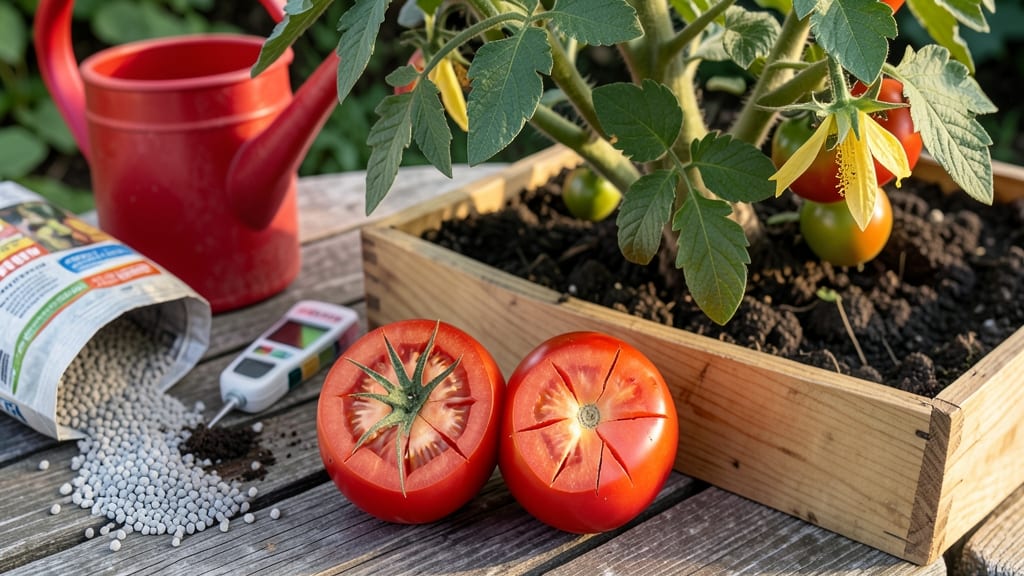
Tomato fruit cracking is due to a deficiency of calcium, throwing your harvest into chaos. 🌱 I’ve seen perfectly shaped tomatoes split open like overripe fruit—only to discover it was never about ripeness, but about the soil’s hidden weakness.
The moment I learned to test for calcium, my cracked tomatoes vanished, and my harvest became perfectly blemish-free.
Calcium is the unsung hero of tomato health—it keeps cell walls strong so they don’t burst when water rushes in. Inconsistent watering makes it worse, but the real culprit is often the soil itself.
Sandy soils drain too fast, while heavy clay holds water but blocks calcium uptake. Even rich compost can’t fix the problem if the pH is off or organic matter is lacking.
Fixing it starts with a simple soil test (or a DIY egg-shell calcium boost). Add crushed eggshells or gypsum to the soil, water deeply but evenly, and mulch to keep moisture steady. Within weeks, your tomatoes will stay firm, sweet, and crack-free—no more wasted fruit or disappointed harvests.
This works for backyard gardens, containers, and even raised beds. The key is consistency: calcium, water, and patience. Trust me, your next tomato season will thank you.
Root Causes Of Tomato Cracks
Tomato fruit cracking is a frustrating issue for gardeners, but understanding the underlying causes—especially nutrient deficiencies—can help you prevent it. Below, we break down the key factors that lead to weak cell walls and split tomatoes, starting with the most critical: calcium deficiency.
Calcium is the primary structural component of tomato cell walls, acting like a glue that keeps cells firm and flexible. When tomatoes don’t get enough calcium—especially during rapid growth phases—the cell walls become weak and brittle.
- Why it happens: - Calcium is immobile in plants, meaning it can’t be redistributed from older leaves to new fruit.
If the plant lacks calcium early on, the fruit suffers later. - High nitrogen fertilizers (common in fast-growing plants) can outcompete calcium uptake, leading to deficiencies even if soil calcium levels are adequate. - Fluctuating soil moisture (alternating between drought and heavy watering) disrupts calcium absorption, causing uneven distribution in the fruit. - Root zone stress (compacted soil, poor drainage, or high soil pH) prevents roots from accessing calcium efficiently.
Visual clue: Cracks often appear as radial splits (like starburst patterns) or concentric rings near the blossom end, a classic sign of calcium stress.
Tomatoes absorb water rapidly during warm, humid days, but if the soil can’t keep up, the fruit swells unevenly. This internal pressure exceeds the fruit’s structural limits, causing cracks.
- Why it happens:
- Inconsistent watering (drought followed by heavy rain or overwatering) leads to osmotic stress, where cells expand too quickly.
- Shallow root systems (common in container-grown tomatoes) struggle to supply water uniformly, leaving some areas of the fruit dehydrated while others swell.
- High humidity increases transpiration (water loss through leaves), but if roots can’t replenish water fast enough, the fruit becomes hydrated unevenly.
- Overhead watering (especially in the evening) can cause surface tension cracks as water beads up on the fruit before being absorbed.
Visual clue: Cracks may appear as longitudinal splits (vertical or horizontal) along the fruit’s sides, often near the stem.
While nitrogen is essential for leafy growth, too much of it starves other nutrients—including calcium—because the plant prioritizes foliage over fruit development.
- Why it happens:
- Excess nitrogen (from synthetic fertilizers or compost-heavy soils) promotes luxuriant foliage but weakens cell walls in developing fruit.
- Slow-release fertilizers can cause nitrogen spikes, overwhelming the plant’s ability to uptake calcium.
- Organic matter breakdown (like fresh manure) can temporarily tie up calcium in the soil, making it unavailable to roots.
Visual clue: Affected plants may have dark green, lush leaves but small, misshapen fruit with cracks.
Tomatoes thrive in consistent warmth (70–85°F), but extreme heat or cold disrupts nutrient uptake and cell division.
- Why it happens:
- Heat stress (above 90°F) reduces calcium absorption and increases transpiration rates, leading to uneven water distribution.
- Cold nights (below 55°F) slow root activity, limiting calcium transport to the fruit.
- Rapid temperature swings (common in greenhouse or high-desert growing) cause physiological stress, weakening cell walls.
Visual clue: Cracks may be irregular and shallow, often accompanied by blossom-end rot (a related calcium deficiency symptom).
Calcium is most available in slightly acidic to neutral soils (pH 6.0–7.0). If your soil is too acidic (<5.5) or alkaline (>7.5), calcium becomes chemically bound and inaccessible.
- Why it happens:
- Acidic soils (common in peat-based mixes) increase aluminum and manganese toxicity, which competes with calcium for uptake.
- Alkaline soils (high in lime) can precipitate calcium as insoluble compounds, making it unavailable to roots.
- Sandy soils drain too quickly, washing out calcium before roots can absorb it.
Visual clue: Yellowing leaves with interveinal chlorosis (yellowing between veins) may appear alongside cracked fruit.
Not all tomatoes are equally prone to cracking. Thin-skinned or fast-growing varieties (like beefsteaks and heirlooms) are more susceptible than thick-skinned types (like Roma or San Marzano).
- Why it happens:
- Hybrid tomatoes bred for large size often have weaker cell walls to accommodate rapid growth.
- Determinate varieties (bush tomatoes) may crack if overwatered at harvest, while indeterminate types (vining tomatoes) are more prone to uneven water distribution as they grow taller.
- Older tomato plants producing late-season fruit may exhaust calcium reserves, leading to cracks in the final harvest.
Visual clue: Cracks may be more common in larger fruit or in late-season tomatoes on mature plants.
Fixing Cracked Tomatoes Naturally
Tomato fruit cracking is often a sign your plants are thirsty for more than just water—it’s a cry for balance, especially when it comes to calcium and moisture management. The good news?
With the right adjustments, you can save your harvest and prevent future cracks. Below, we’ll break down cause-specific fixes and share preventive tips to keep your tomatoes firm, juicy, and blemish-free.
If your tomatoes are cracking due to low calcium uptake, the solution lies in fortifying soil health and optimizing nutrient delivery.
🔥 Immediate Fixes (Short-Term)
- Calcium Spray or Soak: Mix 1 tablespoon of calcium nitrate or crushed eggshells in a gallon of water.
Spray the foliage and roots every 5–7 days for 2–3 weeks. (Pro tip: 💡 Use a sprayer for even coverage!) - Epsom Salt Boost: While magnesium is key, a light Epsom salt solution (1 tbsp per gallon) can indirectly support calcium absorption by improving nutrient balance.
👨🍳 Long-Term Soil Solutions
- Amend Soil with Gypsum: Work 2–3 cups of gypsum (calcium sulfate) into the soil 6–8 inches deep before planting.
Gypsum releases calcium slowly without altering soil pH. - Compost & Bone Meal: Add aged compost (rich in organic calcium) and a small amount of bone meal (10–15% of fertilizer mix) to replenish calcium over time. - Mulch with Straw or Grass Clippings: Mulching retains moisture (reducing stress cracks) while slowly breaking down to add calcium to the soil.
🌡️ Prevention Tips for Calcium Cracks
✅ Water Consistently: Avoid soaking-and-drying cycles—keep soil evenly moist (but not soggy). ✅ Avoid Over-Fertilizing with Nitrogen: Too much nitrogen delays calcium uptake.
Use a balanced 10-10-10 or 5-10-10 fertilizer instead. ✅ Test Soil pH: Calcium absorbs best in slightly acidic to neutral soil (6.0–7.0). Adjust with lime if needed.
Fluctuating water levels cause irregular cell expansion, leading to cracks. Here’s how to stabilize moisture for plump, uncracked tomatoes.
🍳 Watering Techniques for Stability
- Drip Irrigation > Hose: Use soaker hoses or drip lines to deliver water slowly and directly to roots, preventing surface evaporation.
- Morning Watering: Water early in the day (6–8 AM) so foliage dries quickly, reducing blossom-end rot risk (a calcium-related issue).
- Mulch Thickly: Apply 3–4 inches of organic mulch (straw, wood chips) to lock in moisture and shield roots from temperature swings.
⏰ Adjust for Weather & Growth Stages
- During Heatwaves: Increase watering slightly but shallowly to avoid deep cracks from rapid growth.
- Before Harvest: Reduce watering by 20% in the final 2 weeks to slow fruit expansion and firm up skins.
🎯 Prevention Tips for Water-Related Cracks
✅ Use Rain Gauges: If relying on rain, supplement with 1–2 inches of water weekly during dry spells. ✅ Avoid Overhead Watering: Splashing water on leaves can wash away calcium and spread disease. (Pro tip: 🔥 Water at the base only!) ✅ Monitor Soil, Not Schedule: Stick your finger 1–2 inches deep—if dry, water; if damp, wait.
Tomatoes crack when they grow too fast due to heat, cold, or uneven sunlight. Mitigate stress with these protective measures:
🔪 Physical & Structural Fixes
- Shade Cloth for Hot Days: Use 30–50% shade cloth during peak sun (11 AM–3 PM) to slow growth without stunting plants.
- Row Covers for Cool Nights: Lightweight frost blankets can retain heat and prevent rapid temperature drops that stress fruit.
- Prune for Airflow: Remove suckers and lower leaves to improve circulation, reducing humidity-related cracks.
🌡️ Climate-Specific Adjustments
| Issue | Solution |
|---|---|
| Sudden Heat Spikes | Mulch heavily + water deeply every 2–3 days. |
| Cold Snaps | Cover plants at night + use black plastic mulch to warm soil. |
| High Humidity | Space plants 18–24 inches apart + prune for airflow. |
✨ Prevention Tips for Environmental Cracks
✅ Choose Heat-Tolerant Varieties: Try ‘Solar Fire’ or ‘Heatmaster’ tomatoes if you live in hot climates. ✅ Harvest Early: Pick tomatoes slightly green if cracks are severe—they’ll ripen indoors without splitting. ✅ Avoid Fertilizer Burns: Over-fertilizing speeds up growth, leading to cracks.
Stick to side-dressing with compost mid-season.
If your tomatoes are already cracked but still firm: 1. Harvest & Ripen Indoors: Place them stem-side down in a paper bag with a banana (ethylene gas speeds ripening).
- Use the Cracked Fruit: Sauté, blend into sauces, or make salsa—cracks don’t affect flavor or safety!
By tackling calcium deficiency, water imbalance, and environmental stress with these targeted fixes, you’ll minimize cracks and maximize your harvest. Happy gardening! 🍅🌿
Frequently asked questions
What’s the difference between calcium deficiency cracks and water-related tomato cracks?
Calcium deficiency cracks appear as radial splits near the blossom end (like starbursts), while water-related cracks are usually longitudinal splits along the fruit’s sides. The key difference? Calcium cracks happen when cells lack structural support, while water cracks occur when fruit expands too quickly from uneven hydration.
Can I use eggshells to fix calcium deficiency in my tomato plants?
Crush clean, baked eggshells into a fine powder and mix them into the soil or sprinkle around the base. For faster results, steep shells in water for 24 hours, strain, and use as a foliar spray. Just remember—it’s a slow-release solution, so start early in the season for best results.
Why do my container-grown tomatoes crack more than those in the ground?
Container tomatoes crack more due to shallow root systems and rapid water fluctuations. Potted plants dry out faster and struggle to maintain even moisture, causing uneven fruit expansion. Use larger containers (at least 5 gallons) and water consistently—never let the soil dry completely between waterings.
Is boron deficiency also a cause of tomato cracking?
Yes! Boron works with calcium to strengthen cell walls. A deficiency causes irregular cracks and deformed fruit. If you suspect boron deficiency, add borax (1/4 tsp per gallon of water) as a soil drench or foliar spray. Test soil first—too much boron can be toxic.
Will cracked tomatoes still taste good?
Yes! Cracks don’t affect flavor or safety—just texture. Use cracked tomatoes in sauces, soups, or blended salsas where texture doesn’t matter. For slicing, harvest slightly green and ripen indoors to prevent further cracking while maintaining quality.