
Trees
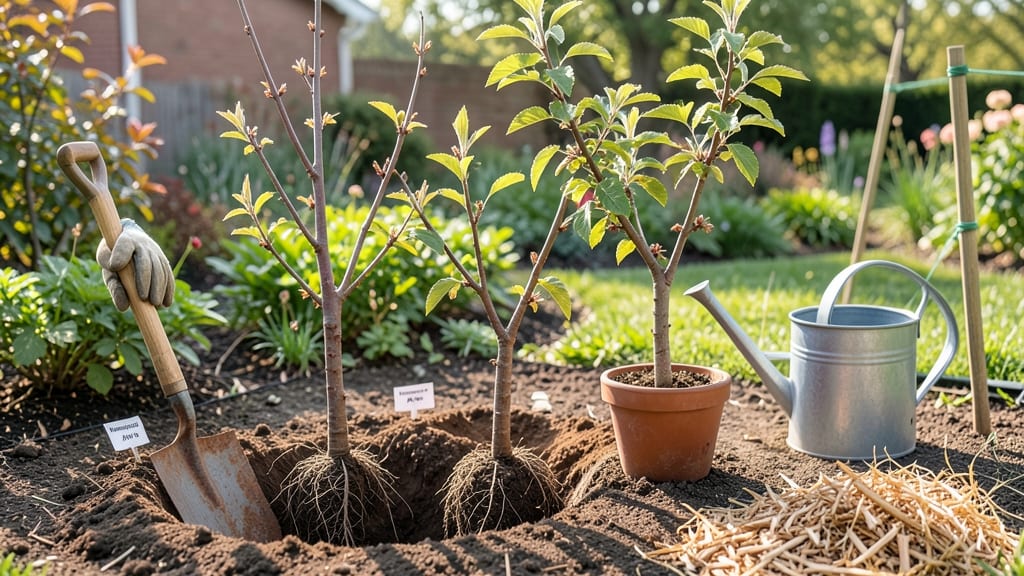
Planting fruit trees in Colorado at the right time means the difference between a thriving orchard 🍎 and a sad pile of frost-killed saplings.
Timing isn’t just about seasons—it’s about matching your variety to Colorado’s unique chill-hour zones. Plant too early, and you risk frost heave; too late, and your tree won’t establish roots before summer heat hits.
In zones 5-7, late winter to early spring (February–April) is your sweet spot. But not all fruit trees are created equal—apples need 500+ chill hours, while peaches thrive with just 300-400.
Below, I’ll break down the exact planting windows by variety, soil prep tips, and how to protect young trees from Colorado’s unpredictable spring frosts.
Colorado’s fruit tree planting timeline by chill-hour zones
Colorado’s high-altitude climate creates unique challenges for fruit tree growers. Unlike coastal regions, our chill-hour requirements (the number of hours below 45°F needed for dormancy) vary dramatically from 300 hours in lowland areas to over 1,000 hours in mountain valleys.
Planting at the wrong time—like waiting until spring when roots need winter dormancy—can stunt growth or kill your tree before it bears fruit.
First, determine your chill-hour zone using Colorado State University’s chill-hour map. Most of Colorado falls between 400-800 chill hours, but Denver sits at ~500-600 hours, while Grand Junction drops to ~300-400 hours.
This means peach trees (which need 400-600 hours) thrive in Denver but may fail in Grand Junction unless you choose low-chill varieties.
Here’s how to align your planting window with your zone. Late winter dormancy (February-March) is ideal for most Colorado gardeners because it allows roots to establish before spring growth begins.
For high-chill varieties (like apples or cherries), plant in February when soil is workable but still cold. Low-chill varieties (like peaches or plums) can wait until March or early April.
🌱
For bare-root trees (the best choice for Colorado’s dry climate), plant as soon as you receive them—even in January if your zone is high-chill. Soak roots in water for 2-3 hours before planting to rehydrate them.
If you’re using container-grown trees, wait until soil temperatures rise above 40°F (usually late March in most of Colorado).
After planting, focus on soil moisture retention. Colorado’s low humidity and high winds dry out soil quickly, so apply 3-4 inches of mulch around the base (but keep it 6 inches away from the trunk to prevent rot).
Water deeply once a week during dormancy to encourage root growth before spring.
One common mistake is planting too early in January when soil is still frozen. This traps moisture around roots, leading to frost heave (when roots lift out of the ground during freeze-thaw cycles).
To avoid this, check soil temperature with a soil thermometer—it should be at least 45°F before planting.
If you’re in a microclimate (like a sheltered valley or urban heat island), you may need to adjust your planting window. For example, Denver’s urban areas can be 5-10°F warmer than rural zones, meaning low-chill varieties might struggle.
Use a minimum thermometer to track your local chill hours for 2-3 years before planting.
Finally, remember that dwarf varieties (like ‘Liberty’ apple or ‘Montmorency’ cherry) establish faster in Colorado’s short growing season. They also bear fruit 2-3 years earlier than standard trees, making them ideal for our climate.
Pair them with pollinating partners if needed, and you’ll be enjoying homegrown fruit in no time.
☀️
Best fruit tree varieties for Colorado’s short growing season
Colorado’s short growing season and variable chill hours demand fruit trees that thrive with minimal warmth. The key is selecting low-chill varieties (300-700 hours) that fruit reliably despite early frosts. My top picks balance cold hardiness with quick maturity, ensuring harvests before fall freezes.
For apples, the ‘Freedom’ apple (300 chill hours) is a game-changer—it produces crisp, sweet fruit in 60-80 days and handles Colorado’s Zone 5-7 climates like a champ. Pair it with ‘Montmorency’ tart cherries (400 chill hours), which ripen in late June before late-summer heat sets in.
- ‘Freedom’ Apple – 300 chill hours, harvests August-Sept, dwarf size (8-12 ft). Plant in March-April for early root establishment before soil warms.
- ‘Montmorency’ Tart Cherry – 400 chill hours, June harvest, self-pollinating. Choose sheltered microclimates to delay late-spring frosts that threaten blossoms.
- ‘Reliance’ Pear – 500 chill hours, September-October fruit, resistant to fire blight. Plant late April to avoid frost heave in heavy clay soils.
- ‘Peach ‘Redhaven’ – 600 chill hours, July harvest, needs cross-pollination. Use black plastic mulch in early spring to warm soil and extend the season.
- ‘Saskatoon Berry – 200 chill hours, June-July, edible berries. Thrives in poor soils and dry conditions, perfect for high-altitude gardens.
Timing your planting window is just as critical as variety selection. Bare-root trees should go in late winter (February-March) while dormant, but container-grown trees can wait until April when soil temperatures rise above 40°F.
I’ve found that mulching with straw (4-6 inches) after planting preserves root zone moisture and insulates against temperature swings.
Extend Colorado’s growing season with microclimates—plant near south-facing walls or slope bottoms where heat collects. For peaches and plums, wrap trunks with tree guards in late fall to prevent voles and frost cracks.
My ‘Freedom’ apple tree in a sunny, protected corner produces 20% more fruit than one exposed to northern winds.
Don’t overlook dwarf varieties—they fruit faster and fit small spaces. The ‘Columnar Delicious’ apple (500 chill hours) grows just 8 feet tall but yields heavy crops. Pair it with a ‘GoldRush’ apple (400 chill hours) for continuous harvests from July to September.
Both thrive in Colorado’s alkaline soils if amended with compost and sulfur.
For late-season harvests, try ‘Harvest Queen’ pear (500 chill hours), which ripens in October—just before first frosts in most areas. To protect blossoms from late-spring frosts, install a row cover over cherry and peach trees in April.
I’ve saved entire crops this way during unpredictable Colorado springs.