
Trees
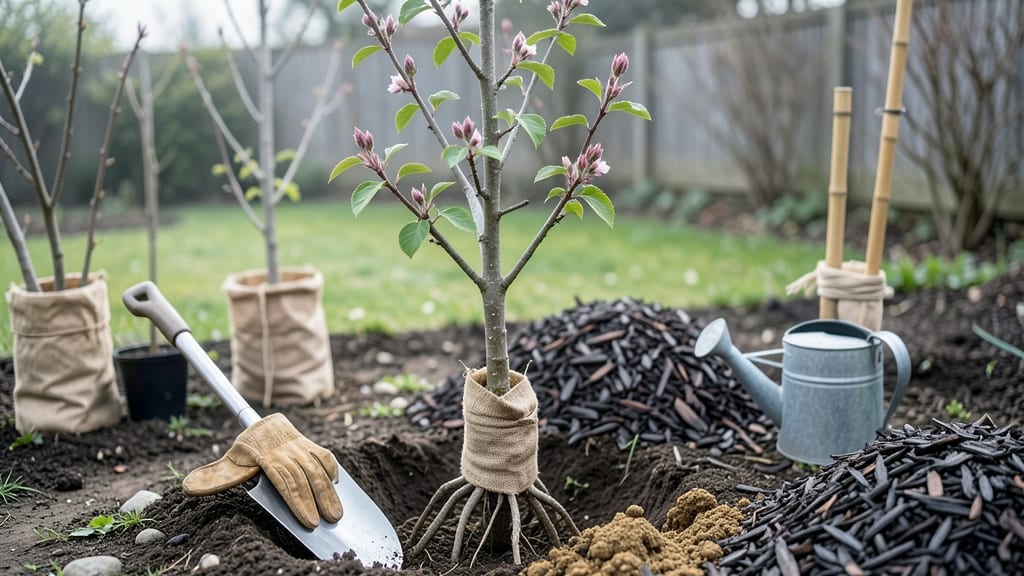
Planting fruit trees in Arkansas at the right time ensures they thrive in your 7a-8a climate, where chill hours and frost dates make all the difference.
Picture this: you’ve spent months picking the perfect 🍎 variety, only to plant it too early and watch a late frost turn your new tree into a sad, brown stick. Or worse, you wait too long, and the roots struggle to establish before summer’s heat sets in.
Planting fruit trees in Arkansas at the wrong time can mean the difference between a thriving orchard and years of disappointment—so timing isn’t just important, it’s everything.
Arkansas’s unpredictable weather—from late winter freezes to early spring warmth—means you can’t just follow a generic calendar. Instead, you’ll need to align your planting with chill-hour zones, last frost dates (usually around March 15), and whether you’re planting bare-root or container-grown trees.
Get this wrong, and even the hardiest peach tree might never recover.
In this guide, I’ll break down the exact late-winter to early-spring window (February–April) that works for Arkansas, plus how to adjust for your specific zone, soil prep tips, and what to do if you miss the ideal time.
By the end, you’ll know not just when to plant, but how to set your fruit trees up for a lifetime of harvests.
Arkansas chill-hour zones: how climate dictates fruit tree planting months
Arkansas’s variable climate creates unique challenges for fruit tree growers. Unlike northern states, Arkansas’s chill-hour zones (ranging from 500 to 1,000+ hours) determine which fruit varieties thrive—and when to plant them.
Peaches, for example, need 500-700 chill hours, while apples require 800-1,000+ hours. Understanding your zone ensures your trees break dormancy at the right time for optimal growth.
Most of Arkansas falls within USDA Zones 7a-8a, but chill-hour requirements vary by region. Northern Arkansas (e.g., Bentonville) typically sees 800-1,000+ chill hours, while southern areas (e.g., Little Rock) may only hit 500-700 hours.
This difference means peaches and plums flourish in the north, while figs and persimmons may succeed in the south. Always check your local Arkansas Cooperative Extension Service data for precise chill-hour counts.
Dormant trees (bare-root or balled-and-burlapped) should be planted in late winter to early spring (February-March) when soil is workable but before buds swell. Semi-dormant trees (container-grown) offer more flexibility, allowing planting through fall or early spring. However, avoid planting in summer heat, as stress reduces root establishment.
| Chill-Hour Zone | Best Fruit Varieties | Ideal Planting Window | Key Considerations |
|---|---|---|---|
| 500-700 hours (South AR) | Peaches, Plums, Figs, Persimmons | Late Feb - Early April | Avoid late frost; mulch heavily |
| 700-900 hours (Central AR) | Apples, Pears, Cherries, Nectarines | Mid-Feb - Mid-April | Test soil pH (6.0-7.0 ideal) |
| 900-1,000+ hours (North AR) | Apples (Fuji, Gala), Pears, Tart Cherries | Early Feb - Late March | Prune in late winter for air flow |
| All Zones (Container Trees) | Dwarf Varieties (e.g., Columnar Apples) | Fall (Sept-Oct) or Spring (March-April) | Water deeply post-planting |
For peaches and plums, prioritize 500-700 chill-hour zones in southern Arkansas. These trees bloom early, so plant them in February to avoid late frost damage. In contrast, apples and pears thrive in 700-1,000+ chill-hour zones and should be planted in March when soil temperatures rise above 40°F.
Always choose dwarf or semi-dwarf varieties for smaller spaces, as they mature faster and produce fruit sooner.
Arkansas’s humid summers and variable winters demand careful planning. If you miss the spring window, consider fall planting (September-October) for container-grown trees, but avoid planting when soil temps drop below 50°F.
Use mulch (3-4 inches) to regulate soil temperature and retain moisture, especially in Zone 8a, where heat stress is a risk. Monitor local frost dates—northern Arkansas may see frost until mid-April, while southern areas are safer by mid-March.
One common mistake is planting bare-root trees too early, which can lead to root desiccation. Wait until soil is workable but not soggy—stick your finger in the ground; if it feels cool and moist, it’s time.
For container-grown trees, remove the pot and inspect roots before planting. If roots circle the pot, gently loosen them to encourage outward growth. This step is critical for long-term tree health in Arkansas’s clay-heavy soils.
Consider microclimates when selecting planting spots. A south-facing slope warms up faster in spring, ideal for early-blooming peaches. Conversely, a north-facing area may delay bud break, protecting late-blooming apples from early frost.
Elevation also matters: Mountainous regions (e.g., Ozarks) experience cooler nights, extending chill hours naturally. Use these microclimates to your advantage by placing heat-sensitive varieties in shaded areas during peak summer.
For tropical or subtropical fruit trees (e.g., citrus, loquats), Arkansas’s chill hours are often insufficient. Instead, grow these in containers and move them indoors during winter or plant them in sheltered microclimates near buildings or fences. Even in <
Step-by-step planting timeline: exact weeks to plant by fruit tree type
Timing your fruit tree planting in Arkansas is critical—especially with our variable climate and USDA Zones 7a-8a. Bare-root trees thrive in late winter, while container-grown trees offer more flexibility.
Miss the window, and you risk frost damage or stunted growth. Let’s break down the exact weeks to plant by tree type and preparation stage.
Arkansas’s last frost date typically falls around March 15, but microclimates in the Ozark Mountains may delay it by 2-3 weeks. For bare-root trees, dormancy is your ally—plant them as soon as soil is workable (late January to early March).
Container-grown trees can wait until March or early April for better root establishment.
-
Late January - Early February: Soil Prep
- Test soil pH (6.0-7.0 ideal)
- Amend with compost or aged manure
- Mark planting spots with stakes for spacing
-
Mid-February - Early March: Bare-Root Planting
- Plant peaches, plums, cherries (chill-hour needs: 500-1,000+)
- Soak roots 1-2 hours before planting
- Space 15-25 ft apart (standard trees)
-
March 15 - April 15: Container-Grown Trees
- Best for apples, pears, figs (lower chill needs)
- Dig hole twice as wide as root ball
- Backfill with native soil (no amendments)
-
September 1 - October 15: Fall Alternative
- Plant container-grown trees only (avoid bare-root)
- Water deeply before first frost (Nov 15)
- Mulch 3-4 inches deep (avoid trunk contact)
-
Post-Planting Care: Critical First 30 Days
- Water deeply 2-3x weekly (15-20 gallons)
- Stake if needed (windy sites)
- Avoid fertilizing until new growth appears
For peach and plum trees, prioritize late January to early March planting—they need 500-1,000 chill hours, and Arkansas’s winters deliver just enough. Apple and pear trees, with lower chill needs (300-500 hours), can wait until March or April without stress.
Always check the Arkansas Cooperative Extension Service for local frost updates.
Pro tip: If you miss spring, fall planting (September-October) works for container-grown trees—just ensure roots establish before first frost. Use mulch to insulate roots and retain moisture during Arkansas’s unpredictable fall rains.
Remember, spacing matters—standard trees need 15-25 feet between them to avoid competition. After planting, focus on deep watering and mulching to set your trees up for year-one success. The first year is about roots, not fruit! 🌱