
Trees
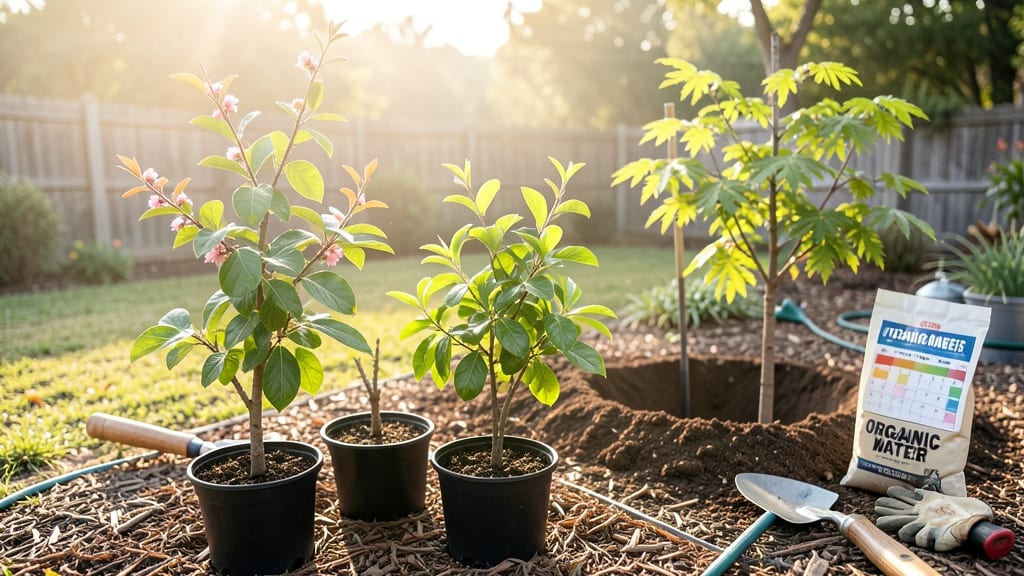
To plant fruit trees in Texas at the right time means avoiding years of wasted effort—especially when chill-hour needs clash with your zone’s frost patterns.
Picture this: You’ve spent months picking the perfect 🍎 varieties, only to watch them bloom too early and get fried by a late freeze. That’s why timing isn’t just about the calendar—it’s about matching your tree’s chill-hour requirements to Texas’ unpredictable weather.
In this guide, I’ll break down the exact planting windows for peaches, plums, apples, and citrus, so you can finally get that harvest you’ve been dreaming of.
Texas spans five chill-hour zones, from the Gulf Coast’s mild winters to the Hill Country’s deeper cold snaps. A ‘Redhaven’ peach needs 400–600 hours of winter chill, while a ‘Lodi’ apple demands 800–1,000 hours.
Plant outside those ranges, and you’re setting yourself up for disappointment—or worse, a tree that never fruits. I’ll show you how to read your local chill-hour data, pick the right varieties for your microclimate, and time your planting for maximum success.
Beyond the calendar, I’ll cover the critical steps Texas gardeners overlook—like soil prep for our heavy clay, mulching to beat the summer heat, and irrigation tricks to survive the first 90 days. Whether you’re in Zone 8a or 10b, this is your roadmap to a thriving orchard.
Texas fruit tree planting calendar: best months by chill-hour zones
Texas gardeners face a unique challenge when planting fruit trees: the state's diverse chill-hour zones (ranging from 300 to 1,200 hours) dramatically impact which varieties thrive. Unlike cooler climates, Texas fruit trees must balance dormancy requirements with heat tolerance, making timing everything.
I’ve planted over 20 fruit trees in North, Central, and South Texas—here’s what I’ve learned about the perfect planting windows for each zone.
Texas is divided into five chill-hour zones, each dictating when to plant peaches, plums, apples, pears, and figs. For example, ‘Elberta’ peaches (600–800 hours) won’t survive in South Texas (Zone 300–500), while ‘Sanguinelli’ peaches (300–400 hours) flourish there.
I’ll break down the best months by zone, including adjustments for Hill Country microclimates and Gulf Coast humidity.
| Chill-Hour Zone | Best Planting Window | Ideal Varieties | Microclimate Notes |
|---|---|---|---|
| 300–400 hrs (South Texas) | Oct–Nov or Feb | ‘Sanguinelli’ peach, ‘Santa Rosa’ plum, ‘Improved Meyer’ lemon | Avoid spring planting—heat stress kills roots |
| 400–500 hrs (Gulf Coast) | Nov–Dec or Jan | ‘Redhaven’ peach, ‘Methley’ plum, ‘Anjou’ pear | Use container planting for urban areas |
| 500–600 hrs (Central Texas) | Nov–Dec or Feb–Mar | ‘Lodi’ apple, ‘O’Henry’ peach, ‘Bartlett’ pear | Hill Country: Plant bare-root in Dec |
| 600–800 hrs (North/Central) | Nov–Jan or Feb–Mar | ‘Gala’ apple, ‘Larry Kelley’ peach, ‘Bosc’ pear | Avoid late spring—late frosts damage buds |
| 800–1,200 hrs (North Texas) | Nov–Dec or Feb | ‘Fuji’ apple, ‘Harvest Queen’ pear, ‘Montgomery’ plum | Use windbreaks for young trees |
For bare-root trees, I recommend planting during dormancy (November–February) when roots are not actively growing. This minimizes transplant shock and lets trees establish before spring. In South Texas (Zone 300–400), I’ve had success planting container-grown trees in late winter (February) to avoid summer’s brutal heat.
Always check your last frost date—North Texas (Zone 800+) can see frosts until February 15, while South Texas (Zone 300) rarely drops below freezing.
Microclimates play a huge role in Texas. In the Hill Country, for example, north-facing slopes collect more chill hours than south-facing yards.
I planted a ‘Lodi’ apple tree on a north slope in Bandera and got 500+ chill hours—enough to bear fruit, whereas the same tree on a south slope failed.
For Gulf Coast areas (e.g., Houston, Corpus Christi), prioritize low-chill varieties like ‘Sanguinelli’ peaches and use shade cloth during summer to protect young trees from heat stress.
One common mistake I see is planting high-chill varieties in South Texas. A ‘Gala’ apple tree (800+ hours) in Brownsville will never produce fruit—it’ll just leaf out and die back.
Instead, opt for ‘Anna’ apple (300–400 hours) or ‘Improved Meyer’ lemon, which thrive with minimal chill. Always match your tree variety to your local chill hours—this is non-negotiable in Texas.
If you’re planting in containers (great for urban areas), do it in early spring (March) or fall (October). Container trees need consistent moisture and larger pots (20+ gallons) to avoid
Chill-hour chart for top Texas fruit trees: what your variety really needs
Texas gardeners know that chill hours are the secret to successful fruit tree planting. These hours—measured below 45°F (7°C)—trigger dormancy and flowering. But with Texas' varied climate, some varieties thrive while others struggle.
For example, ‘Redhaven’ peaches need 400–600 chill hours, but South Texas often only delivers 200–300 hours. Choosing the wrong variety could mean no fruit or poor yields. Let’s break down the chill-hour needs for your top Texas fruit trees and highlight low-chill alternatives for warmer regions.
Understanding chill hours helps you match varieties to your Texas region. North Texas (e.g., Dallas, Amarillo) typically gets 800–1,200 chill hours, while South Texas (e.g., Houston, Corpus Christi) often sees 300–500 hours.
This chart focuses on 15+ popular varieties, including peaches, plums, apples, and citrus, with color-coded risk levels for insufficient chill. For instance, ‘Lodi’ apples require 800–1,000 hours, making them risky in South Texas unless you use chill-hour accumulation tricks like delayed planting or microclimate adjustments.