
Trees
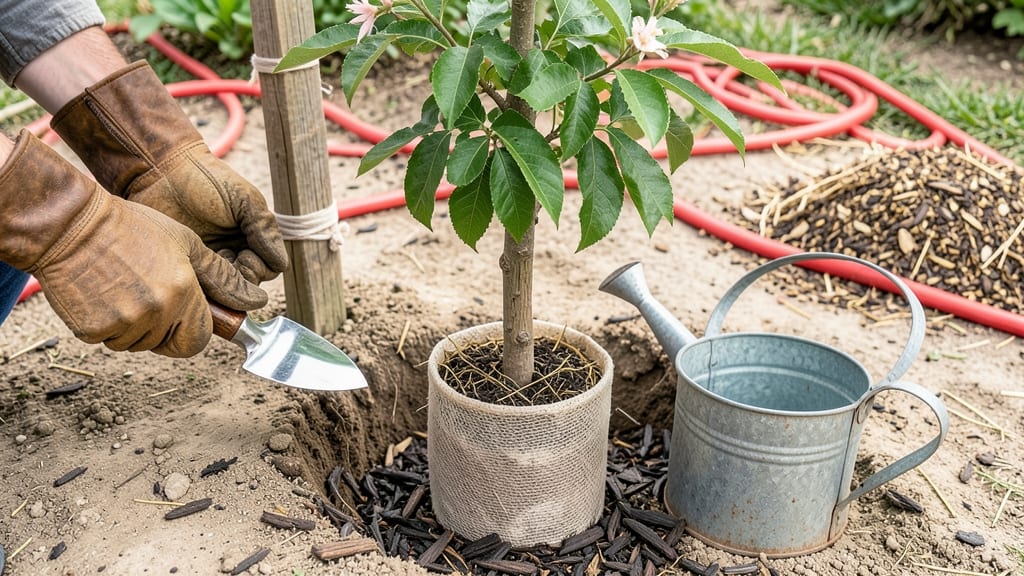
Planting fruit trees at the right time ensures strong roots and a bountiful harvest—late winter to early spring is the best time to plant them in most climates like Zone 6a.
Picture this: You’ve just planted your 🍎 fruit tree, only to watch it struggle through a late frost or fail to establish before summer heat sets in. That’s why timing isn’t just about seasons—it’s about matching your tree’s chill-hour needs with your local frost-free window.
Whether you’re in a temperate zone or a warmer microclimate, knowing when to plant makes the difference between a thriving orchard and years of disappointment. Below, I’ll break down how chill hours, frost dates, and even container planting adjust your ideal window.
You’ll learn how to calculate your frost-free window, pick the right varieties for your climate, and even extend the season with mulch or microclimates—so your fruit tree gets off to the best start possible.

How chill-hour requirements determine your planting window
When selecting fruit trees, chill hours are one of the most critical factors in determining your planting window. These are the number of hours below 45°F (7°C) a tree needs during winter dormancy to trigger flowering and fruiting.
Planting a tree with high chill-hour needs in a warm climate—or a low-need variety in a cold zone—can lead to poor fruit set or no fruit at all.
For example, apple trees typically require 500–1,000 chill hours, while peaches need 300–900 chill hours. Meanwhile, citrus trees like oranges thrive with 0–200 chill hours, making them unsuitable for northern climates. Matching your tree’s chill-hour needs to your USDA hardiness zone ensures healthy growth and abundant harvests.
| Fruit Tree Type | Chill-Hour Range | Ideal USDA Zones | Best Planting Window |
|---|---|---|---|
| Apples | 500–1,000 | 4–8 | Late winter (Feb–March) |
| Peaches | 300–900 | 5–9 | Early spring (March–April) |
| Cherries | 500–1,000 | 5–8 | Late winter (Feb–March) |
| Pears | 300–800 | 5–8 | Early spring (March–April) |
| Citrus (Oranges, Lemons) | 0–200 | 9–11 | Fall (Sept–Nov) |
| Figs | 100–300 | 7–11 | Spring or fall |
If you live in Zone 7 or colder, focus on trees like apples or cherries, which thrive with ample chill hours. In Zones 8–10, opt for peaches, figs, or low-chill apples (e.g., 'Anna' or 'Dorsett Golden').
For Zones 11 and warmer, citrus and subtropical fruits are your best bet.
Planting in late winter or early spring (after the ground thaws but before buds swell) gives roots time to establish before summer heat. In warmer climates, fall planting (September–November) reduces transplant shock. Always check your local last frost date and adjust timing accordingly.
For container-grown trees, chill-hour needs are less critical, but you’ll still need to provide winter protection (e.g., moving pots to a sheltered area or using frost blankets) if your tree requires cold exposure.
Dwarf varieties are ideal for containers, as they adapt better to limited root zones and can be moved seasonally.
Pro tip: If you’re unsure about your chill-hour total, check local weather records or use a chill-hour calculator (like those from your state’s agricultural extension office). Some nurseries even label trees with their chill-hour requirements—always choose a variety that matches your climate to avoid disappointment.
Remember, dormant trees (bare-root or balled-and-burlapped) are easiest to plant in winter, while container-grown trees can be planted year-round in mild climates. Just avoid extreme heat or frost during transplanting to give your tree the best start.
By aligning your fruit tree variety with your region’s chill hours, you’ll maximize growth, flowering, and fruit production—leading to a bountiful harvest for years to come. 🌱
Frost-free window: when to plant based on your region
Understanding your frost-free window is the key to planting fruit trees successfully. This period—the time between your last spring frost and first fall frost—determines when your tree can safely establish roots and grow without damage.
For most regions, this means planting in late winter or early spring, but the exact timing depends on your USDA hardiness zone and local microclimates.
In colder climates (zones 3-5), aim for planting 2-3 weeks after your last frost date, when soil temperatures reach at least 50°F (10°C). Warmer zones (6-9) can plant slightly earlier, even in fall or winter, as long as the ground isn’t frozen.
Always check your local frost calendar—many extension offices provide this data for free.
- 1 Find your last frost date: Use the USDA Plant Hardiness Zone Map or local weather records to pinpoint your average last frost (e.g., April 15 in Zone 6a).
- 2 Plant 2-3 weeks after frost: Wait until soil is workable and warm (test with your finger—it should feel like a damp sponge, not mud). For bare-root trees, plant in dormant season (late fall or winter) in colder zones.
- 3 Adjust for microclimates: South-facing slopes warm up faster, while low-lying areas stay colder. Use mulch (straw or wood chips) to insulate roots in spring or fall if needed.
- 4 Extend seasons with protection: In hot climates, use shade cloth during summer; in cold zones, wrap young trees with burlap for winter. Dwarf varieties adapt better to container planting for urban gardens.
Fall planting is also an option in mild climates (zones 7-10), especially for bare-root trees. The tree’s roots establish before dormancy, giving it a head start in spring.
Just avoid planting when soil temperatures drop below 40°F (4°C), as roots can suffer. For container-grown trees, fall planting works year-round in warm zones.
If you’re unsure about your frost dates, use frost-sensitive plants as indicators—like calendula or basil, which wilt when frost hits. Alternatively, sign up for local weather alerts or use apps like PlantNet to track real-time conditions. Remember, rushing planting risks frost damage, while waiting too long delays root growth.
Pro tip: Mulch heavily after planting to retain moisture and regulate soil temperature. A 3-inch layer of organic mulch (like straw or shredded leaves) can make a 10°F difference in root zone temperatures.
Pair this with deep watering (10-15 gallons per young tree) to set your fruit tree up for success.
🌱