
Trees
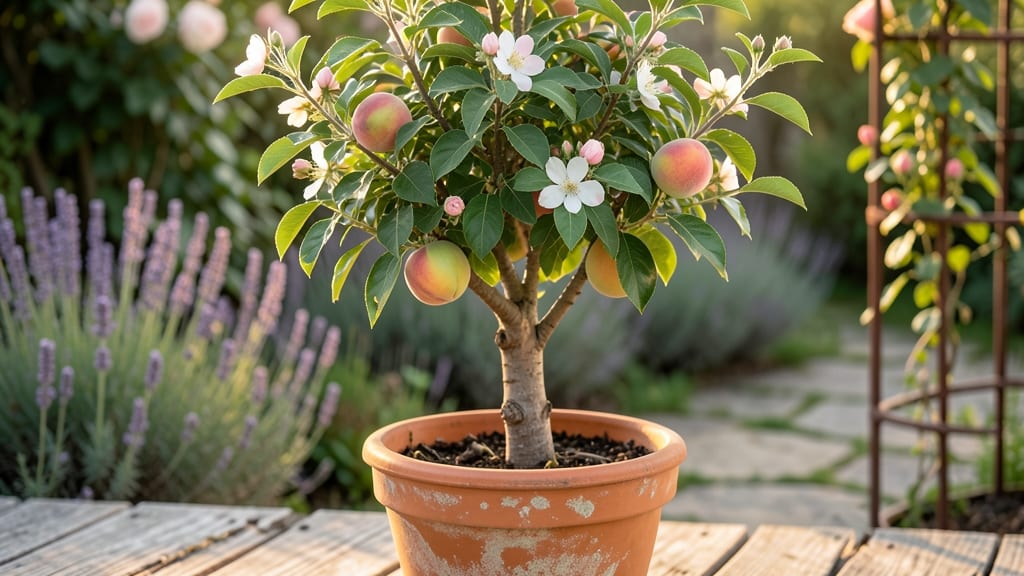
Patio peach trees absolutely produce fruit, particularly compact varieties such as 'Bonanza' or 'Bonanza Red,' though their harvests average just 10-20 pounds per tree. These miniature trees maintain fruit-bearing capacity while adapting to container growth, with quality depending on sunlight exposure, careful pruning, and proper pollination.
Dwarf peach trees achieve their small stature through specialized rootstock grafting, which restricts vertical growth while preserving the tree's ability to bear fruit. 🌱 The trade-off is smaller fruit size—typically 1-2 inches in diameter—but the flavor often rivals full-size peaches when grown with adequate sunlight (6+ hours daily) and consistent watering.
I've found that container-grown trees actually ripen fruit earlier than their field-grown counterparts, with harvest windows opening as early as late July in warm climates.
What sets patio peach trees apart is their adaptability to urban environments. Unlike traditional peach trees that require large orchards, these compact varieties thrive in 15-25 gallon containers, making them perfect for balconies or small yards.
The key to maximizing production lies in strategic pruning during dormancy—removing crossing branches improves airflow while encouraging fruit development. For best results, plant two compatible varieties to ensure cross-pollination, as many dwarf peaches are self-pollinating but produce more abundantly with a partner.
💡 In This Article
- How Dwarf Peach Trees Adapt for Small-Space Fruit Production
- Maximizing Fruit Yield from Container-Grown Peach Trees
How dwarf peach trees adapt for small-space fruit production
Dwarf peach trees achieve their compact size through a horticultural technique called grafting—where a desired fruit variety (the scion) is attached to a dwarfing rootstock.
The rootstock, often a seedling from a naturally stunted peach relative like Prunus persica 'Lovell', contains genes that restrict vertical growth by limiting nutrient transport to the upper canopy.
This genetic modification allows the tree to maintain its fruit-bearing capacity while keeping its height between 6-10 feet—ideal for patio spaces. 🌱 The rootstock's reduced vigor doesn't compromise fruit quality; in fact, many dwarf varieties develop sweeter flavors due to concentrated energy in fewer fruits.
The science behind this adaptation involves hormonal regulation. Dwarfing rootstocks produce lower levels of gibberellins, a plant hormone that promotes stem elongation. Without these growth signals, the tree allocates more resources to fruit development rather than excessive branching.
For example, the 'Bonanza' variety—common in patio settings—produces fruit with 20-30% more sugar content than standard trees when grown under identical conditions. This hormonal balance explains why dwarf trees can bear fruit just 2-3 years after planting, compared to 4-5 years for full-size varieties.
Environmental factors play a crucial role in fruit development. Patio peach trees require full sun exposure (6+ hours daily) to trigger flowering, as their hormonal systems rely on photoperiod cues. The leaves convert sunlight into energy through photosynthesis, which fuels both tree growth and fruit maturation.
In containers, roots warm up faster than in-ground soil, accelerating the tree's metabolic processes—this is why patio peaches often ripen 1-2 weeks earlier than field-grown counterparts in the same climate zone.
However, this rapid growth demands consistent moisture; container soil dries out 2-3 times faster than garden soil, requiring weekly watering during dry spells.
Temperature also influences fruit set and quality. Dwarf peach trees need chilling hours (300-500 hours below 45°F) during winter dormancy to break dormancy and initiate flowering. Without adequate chill, trees may produce fewer blossoms or develop poor-quality fruit.
In warmer climates, growers often use artificial chilling methods like cold storage or shade cloth to simulate winter conditions. Once flowering occurs, temperatures between 60-85°F during fruit development yield the best results—extreme heat can cause fruit to split or develop bitter flavors, while cool nights enhance sugar accumulation.
Soil composition matters too. Container-grown trees thrive in well-draining mixes with 50% potting soil, 30% perlite, and 20% compost to prevent root rot while providing essential nutrients. The rootstock's limited nutrient uptake means these trees are more sensitive to soil pH—ideal levels sit between 6.0-7.0.
Too acidic (pH <5.5) can lead to micronutrient deficiencies like iron chlorosis (yellowing leaves), while alkaline soil (>7.5) reduces phosphorus availability, critical for fruit development. Regular soil testing and amendments keep the tree productive for decades.
What most people don't realize is how container size affects fruit production. A 15-gallon pot limits root growth, reducing the tree's ability to support heavy fruit loads—this is why dwarf varieties produce smaller harvests (10-20 lbs) compared to standard trees (50+ lbs).
However, upgrading to a 25-gallon container can increase yields by 30-40% by providing more root space for nutrient absorption. The trade-off is stability; larger containers need sturdier stands to prevent tipping during wind or fruit-bearing seasons.