
Trees
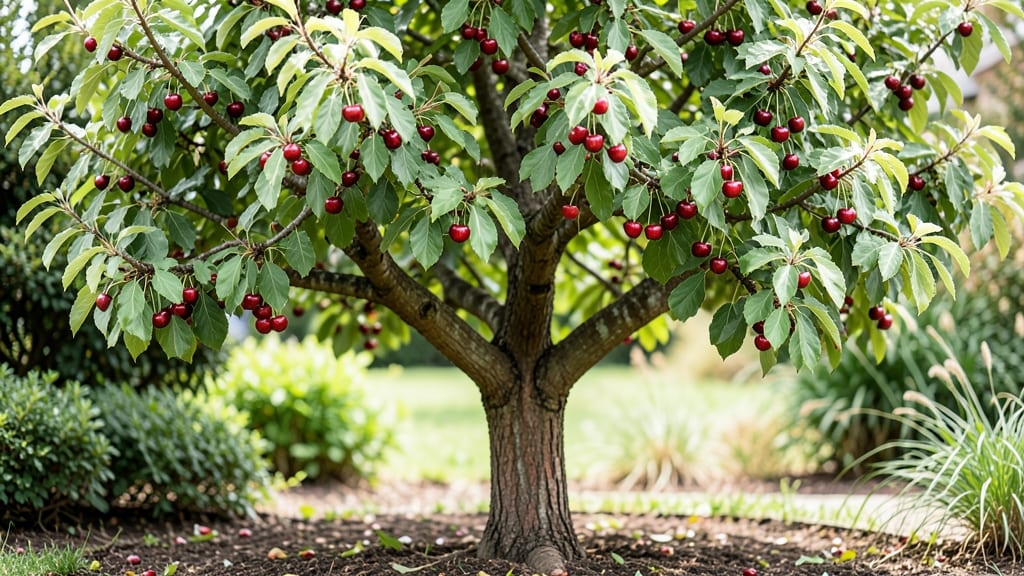
Cherry fruit trees 🍒 can grow anywhere from 6 feet to over 40 feet tall, depending on the variety and how you care for them.
Wondering if your backyard can accommodate a cherry tree without turning into a jungle? The height of cherry fruit trees varies dramatically by variety—and knowing these differences can help you choose the perfect tree for your space, sunlight, and long-term care goals.
Dwarf varieties like 'Stella' stay under 10 feet, making them ideal for small yards or containers, while standard types like 'Bing' or 'Rainier' can reach towering heights of 25-40 feet.
In this guide, you'll discover how to pick the right size for your garden, control growth with pruning, and even train your tree to fit compact spaces without sacrificing fruit production.

Cherry tree height ranges by variety: dwarf to standard sizes explained
Choosing a cherry tree often comes down to one critical question: how tall do cherry fruit trees grow? The answer depends entirely on the variety you select, with heights ranging from compact 6-foot dwarfs to towering 40-foot standards.
Understanding these differences helps you match your tree to your space, sunlight, and long-term care capacity.
Most cherry trees fall into three height categories: dwarf (6-12 ft), semi-dwarf (12-18 ft), and standard (20-40 ft). Dwarf varieties are ideal for urban gardens or small backyards, while standard trees suit large properties or commercial orchards.
The key difference lies in the rootstock used during propagation, which directly controls growth rate and mature height.
Rootstock is the underlying plant onto which the desired cherry variety is grafted. For example, 'Gisela 5' rootstock produces dwarf trees, while 'Mahaleb' creates semi-dwarfs, and 'Mazzard' yields full-size standards. This grafted structure ensures the tree retains the fruit characteristics of the top variety while inheriting the growth habit of the rootstock.
Here’s a quick look at how these height categories compare, including popular varieties and their mature sizes:
Dwarf varieties like 'Stella' and 'Montmorency' are perfect for gardeners with limited space. These trees typically mature between 6-10 feet and grow just 1-2 feet per year, making them ideal for containers or small urban yards.
Their compact size also means they require less intensive pruning and are easier to harvest from ladders or even standing on a stool.
Semi-dwarf cherry trees, such as 'Bing' and 'Rainier', strike a balance between manageability and productivity. Reaching 12-18 feet at maturity, they’re well-suited for backyards with moderate space. These varieties grow slightly faster than dwarfs, adding 1.5-3 feet annually, and often produce larger fruit yields.
They’re also versatile enough for espalier training, allowing you to grow them against fences or walls.
Standard cherry trees, including 'Lambert' and 'Black Republic', are the giants of the orchard. Towering 25-40 feet tall
Factors that influence cherry tree height: sunlight, soil, and pruning tips
When planning where to plant your cherry fruit tree, understanding how sunlight exposure, soil quality, and pruning techniques affect its height is crucial.
These three factors can either maximize growth or stunt it, dramatically altering whether your tree reaches 20+ feet or stays compact at 6-10 feet. Let’s break down how each plays a role in shaping your tree’s future stature.
First, sunlight is the most critical factor for cherry tree growth. Trees planted in full sun (6-8+ hours daily) grow significantly taller and produce more fruit than those in partial shade.
For example, a Bing cherry in full sun may reach 25 feet, while the same variety in partial shade could max out at 15 feet. This difference happens because sunlight fuels photosynthesis, which drives vertical growth and canopy expansion.
Soil quality also plays a surprising role in height control. Cherry trees thrive in well-draining, slightly acidic soil (pH 6.0-6.5). Poor soil—whether too clay-heavy, sandy, or compacted—restricts root development, leading to stunted growth.
I once planted a Montmorency sour cherry in heavy clay soil, and after three years, it only reached 8 feet instead of the expected 12-15 feet. Amending soil with compost or organic matter can make a dramatic difference in both height and fruit production.
⚠️ Warning: Overpruning or Neglect Can Stunt Growth
Cherry trees are sensitive to aggressive pruning in their early years. Cutting too much in one season (over 25% of the canopy) can shock the tree, leading to reduced height growth or even dieback. Additionally, neglecting soil health or underwatering during drought stress can cause permanent stunting. Always prune in late winter or early spring before new growth begins.
Pruning is where you can actively control your cherry tree’s height. For standard varieties, I recommend open-center pruning to encourage a broad, manageable shape while allowing vertical growth. For dwarf varieties, central leader pruning keeps the tree compact.
Remember, pruning should be done annually to maintain shape and remove dead or crossing branches. Over time, this practice ensures your tree stays within your desired height limits.
Seasonal growth patterns also influence height. Cherry trees experience most of their vertical growth in early spring, just after dormancy. During this time, they can grow 1-2 feet per year if conditions are ideal.
However, late summer pruning can stimulate a second flush of growth, which may add an extra 6-12 inches before winter. Understanding these patterns helps you time pruning and fertilizing for maximum height control.
Avoid these common mistakes that lead to overgrowth or stunted trees: ignoring root competition from nearby plants, using heavy-handed pruning tools that damage bark, or planting in low-lying areas where cold air pools and damages roots.
Instead, focus on balanced care, including mulching, consistent watering, and seasonal pruning.
By mastering these three factors—sunlight, soil, and pruning—you can guide your cherry tree to reach its full potential height while keeping it healthy and productive.
Whether you’re aiming for a towering standard tree or a compact backyard variety, these tips will help you achieve the perfect fit for your space. 🌱