
Plants
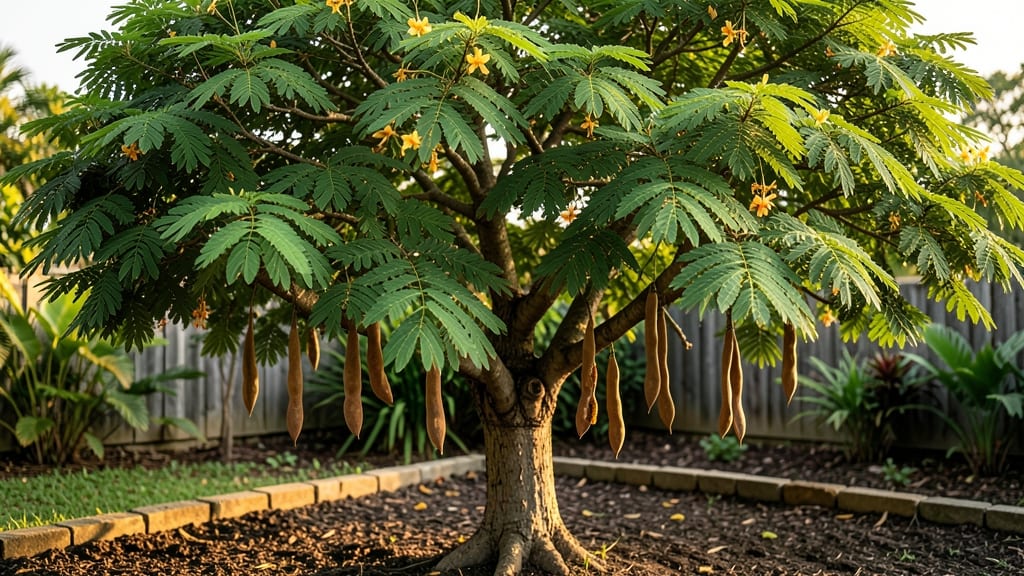
Tamarind fruit looks like a dark brown, wrinkled pod about 3–6 inches long, shaped like a flattened bean with a tough outer shell. Inside, it contains sticky, tangy pulp surrounding one large, hard seed. The flesh is fibrous and deep amber when ripe, often used in cooking and drinks.
Tamarind pods hang in clusters like nature's own dried fruit, their leathery skin developing deep cracks as they mature. 🌿 The outer shell's rough texture makes it easy to grip, while the inner pulp transforms from pale green to rich amber—a clear sign of ripeness.
Many people mistake the whole pod for the edible part, but it's actually the sweet-tart flesh inside that brings the signature tangy flavor to dishes like chutneys or Thai curries.
What's fascinating is how the seed plays a role in both the fruit's structure and its culinary use. The single, dark brown seed sits at the pod's center, acting as a natural divider for the sticky pulp.
When preparing tamarind for cooking, you'll often find the seed removed, leaving behind the fibrous strands that give the pulp its signature texture—perfect for making pastes or sauces.
💡 In This Article
- Tamarind Pod Anatomy: From Outer Shell to Inner Seed
- How to Identify Ripe Tamarind for Harvesting and Use
Tamarind pod anatomy: from outer shell to inner seed
The tamarind pod's outer shell starts as a smooth, green husk that hardens and develops deep brown wrinkles as it matures. This leathery exterior can measure anywhere from 3 to 6 inches long and 1 to 2 inches wide, resembling a flattened, elongated bean.
The shell's texture becomes increasingly rough and papery as it dries, with noticeable cracks forming along its length—these cracks are nature's way of signaling ripeness and making the pod easier to open.
Inside this protective casing lies the amber-colored pulp, which is both fibrous and sticky when ripe. The pulp's texture can be compared to a cross between a thick paste and a gel, with strands that easily separate when pulled apart.
At the pod's center sits the single, oval seed, typically 1 to 1.5 inches long and dark brown in color, surrounded by the pulp. This seed plays a crucial structural role, acting as a natural divider that keeps the pulp organized within the pod's confines.
The pulp's color transformation is one of the most striking features of tamarind maturation. When unripe, it appears pale green or yellowish, but as it ripens, it develops a rich deep amber hue that's often described as golden-brown.
This color shift isn't just visual—it indicates a chemical change where the pulp's natural sugars become more concentrated and its acidity balances out, creating that signature tangy-sweet flavor profile. The pulp's stickiness comes from its high pectin content, which gives it that characteristic cling when used in cooking.
Interestingly, tamarind pods from different regions exhibit subtle variations in their anatomy. For instance, pods grown in Thailand or India tend to be slightly longer and more curved, while those from Mexico or Africa often have a straighter shape and thicker shells.
The pulp's consistency can also vary—some varieties produce a slightly grainier texture, while others yield a smoother paste. These regional differences are primarily due to climate variations affecting the fruit's growth rate and water content during maturation.
The tamarind seed's size and shape are remarkably consistent across varieties, though its surface may develop minor bumps or ridges as it matures. This seed isn't typically consumed, but it does serve an important function in traditional preparation methods.
When making tamarind paste, the seed is often removed first, leaving behind the fibrous strands that can be easily separated and blended into the signature tangy pulp used in countless Southeast Asian and Mexican dishes.
What makes tamarind's anatomy particularly fascinating is how its structure directly influences its culinary applications. The pod's tough outer shell protects the delicate pulp during growth and transportation, while the seed's central position ensures even distribution of the pulp around it.
This natural packaging makes tamarind incredibly practical for both fresh and dried uses—whether you're harvesting it directly from the tree or working with commercially dried pods that maintain their structural integrity until rehydrated.