
Trees
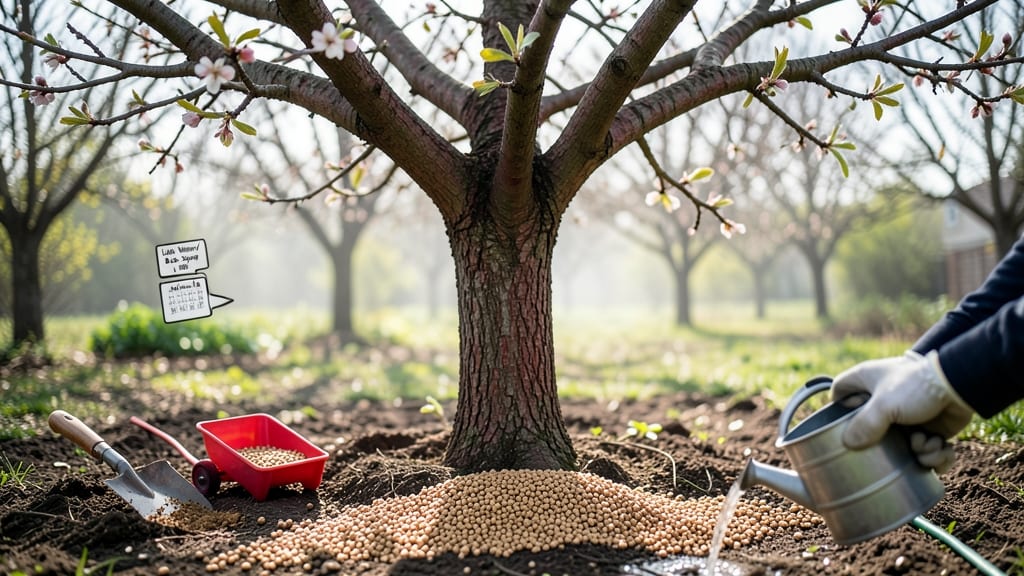
Fertilizing fruit trees at the right time can transform a struggling 🍎 into a fruit-bearing powerhouse — and missing the window often means wasted money and stunted growth.
Most gardeners wait until spring, but that’s only half the story. The real secret lies in understanding when your tree actually needs nutrients — and when feeding it could do more harm than good.
In this guide, I’ll break down the exact timing for young vs. mature trees, the best months to feed by climate zone, and the one mistake that kills fruit production before it even starts.
You’ll learn how to sync fertilization with your tree’s natural cycle, from late winter wake-up calls to post-harvest recovery — without overdoing it.

Best fertilization timing for fruit trees by season (with critical deadlines)
Fruit trees thrive when fertilized at the right time—too early or late can stress your tree or even reduce fruit production. The key is aligning fertilization with your tree's natural growth cycles, especially spring flush, summer fruit development, and fall dormancy.
Missing these windows can lead to weak branches, poor yields, or even tree decline.
Unlike annuals, fruit trees have critical deadlines for feeding. For example, fertilizing after late summer can trigger tender new growth vulnerable to frost. Meanwhile, skipping spring feeding delays the tree's energy reserves for flowering. Let's break down the seasonal fertilization schedule with hard deadlines to follow.
Spring is your most critical fertilization window. Apply a balanced fertilizer (like 10-10-10) right after dormancy breaks but before buds swell. This jumpstarts root and shoot growth.
For example, in USDA Zone 7, aim for mid-February to early March. Miss this window, and your tree may struggle to flower.
Summer fertilization is often overlooked, but it’s essential for fruit quality. Switch to a low-nitrogen fertilizer (like 6-6-6) in June to avoid excessive leaf growth at the expense of fruit.
Stop by August 1 to prevent new growth that could freeze in fall. Citrus trees, for instance, need this mid-summer boost to sweeten their fruit.
Fall and winter are no-fertilizer zones. Fertilizing after September 1 can trigger tender shoots that won’t survive frost. Instead, focus on mulching and watering deeply before dormancy. Evergreens like figs need extra care—avoid fertilizing after October 15 in colder climates.
Young fruit trees (under 3 years) need gentler feeding. Use half the recommended dose of a balanced fertilizer in spring and a light application in summer. Over-fertilizing can burn delicate roots. For mature trees, increase the dose but split it into two applications: early spring and mid-summer.
Watch for signs of over-fertilization, like yellow leaves or leaf scorch. These mean you’ve exceeded your tree’s needs. Adjust by reducing the dose or spacing out applications.
For example, if your peach tree shows leaf burn after spring feeding, switch to organic options like compost tea for a gentler approach.
Soil tests are your best friend. Test your soil in early spring to check pH and nutrient levels. Most fruit trees prefer slightly acidic soil (pH 6.0–6.5).
If your test shows low phosphorus, add bone meal in spring. For calcium-deficient zones, apply gypsum before planting stone fruits like cherries.
Climate plays a huge role. In warmer zones (8–10), extend your summer feeding to September. In colder zones (4–6), finish by July 15 to avoid frost damage.
For example, a lemon tree in Florida can handle late-summer feeding, while an apple tree in Maine must stop by early August.
How to adjust fertilization schedule for young vs mature fruit trees
Fertilizing your fruit trees at the right time depends entirely on their age—what works for a 1-year-old sapling can harm a 10-year-old mature tree. Young trees need gentle, frequent feeding to build strong roots, while established trees require balanced nutrition to support fruit production.
Understanding these differences prevents over-fertilization or nutrient deficiencies that stunt growth.
For young fruit trees (1–3 years old), focus on root development. Their shallow root systems can't handle heavy fertilizer loads, so I recommend starting with a light application at planting and following up in early spring.
Use a low-nitrogen fertilizer (5-10-10) to avoid excessive leaf growth that weakens young wood.
Fertilizing Young vs Mature Fruit Trees: Pros and Cons
- Pros: Builds strong root systems
- Pros: Encourages early branching
- Cons: Over-fertilizing burns tender roots
- Pros: Supports heavy fruit production
- Pros: Maintains soil fertility
- Cons: Excess nitrogen causes poor fruit quality
Mature fruit trees (4+ years old) have deeper root systems and can handle higher-nitrogen fertilizers (10-10-10) to fuel fruit production. I fertilize mine twice a year: once in early spring before buds swell and again after harvest to replenish nutrients.
For citrus trees, a fall application helps them prepare for winter.
Transitioning from young to mature trees requires adjusting your approach. When your tree reaches 3–4 feet tall, reduce fertilizer frequency but increase the amount per application.
For example, switch from monthly light feeds to bi-monthly heavier doses in spring and fall. Always water deeply after fertilizing to prevent root burn.
Watch for signs of imbalance: Yellowing leaves may indicate over-fertilization, while small fruit or sparse blooms suggest under-fertilization. Soil tests every 2–3 years help tailor your schedule to your tree's specific needs, ensuring optimal growth without waste.
Remember, root development is the foundation. Young trees prioritize roots over fruit, while mature trees balance both. By aligning your fertilization with these natural phases, you'll see healthier trees and better harvests year after year. 🪴