
Size
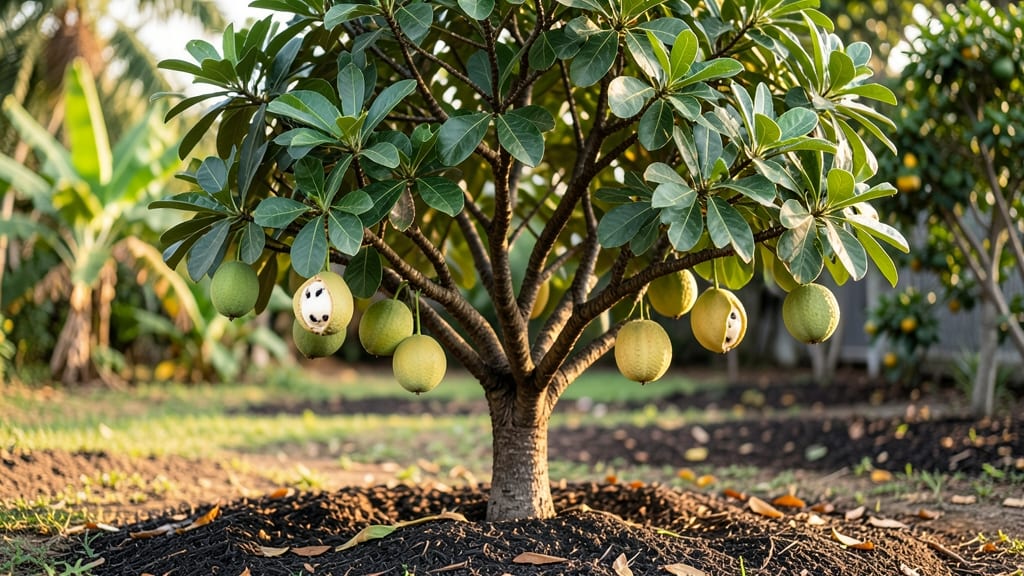
Soursop fruit thrives naturally in tropical regions across the Americas, from the Amazon Basin to Caribbean islands and Central America, where warm, humid climates and well-draining soil create ideal growing conditions. Cultivation has also successfully expanded it to Southeast Asia, Florida, and parts of Africa.
This tropical fruit originally flourished in the lush, rainforest-like environments of South America, where temperatures between 70–85°F and high humidity (70%+) support its growth. 🌿 The Amazon Basin remains one of its strongest native strongholds, with similar conditions found in Caribbean nations like Jamaica and Puerto Rico.
Beyond its natural range, soursop has adapted remarkably well to regions like Thailand and the Philippines, where farmers replicate its ideal climate through irrigation and shade management.
What makes soursop such a resilient crop is its ability to thrive in acidic, sandy-loam soils—a key factor for gardeners in Florida or Hawaii looking to grow it. The fruit’s large, spiky green exterior protects tender flesh inside, but it demands consistent moisture without waterlogging.
Many commercial growers in Southeast Asia use pruning techniques to manage size and boost fruit production, while organic methods like companion planting help deter pests like fruit flies.
💡 In This Article
- Soursop’s Native Habitat and Climate Requirements
- Global Soursop Cultivation Zones and Growing Tips
Soursop’s native habitat and climate requirements
The soursop tree, scientifically named Annona muricata, evolved in the dense, humid rainforests of South America, particularly in the Amazon Basin and Guianas. This region provides the perfect balance of 70–85°F temperatures and 70–90% humidity, which the tree relies on for photosynthesis and fruit development.
The canopy coverage in these forests creates ideal shade conditions, preventing excessive sunlight that could stress the tree's delicate leaves.
What truly sets soursop apart is its soil preference: it thrives in acidic, sandy-loam soils with a pH range of 5.5–6.5. This soil type allows excellent drainage while retaining enough moisture to support the tree's deep root system, which can extend up to 10–15 feet underground.
In its native habitat, soursop trees grow wild along riverbanks and in lowland areas where rainfall averages 60–100 inches annually, ensuring consistent moisture without waterlogging.
The fruit's distinctive spiky green exterior serves as a natural adaptation to its tropical environment. These spines protect the tender, creamy-white flesh inside from wildlife and excessive sun exposure.
When temperatures drop below 60°F or humidity falls below 60%, the tree enters a dormant phase, which explains why soursop struggles in temperate climates. This sensitivity to temperature is why the fruit's natural range remains confined to within 23° north and south of the equator. 🌿
In the Caribbean, where soursop is widely cultivated, the fruit's flavor profile intensifies during the rainy season (June–November). Farmers in Jamaica and Puerto Rico have observed that trees produce 20–30% larger fruits when given additional irrigation during dry periods, proving how critical consistent moisture is.
The tree's ability to produce fruit year-round in these regions demonstrates its remarkable adaptability within its native climate range.
One fascinating mechanism is how soursop trees use their extensive root systems to access groundwater during dry spells. This adaptation allows them to survive brief droughts, a trait that's been crucial for their survival in the wild.
The tree's flowers, which bloom in clusters, are highly sensitive to temperature fluctuations—ideal pollination occurs at 75–80°F, explaining why cooler nights can reduce fruit set.